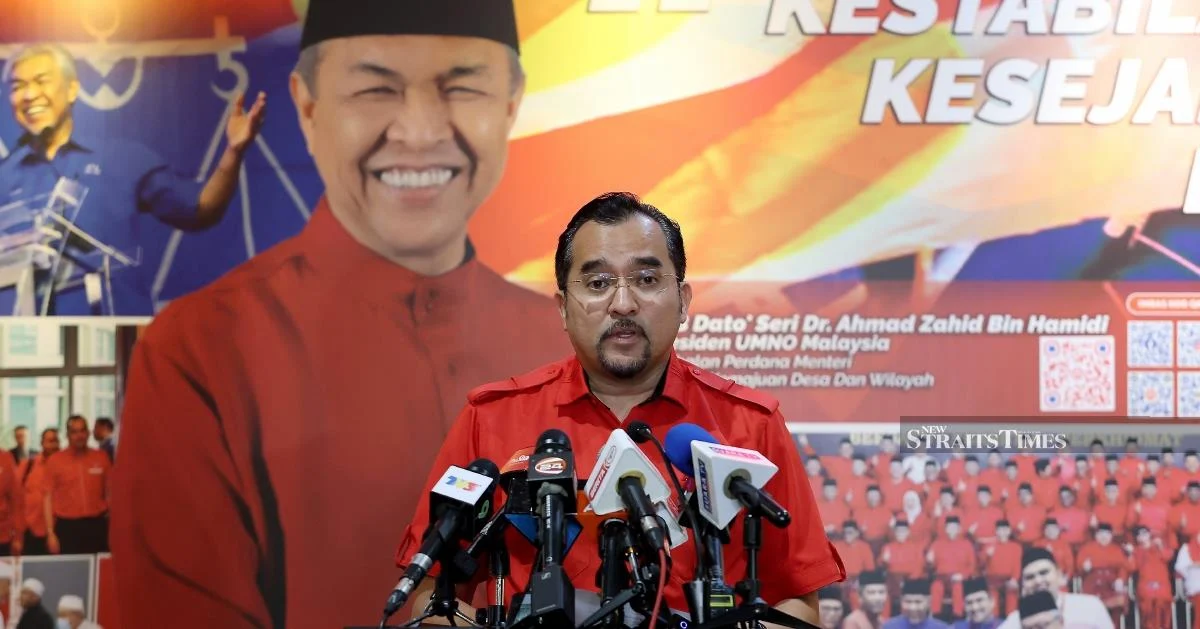
Umno will pursue a campaign strategy centred on substantive policy proposals rather than personal attacks in the forthcoming state elections in Johor and Negri Sembilan, according to party secretary-general Datuk Dr Asyraf Wajdi Dusuki. The commitment represents an attempt by Malaysia's longest-serving ruling party to recalibrate its political messaging amid growing public fatigue with adversarial campaign tactics that have characterised recent electoral contests across the country.
The pledge underscores Umno's broader effort to rebuild its political brand following a series of electoral setbacks and internal scandals that have eroded public confidence in the party's governance capabilities. By emphasising concrete policy platforms over mudslinging, party leadership appears intent on redirecting voter attention toward programmatic achievements and forward-looking initiatives that address cost-of-living pressures and economic development priorities.
Johor and Negri Sembilan represent strategically important electoral battlegrounds for Umno's revival ambitions. Johor, traditionally a stronghold for the party, remains economically significant as one of Malaysia's industrial hubs and a crucial revenue contributor through federal allocation mechanisms. The state's electoral dynamics have shifted in recent years, with opposition parties making incremental gains in previous contests, particularly among younger and urban voters concerned with transparency and institutional accountability.
Negri Sembilan, similarly, holds considerable political weight within Umno's traditional support base. The state has witnessed complex political developments in which Umno has competed against opposition coalitions while maintaining a presence in state government structures. The upcoming election offers an opportunity for the party to consolidate support among communities that have expressed dissatisfaction with policy implementation and service delivery standards.
The decision to frame campaigns around policy substance rather than character assassination reflects broader strategic calculations within Umno's leadership hierarchy. Party strategists appear to recognise that negative campaigning, whilst potentially effective in mobilising core supporters, carries reputational risks in an environment where Malaysian voters increasingly demand substantive engagement with policy questions. This shift in approach may also reflect internal party dynamics, where senior figures have sought to distance Umno from associations with inflammatory rhetoric that alienated moderate and swing voters during previous electoral cycles.
Policy-focused campaign messaging offers Umno multiple strategic advantages in these contests. The party can emphasise infrastructure development achievements, job creation initiatives, and social welfare programmes that resonate with lower-income and middle-class voters. By anchoring campaign narratives around tangible governance outcomes rather than opponent character flaws, Umno seeks to present itself as a serious administrator preoccupied with constituent welfare rather than factional point-scoring.
Malaysian voters, particularly in urban and semi-urban areas, have demonstrated increasing receptivity to campaigns that address specific policy concerns including healthcare accessibility, education quality, wage stagnation, and housing affordability. Umno's deliberate choice to orient its campaign apparatus toward these substantive issues suggests a recognition that swing voters—essential for maintaining electoral competitiveness—require substantive policy engagement rather than inflammatory rhetoric about political opponents.
The timing of this commitment carries significance within Malaysia's broader political context. Coalition dynamics have grown increasingly fluid, with multiple political parties recalibrating their strategic positioning ahead of anticipated electoral contests. By publicly committing to campaign standards that eschew personal attacks, Umno simultaneously distinguishes itself from competitors who may resort to negative tactics and appeals to voters concerned with the deteriorating quality of electoral discourse in Malaysian politics.
The success of this campaign approach, however, depends substantially on execution by party candidates and ground-level operatives. Previous occasions have witnessed gaps between party leadership directives and candidate conduct during electoral campaigns, with individual politicians occasionally pursuing confrontational strategies that contradict official party messaging. Ensuring consistent adherence to policy-focused messaging across Johor and Negri Sembilan campaigns will require robust internal party discipline and monitoring mechanisms.
For Malaysian voters in these states, Umno's declared commitment to substantive campaign discourse provides opportunity to evaluate party platforms based on policy merit and implementation capacity rather than personality-driven narratives. This shift potentially elevates the overall quality of electoral engagement, allowing voters to assess which political formations offer superior economic management, social service provision, and institutional governance in state contexts where citizens face immediate pressures regarding employment opportunities and living costs.
The broader implications extend beyond these two state contests. Should Umno successfully execute policy-focused campaigns that resonate with voters in Johor and Negri Sembilan, the approach could establish a template for subsequent electoral contests elsewhere in Malaysia, potentially influencing how competing political coalitions calibrate their campaign strategies. Conversely, if swing voters perceive the policy offerings as insufficiently substantive or poorly articulated, the campaign strategy may prove ineffective in reversing Umno's recent electoral trajectory.
Regional observers note that Malaysia's electoral environment has become increasingly competitive and volatile compared to earlier decades when Umno's dominance appeared structurally entrenched. Contemporary voters, particularly younger cohorts with higher educational attainment and digital media exposure, respond more favourably to campaigns that engage directly with policy specifics and demonstrate commitment to institutional reform. Umno's strategic recalibration thus reflects not merely internal party preferences but adaptation to fundamental shifts in voter expectations regarding political conduct and substantive governance engagement.