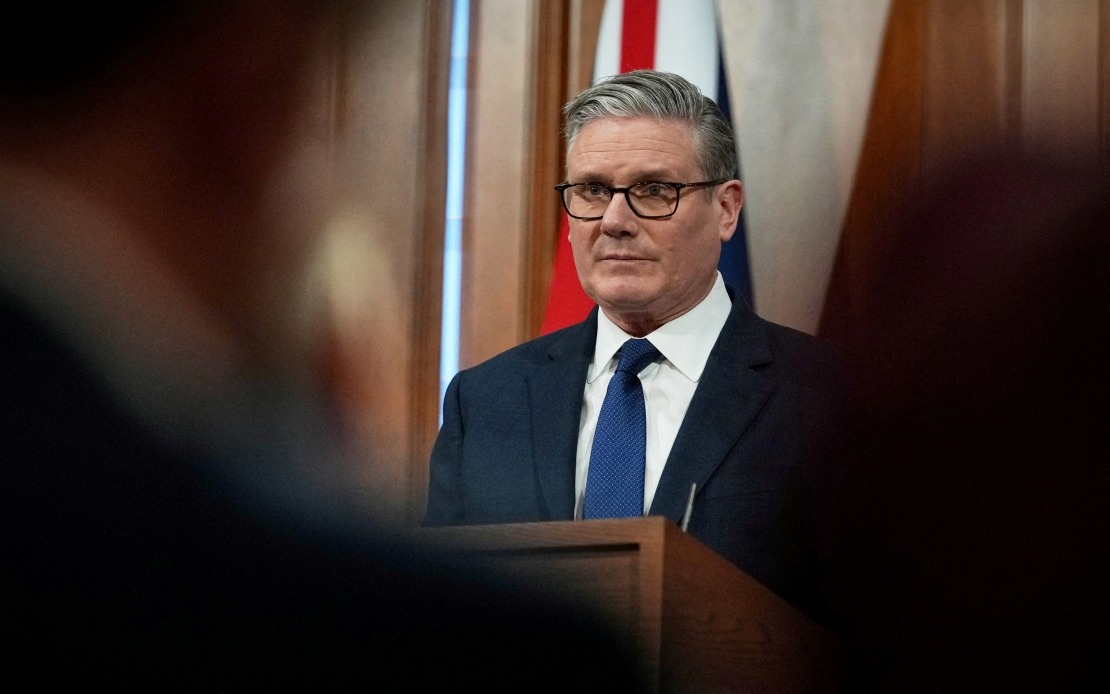
Delivering a blunt verdict on British political leadership, US President Donald Trump declared on Sunday that Prime Minister Keir Starmer will step down from his position, attributing his exit to significant policy missteps on immigration and energy. The statement, posted on Trump's Truth Social platform during remarks made in Istanbul, represents an extraordinary intervention by the American leader into the internal affairs of a close ally, reflecting the increasingly transactional nature of contemporary international relations.
Trump's specific criticisms centred on two pillars of governance that have proven consistently contentious across Western democracies. The immigration portfolio has remained a lightning rod for political debate in the United Kingdom, much as it has in the United States, Australia, and other nations grappling with demographic change and public anxiety over border control. The energy dimension of Trump's critique pointed explicitly toward untapped North Sea oil reserves, a resource that Britain has historically relied upon but that remains embroiled in discussions about climate commitments and energy independence. By invoking both issues, Trump tapped into populist grievances that have mobilised conservative voters on both sides of the Atlantic.
The American president's pronouncement arrived amid intensifying speculation within Westminster itself about Starmer's political viability. British broadcasting authorities reported that government insiders had begun discussing the possibility of an imminent resignation announcement, with multiple sources indicating that Monday could mark the moment when the Prime Minister sets out a formal timeline for his departure. This synchronicity between Trump's public declaration and private Westminster discussions underscores the precarious position Starmer occupies, besieged simultaneously by international commentary and domestic political pressure.
For Malaysian readers and Southeast Asian observers, this moment illuminates broader anxieties about democratic stability in established Western governments. The United Kingdom has long served as a model of institutional steadiness and constitutional propriety for many Commonwealth nations, including Malaysia. When the political foundations of such venerable democracies show signs of instability—marked by leadership crises, policy reversals, and external pressure—it raises uncomfortable questions about the robustness of democratic systems more generally, particularly as they face migration pressures, energy transitions, and populist movements.
The timing of Trump's intervention deserves scrutiny within the context of transatlantic relations and American domestic politics. Trump's return to prominence has coincided with increasingly unfiltered commentary on allied governments, suggesting a departure from the conventional diplomatic protocols that traditionally govern relations between democratic powers. This directness, whether viewed as refreshing candour or reckless interference depending on perspective, represents a fundamental shift in how American presidents publicly discuss the leadership of partners like Britain.
Starmer's position has deteriorated across multiple dimensions beyond those Trump enumerated. His government has confronted economic headwinds, public sector challenges, and internal Labour party dynamics that have eroded political capital. Immigration policy, despite government attempts to address it through various measures, has continued to generate public anxiety and media scrutiny. Meanwhile, energy policy represents a particularly complex portfolio, as Britain navigates the tension between its climate commitments and the need for reliable, affordable power supplies—a dilemma increasingly familiar to developing economies across Southeast Asia seeking to balance development with environmental responsibility.
The North Sea oil reference carries historical resonance that extends beyond mere resource economics. For decades, North Sea petroleum revenues provided Britain with substantial fiscal benefits and energy independence. Climate commitments and the global energy transition have fundamentally altered the political calculus around fossil fuel development, creating tension between those advocating accelerated renewable transitions and those advocating for pragmatic hydrocarbon utilisation. Trump's invocation of untapped reserves reflects a worldview prioritising energy abundance and economic growth over climate considerations, a perspective that finds champions in various parts of the developing world grappling with their own energy security challenges.
For Southeast Asian governments and analysts, the instability at the heart of British politics carries implications beyond mere diplomatic courtesy. The region's prosperity depends significantly on stable, predictable governance from major trading partners and security providers. When leaders of historically stable democracies face imminent political collapse, it introduces uncertainty into international relations, trade negotiations, and security arrangements. Malaysia's own experience with periodic political turbulence means observers here understand intimately how quickly governmental legitimacy can erode and how rapidly political landscapes can shift.
The broader pattern evident in these events—external pressure, internal weakness, policy contestation, and leadership vulnerability—reflects challenges confronting democratic governments across the developed world. Brexit, pandemic responses, migration management, and energy transitions have collectively strained the political systems that traditionally managed these issues through consensus-building and institutional stability. Starmer inherited a Britain still adjusting to its post-Brexit identity, navigating relationships with the European Union and other partners while attempting to address domestic grievances that contributed to the 2016 referendum result.
Starmer's potential departure would represent a remarkable political reversal for a leader who came to office with considerable expectations. Labour's 2024 election victory seemed to offer a fresh start after years of Conservative governance, yet the intervening months have demonstrated the formidable challenges facing any British government attempting comprehensive policy renewal. Whether Trump's prediction proves prescient or overconfident, it reflects genuine weakness in Starmer's political position and the mounting pressure he faces to either deliver tangible improvements or make way for alternative leadership.
The convergence of Trump's international commentary with internal British political dynamics illustrates how modern political leadership operates within an increasingly interconnected, mediatised environment where statements from global figures immediately influence domestic political narratives. For countries across Asia-Pacific seeking to understand contemporary Western politics and international relations, the Starmer situation offers an instructive case study in how quickly political positions can deteriorate and how external commentary can accelerate internal crises. The coming days will reveal whether Starmer can stabilise his position or whether he becomes another casualty of the turbulent era of twenty-first-century democratic governance.