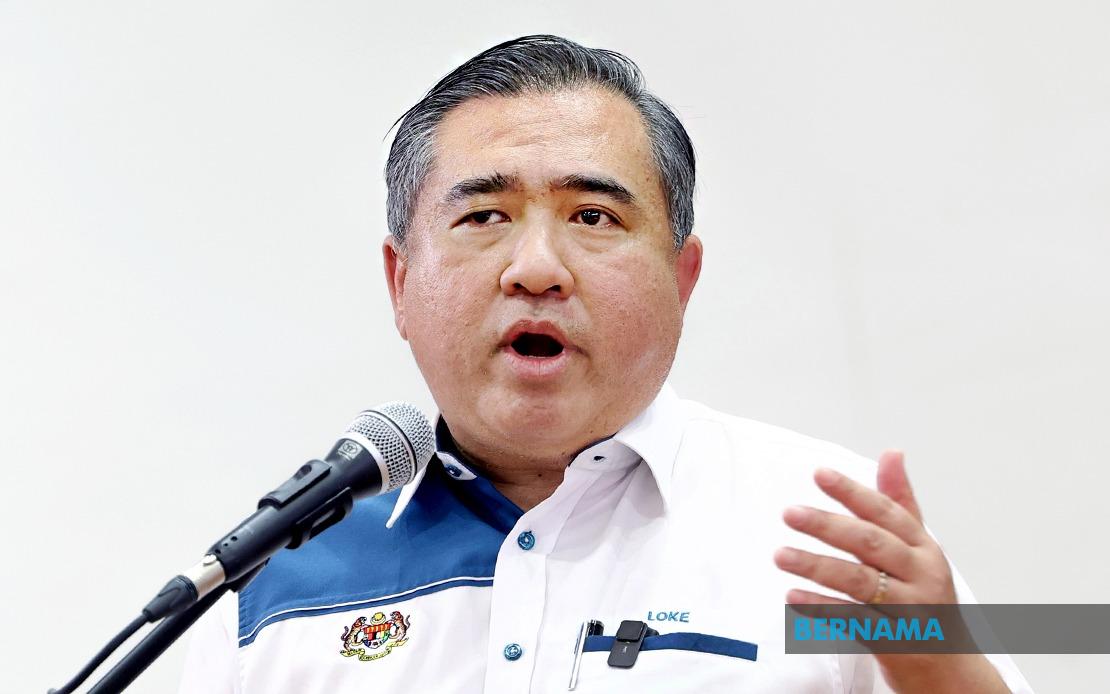
Transport Minister Anthony Loke has defended the deployment of diesel-powered trains on the Southern Shuttle service, characterizing the arrangement as a pragmatic interim solution while the rail operator awaits delivery of modern Electric Multiple Unit (EMU) trains. Speaking on Facebook following public criticism of the service, Loke framed the decision as a choice between meeting immediate transportation needs and forcing passengers to endure another two to three years without rail connectivity in southern Johor.
The ministry has committed substantial financial support to expand rail-based public transport accessibility across the region, pledging annual subsidies ranging from RM11 million to RM15 million. This investment reflects the government's broader strategy to shift commuters away from road-based transport and reduce traffic congestion in one of Malaysia's most economically dynamic corridors. The subsidy framework demonstrates confidence in the project's long-term viability and suggests the ministry views short-term operational compromises as acceptable given the broader public benefit.
Loke's rationale for proceeding with diesel locomotives emphasizes immediacy over technological perfection. Rather than maintaining an extended waiting period until the ten new EMU train sets complete manufacturing and testing cycles, the government elected to leverage existing rolling stock currently available within the national rail fleet. This approach prioritizes service commencement and passenger convenience, allowing residents to experience the benefits of improved rail connectivity without prolonged delay. The minister's position reflects a pragmatic assessment that partial solutions delivered promptly provide greater public value than perfect solutions delivered years hence.
The trajectory toward full electrification remains firmly anchored in the government's development plans. Upon completion of the Gemas-Johor Bahru electrified double-tracking project, diesel trains will be phased out entirely, with Electric Train Service replacing them on the entire route. This transition represents a significant infrastructure modernization effort that will enhance service reliability, reduce operational emissions, and align Malaysian rail standards with contemporary international practices. The electrification project itself constitutes a substantial capital investment, indicating sustained government commitment to transforming southern Johor's transport ecosystem.
The Southern Shuttle service itself represents a notable expansion of rail coverage in the region. The network connects three major population centers—Kulai, JB Sentral, and Pasir Gudang—with journey times proving competitive against road-based alternatives. The Kulai-JB Sentral segment operates at approximately 40 minutes, while the Kempas Baru-Pasir Gudang route requires forty to forty-five minutes. These speed benchmarks position rail as a credible alternative for time-conscious commuters, particularly those operating within predictable schedules where journey reliability matters significantly.
A particularly noteworthy development involves repurposing rail infrastructure previously dedicated exclusively to freight operations. The Kempas Baru-Pasir Gudang corridor has been reconfigured to accommodate passenger services, representing efficient utilization of existing transport assets. This dual-use strategy maximizes infrastructure value while requiring minimal additional capital expenditure, an important consideration given competing budgetary pressures across Malaysia's transport modernization agenda.
Public criticism regarding fare structures has gained traction, with observers noting that Southern Shuttle fares substantially exceed comparable rates in Kuala Lumpur and Seremban. The pricing differential—characterized as three times higher than competing regional services—raises questions about affordability and accessibility, particularly for lower-income residents who might otherwise benefit from improved transport options. While Loke did not directly address fare criticism in his statement, the government's substantial subsidy allocation suggests officials recognize pricing sensitivity and are attempting to manage costs through direct financial support rather than reduced fares that might undermine service sustainability.
The temporary diesel operation timeline presents a crucial test case for Malaysian rail modernization strategy. Stakeholder acceptance of interim measures that fall short of contemporary transport standards will significantly influence public confidence in government infrastructure projects. Should the service deliver reliable, convenient transport despite aging rolling stock, it may strengthen political will for additional rail investments. Conversely, operational difficulties or passenger dissatisfaction could undermine broader rail development initiatives and reinforce public preference for road-based transport.
For Johor residents, the Southern Shuttle represents a meaningful shift in transportation options, particularly for workers commuting between Kulai's industrial zones, central Johor Bahru, and Pasir Gudang's manufacturing facilities. The service addresses genuine connectivity gaps that have historically constrained labor mobility and business flexibility within the southern corridor. By reducing commute times and providing weather-protected travel alternatives, the service offers tangible quality-of-life improvements even while operating interim-generation equipment.
The broader regional context reinforces the service's significance. Johor hosts substantial manufacturing and logistics operations serving both domestic and export markets, making transport efficiency a critical competitive factor. Improved rail connectivity supports continued economic development while potentially reducing infrastructure strain on increasingly congested road networks. The government's willingness to subsidize operations at current rates reflects recognition that transport investment generates returns through enhanced economic productivity and reduced congestion costs, even if direct fare revenues remain modest.
Looking forward, the delivery timeline for new EMU trains will prove crucial to maintaining public support for the project. Any extended delays in the procurement or manufacturing process risk transforming a temporary expedient into a permanent shortcoming, potentially undermining confidence in stated transition dates. Transparent communication regarding EMU delivery schedules and realistic assessment of potential complications would serve government credibility better than optimistic projections that subsequently require revision.
The Southern Shuttle ultimately illustrates the complex tradeoffs characterizing modern infrastructure planning in Malaysia. Officials must balance competing pressures between technological aspiration and practical delivery, capital constraints and service expansion, and long-term vision with immediate community needs. Loke's defense of diesel operations suggests the ministry has consciously prioritized service availability over equipment elegance—a choice that reflects mature infrastructure management philosophy but requires robust execution to justify public patience through the interim period.