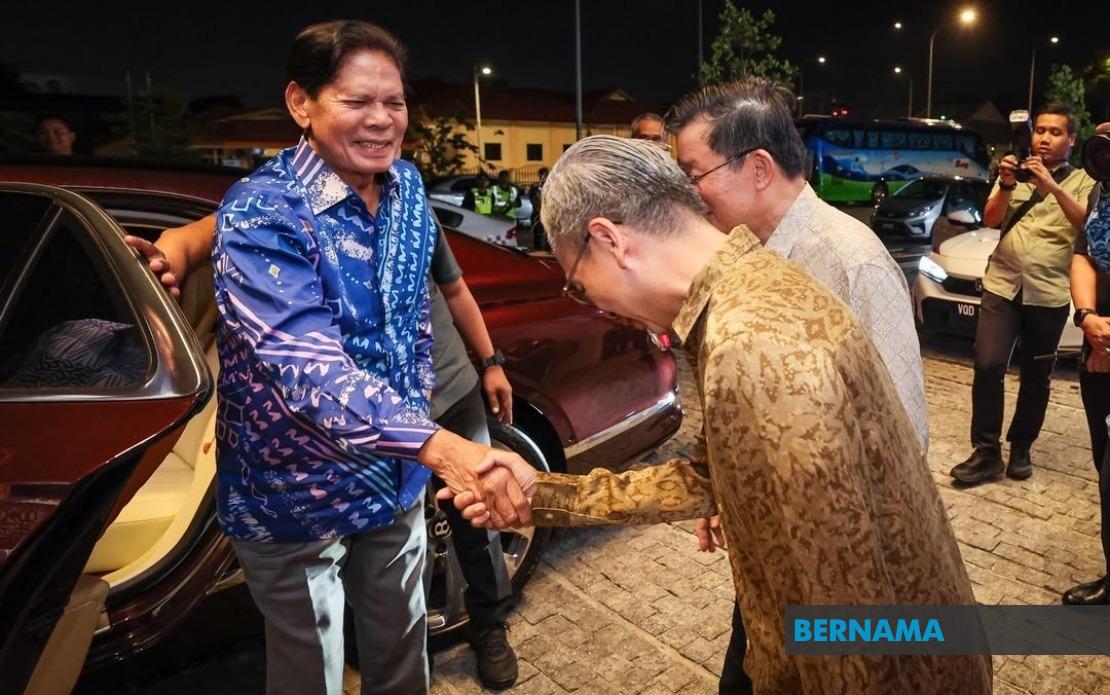
Penang Governor Tun Ramli Ngah Talib brought together journalists, editors and media leaders from across Malaysia and the wider ASEAN region at a formal dinner on June 19, organised in honour of National Journalists' Day and the HAWANA 2026 celebrations. The event, held in Butterworth, underscored the state government's recognition of the media's indispensable contribution to the nation's progress and democratic discourse. With an estimated 350 attendees gathering in a festive setting, the occasion served as a prelude to the main HAWANA 2026 conference, scheduled to commence the following day with a keynote address from Prime Minister Datuk Seri Anwar Ibrahim.
The dinner drew a notably senior roster of participants that reflected the breadth and significance of Malaysia's media landscape. Penang Chief Minister Chow Kon Yeow and Communications Minister Datuk Fahmi Fadzil were among the prominent government figures present, signalling official endorsement of the event's messaging about journalistic independence and professionalism. The gathering also welcomed international representation from ASEAN counterparts, including Timor-Leste's Secretary of State for Social Communication Expedito Loro Dias Ximenes, demonstrating the cross-border collaboration and shared concerns about media standards that increasingly characterise the region's media discourse.
Leadership from Malaysia's major news organisations formed the backbone of the guest list, with chief editors and senior executives from Bernama, the New Straits Times Group, Sin Chew Daily, The Star, Daily Express Sabah, and Astro Awani all represented. This concentration of editorial authority highlighted the collective endorsement of HAWANA 2026's central theme: 'Media Integrity Strengthens Credibility'. In an era when journalism globally faces declining trust and pressure from misinformation, the assembly of the country's most influential newsrooms at a state-sponsored dinner conveyed a unified message about the importance of ethical reporting standards.
The international dimension of the dinner expanded beyond ceremonial acknowledgement to include substantive participation from regional news agencies and journalist associations. The presence of TATOLI Agencia Noticiosa de Timor-Leste's President Noemio Mateus Soares Falcao, the Indonesian chapter of ISWAMI, and ANTARA's Butterworth-based bureau chief illustrated growing regularised engagement between Malaysian and Southeast Asian media institutions. This regional networking at official level reflects the increasing recognition that media challenges—ranging from digital disruption to the spread of false narratives—transcend national borders and demand coordinated responses across ASEAN member states.
The full-scale HAWANA 2026 conference mobilising approximately 1,000 journalists from Malaysia and several ASEAN nations represented an exceptional gathering of the region's journalistic community. To be formally inaugurated by Prime Minister Anwar Ibrahim at the PICCA Convention Centre @ Butterworth Arena, the conference embodied Malaysia's positioning as a convenor of regional media dialogue. The scale of participation suggested that HAWANA has evolved from a domestic observance into a meaningful platform for transnational discussion of journalism standards, regulatory frameworks, and technological adaptation within the Southeast Asian context.
The 'Media Integrity Strengthens Credibility' theme directly addressed contemporary anxieties about journalism's legitimacy. In Malaysia, as across the region, concerns about sensationalism, political bias, fact-checking reliability, and the blurred boundaries between news and commentary have prompted soul-searching within the profession. By elevating integrity as the conference's organising principle, the Communications Ministry and Bernama signalled their intent to foster substantive discussion about ethical journalism practices and industry self-regulation. This thematic choice implicitly acknowledged that mere press freedom is insufficient; the public requires journalism that is demonstrably honest, transparent in methodology, and accountable to professional standards.
The accompanying RIUH Pi HAWANA Carnival, commencing the same evening with projected attendance of 30,000 visitors, extended the celebration beyond professional circles into the general public domain. By programming 24 local creative product brands, 20 food and beverage vendors, interactive workshops, and 16 stage performances by Malaysian artists, the carnival transformed media appreciation from an elite professional concern into a popular cultural celebration. This approach reflected an implicit recognition that rebuilding public trust in journalism requires not merely industry self-improvement but also broader community engagement and celebration of Malaysian creative expression.
The presence of established Malaysian music and performance acts—including Bunkface, Masdo, Sakura Band, and Chelsea Ng—at a media industry event signalled an interesting convergence of journalism and entertainment sectors. Such programming choices suggested that media practitioners themselves are attuned to the need for public connection beyond traditional news consumption. In a media environment increasingly characterised by fragmentation, algorithmic distribution, and audience polarisation, the deliberate creation of shared communal spaces where journalists, artists, vendors, and ordinary citizens converge held symbolic and practical significance.
For Malaysian readers and the broader Southeast Asian audience, HAWANA 2026 represented a pivotal moment in regional media development. The conference's formal structure, government endorsement, and regional participation indicated that media quality and journalistic standards have graduated from peripheral professional concerns to central policy priorities within ASEAN nations. The deliberate internationalisation of the event, with participation from Timor-Leste, Indonesia, and other neighbouring countries, suggested emerging recognition that media cooperation and shared professional standards enhance regional stability and public discourse quality.
The event also contained implicit acknowledgement of journalism's challenging operational context across Southeast Asia. Economic pressures on legacy news organisations, competition from digital-native outlets, political sensitivities in various national contexts, and audience fragmentation all create substantial pressures on journalistic practice. By convening this massive gathering under the explicit banner of media integrity, organisers created space for frank discussion of these systemic challenges whilst affirming the profession's fundamental importance to democratic and social functioning.
Looking forward, the HAWANA 2026 conference outcomes—likely to include discussions on fact-checking methodologies, standards for digital journalism, professional development pathways, and cross-border collaboration frameworks—would establish reference points for media practice throughout Southeast Asia. Malaysia's role in hosting and facilitating such dialogue enhanced its standing as a regional media hub and reinforced the Communications Ministry's commitment to elevating journalism quality beyond competitive market forces alone.
The dinner itself, whilst ceremonial in character, functioned as crucial symbolic groundwork for the substantive work to follow. By honouring journalists publicly through government-sponsored celebration, Malaysian authorities signalled that the press, despite inevitable tensions between media scrutiny and government interests, remains valued as a democratic institution worthy of formal recognition and support. For a region where press freedom indices reveal significant variation in journalists' operating conditions, such official acknowledgement carried weight beyond the immediate occasion.