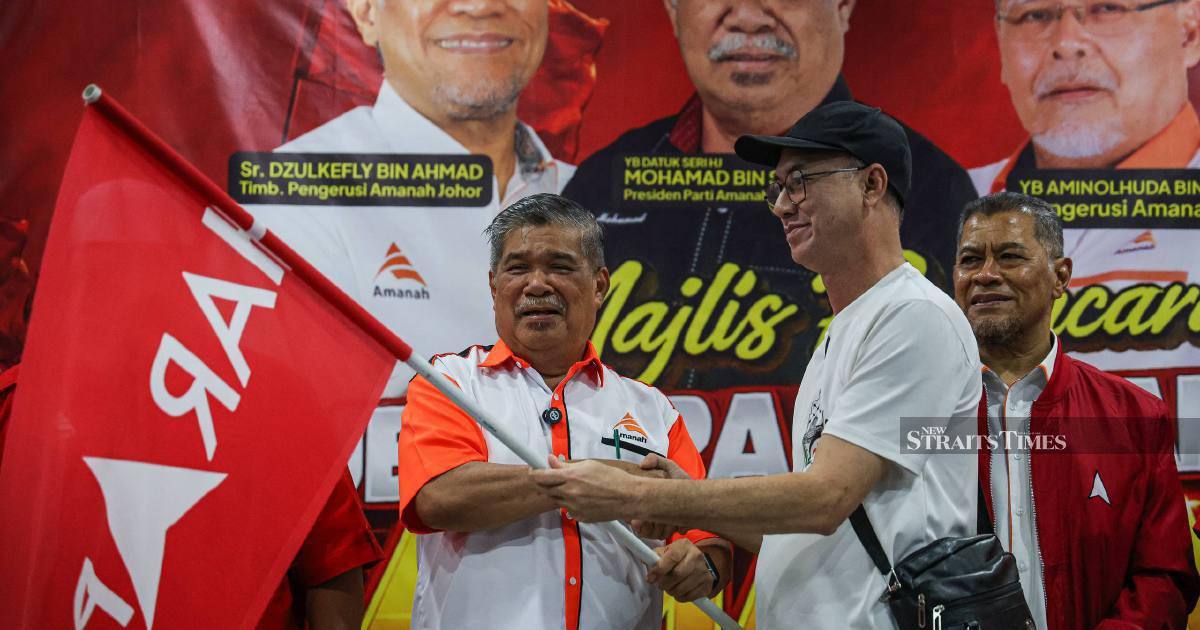
Amanah is placing significant emphasis on youth and fresh political talent in its campaign strategy for the Johor state election scheduled for July 11, with thirteen newcomers making up the bulk of its nineteen-candidate slate. The composition reflects a conscious effort by the party to inject new blood into its organisational structure while maintaining institutional continuity through six returning representatives. This move represents a broader recalibration of Amanah's electoral approach in Johor, one of Malaysia's more politically volatile states where control of the legislative assembly carries substantial weight within the broader federal political landscape.
The decision to field such a high proportion of first-time contestants underscores Amanah's assessment that fresh faces and voices may resonate more effectively with Johor voters seeking alternatives to the traditional political establishment. In recent years, Malaysian voters have shown receptiveness to new political actors, particularly in state-level contests where local issues and personalities often matter more than national party machinery. Amanah's strategy appears calibrated to capitalise on this sentiment while simultaneously managing the challenge of replacing or sidelining sitting representatives who may have lost credibility or electoral appeal.
For Amanah, a component party within the broader Pakatan Harapan coalition, the Johor contest carries implications that extend well beyond the state's boundaries. Johor's political complexion influences not only regional dynamics but also serves as a bellwether for opposition strength in predominantly Malay-Muslim constituencies. The party's ability to mount a competitive campaign through a largely new roster of candidates will be closely monitored by both coalition partners and political observers seeking to gauge whether such generational transitions can translate into actual vote share increases.
The six incumbent candidates retained by Amanah presumably represent performers who have either maintained strong grassroots support or occupy strategically important constituencies where experience and entrenchment provide electoral advantages. This selective retention strategy suggests the party has conducted internal assessments of individual candidate viability, likely through opinion polling and consultation with ground operatives. Such targeted decisions typically involve difficult conversations within party structures, as sitting representatives rarely relinquish their positions willingly.
Johor's political environment has been characterised by intense competition between Barisan Nasional, Perikatan Nasional, and Pakatan Harapan, with shifting allegiances and coalition reconfigurations occurring frequently at both state and federal levels. The introduction of thirteen new candidates into this competitive landscape presents both opportunities and risks for Amanah. Unknown quantities can surprise established rivals with unconventional campaign tactics or unexpected appeal to certain voter demographics, but they equally lack the organisational networks and name recognition that electoral success often requires.
For Malaysian voters particularly in Johor, Amanah's candidate selection carries implications for representation quality and legislative effectiveness. New legislators typically require lengthy orientation periods before functioning effectively within state assemblies, potentially weakening their early contributions to policy deliberation and constituent service. However, fresh perspectives can also challenge entrenched practices and bring energy to governance, particularly on issues that younger generations prioritise such as climate policy, digital economy adaptation, and affordable housing.
The timing of Amanah's announcement, coming well ahead of the July 11 polling date, provides adequate period for campaign preparation and voter familiarisation with candidate profiles. This lead time allows media organisations and political monitoring groups to research and report on the newcomers, potentially addressing voter concerns about unknown candidates. It also permits Amanah's internal machinery to conduct training programmes ensuring new candidates understand party ideology, policy positions, and grassroots mobilisation techniques.
Within the context of Malaysian politics more broadly, Amanah's generational refresh reflects broader trends across opposition and government parties alike. Demographic shifts, changing voter expectations, and the need to project progressive images have compelled many parties to evaluate their bench strength. Amanah's decision to commit nearly 70 percent of its Johor slate to newcomers suggests leadership confidence in available talent pools and willingness to accept higher risk profiles in pursuit of larger electoral gains.
The strategic calculation underlying this candidate selection also depends partly on Johor's demographic composition and economic conditions. Constituencies with younger populations or areas experiencing economic anxiety might respond particularly well to messages delivered by new candidates unencumbered by long associations with previous policy failures or controversial decisions. Conversely, older urban constituencies with stable populations might prefer experienced representatives who understand local governance complexities.
Amanah's performance in the July 11 election will provide important evidence regarding whether substantial candidate renewal can effectively compensate for structural disadvantages that opposition parties face in Johor's electoral system and political culture. The party enters this contest knowing that both coalition partners and internal critics will closely analyse whether fielding thirteen new faces represents bold renewal or reckless improvisation. Success would validate the renewal strategy and potentially encourage similar approaches elsewhere; failure would prompt difficult questions about party judgment and strategic competence.