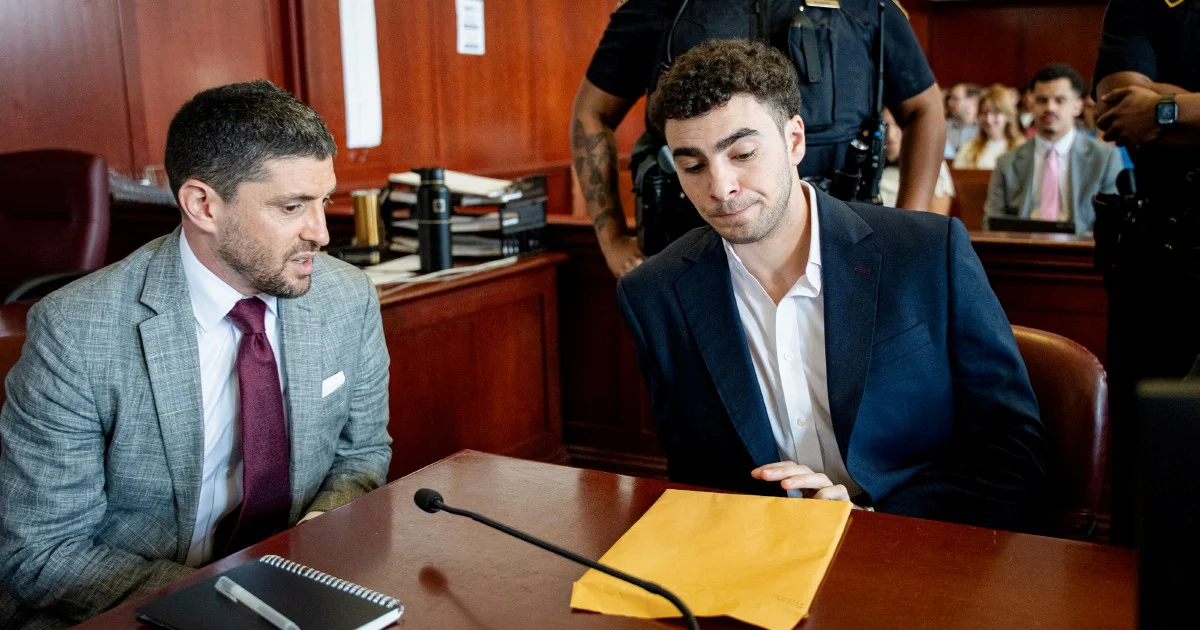
Luigi Mangione, accused of fatally shooting health insurance executive Brian Thompson on a Manhattan street, has unexpectedly withdrawn his plans to mount a mental health defence based on evidence he was experiencing a severe psychological crisis when the alleged shooting occurred. The sudden tactical shift, revealed through a court filing submitted on Friday, signals a significant recalibration of his legal strategy as the case moves toward trial.
The decision to abandon the mental health component of his defence is particularly notable given that mental state evidence could have formed a cornerstone of Mangione's case in attempting to establish diminished capacity or other psychological factors relevant to the charges. By formally notifying the court of this withdrawal, his legal team has signalled confidence in pursuing alternative defence theories or has determined that introducing such evidence could prove detrimental to his overall case.
Mental health defences in high-profile criminal cases frequently attract intense public scrutiny and media coverage. In withdrawing this line of argument, Mangione's defence team may be seeking to shift focus toward other aspects of the evidence or to avoid portraying their client through a lens of psychological vulnerability that might not align with their broader trial narrative. The timing of this decision, before substantial evidence is presented at trial, suggests careful strategic calculation by his legal counsel.
The case itself has captivated public attention across the United States and internationally. Thompson's death on a Manhattan street during the incident has become emblematic of broader tensions surrounding corporate accountability and public anger over healthcare industry practices. The circumstances surrounding the alleged killing have sparked widespread debate about insurance practices and their societal consequences, making this prosecution far more than a routine criminal matter.
Mangione's legal team will now need to develop alternative defence strategies that address the prosecution's evidence without relying on testimony or expert opinions regarding his mental state at the time of the alleged offence. This approach requires confidence in other defensive theories or a belief that the prosecution's case contains vulnerabilities that can be exploited through conventional cross-examination and evidence challenges.
The withdrawal of the mental health defence also impacts how evidence may be presented at trial. Without this component, testimony that might otherwise be admissible through psychiatric or psychological experts may become inadmissible or require entirely different framing. Defence counsel must carefully structure remaining evidence to maintain consistency and credibility without the psychological framework they previously intended to employ.
For Malaysian observers, this case illustrates the complex dynamics of criminal defence strategy in high-profile American prosecutions, where public opinion and media narrative significantly influence legal proceedings. The healthcare industry tensions underlying this case also resonate regionally, as Malaysia's own healthcare system and insurance practices have been subject to ongoing public debate and regulatory scrutiny, particularly concerning corporate accountability and consumer protection.
The court filing itself represents a formal acknowledgement of the defence team's strategic reassessment. Such withdrawals are not unusual in criminal litigation, particularly when new information emerges, trial preparation reveals evidentiary weaknesses, or when counsel determines that a previously planned defence avenue is no longer strategically sound. The Friday filing suggests Mangione's legal representation has completed a thorough evaluation of their position and concluded that this particular defence element should not be pursued.
This development raises questions about what alternative defensive positions Mangione's team will now emphasise. Possible strategies might include challenging witness testimony, questioning forensic evidence, or attacking the prosecution's circumstantial evidence linking Mangione to the alleged crime. Each approach carries different implications for trial outcomes and sentencing considerations.
The broader context of American criminal justice reveals that withdrawing defensive positions is part of normal litigation procedure, though the public nature of this case means such developments receive considerable media attention. Mangione's team appears willing to take strategic risks by abandoning what could have been a sympathetic narrative in favour of other approaches they presumably believe are more effective.
As the case progresses toward trial, other tactical decisions will likely follow. The defence team's willingness to modify their approach suggests active reassessment of evidence and strategy as discovery proceeds. For legal observers and those interested in how American courts handle politically charged criminal cases, Mangione's prosecution will likely continue generating significant interest regarding how judges balance public sentiment against legal procedure and the rights of the accused.
The implications of this strategic shift will become clearer as trial proceedings commence. Whether abandoning the mental health defence proves tactically sound or problematic will ultimately depend on how effectively Mangione's legal team executes their remaining defensive strategies and whether alternative approaches successfully challenge the prosecution's case.