The Paris Vivatech festival is serving as a launchpad for a diverse portfolio of breakthrough innovations that promise to disrupt established industries from healthcare to aviation and cybersecurity. Spread across three floors of displays and exhibition stands, the showcase reveals how startups are tackling real-world problems with cutting-edge technology—solutions that could have far-reaching implications for Malaysian and regional markets where adoption of medical devices, logistics infrastructure and digital security remain growth frontiers.
Berlin-based Blueprint Biomed is addressing one of medicine's persistent challenges: the complications that arise when surgeons transplant patients' own bone tissue to support healing. Currently, millions of procedures each year rely on autologous bone grafts—tissue harvested from the patient's own skeleton. This approach carries inherent risks. Grafts sometimes fail entirely, necessitating additional surgery. Other times they trigger unexpected complications that compromise recovery. Aaron Herrera, the company's chief executive, explains that Blueprint's artificial alternative eliminates these uncertainties altogether. Rather than requiring extraction of living bone from the patient, surgeons will eventually be able to implant custom-built synthetic structures tailored precisely to each patient's anatomical needs.
The engineering behind Blueprint's solution reveals sophisticated biomaterial design. The company constructs its bone replacement scaffolds using three-dimensional printing technology, where polycaprolactone—a biodegradable polyester—forms the underlying framework. Atop this scaffold sits a collagen structure that mimics the composition of natural bone. The brilliance of this approach lies in its temporary nature. The collagen component dissolves harmlessly within three months of implantation, while the polyester scaffold breaks down over approximately two years. By the time the synthetic material has vanished, the patient's own biological systems have regenerated genuine bone tissue within the scaffold's architecture, resulting in permanent healing without foreign objects remaining inside the body.
With operations scaling toward human clinical trials, Blueprint is pursuing US$2.5 million in fresh funding. The company targets implanting its first products into human patients by 2028, a timeline that positions the technology within reach for adoption across Southeast Asian healthcare systems within the next four years. For Malaysia's medical device sector and hospital procurement officials, this represents an opportunity to evaluate solutions that could reduce surgical complication rates and improve outcomes for orthopaedic patients.
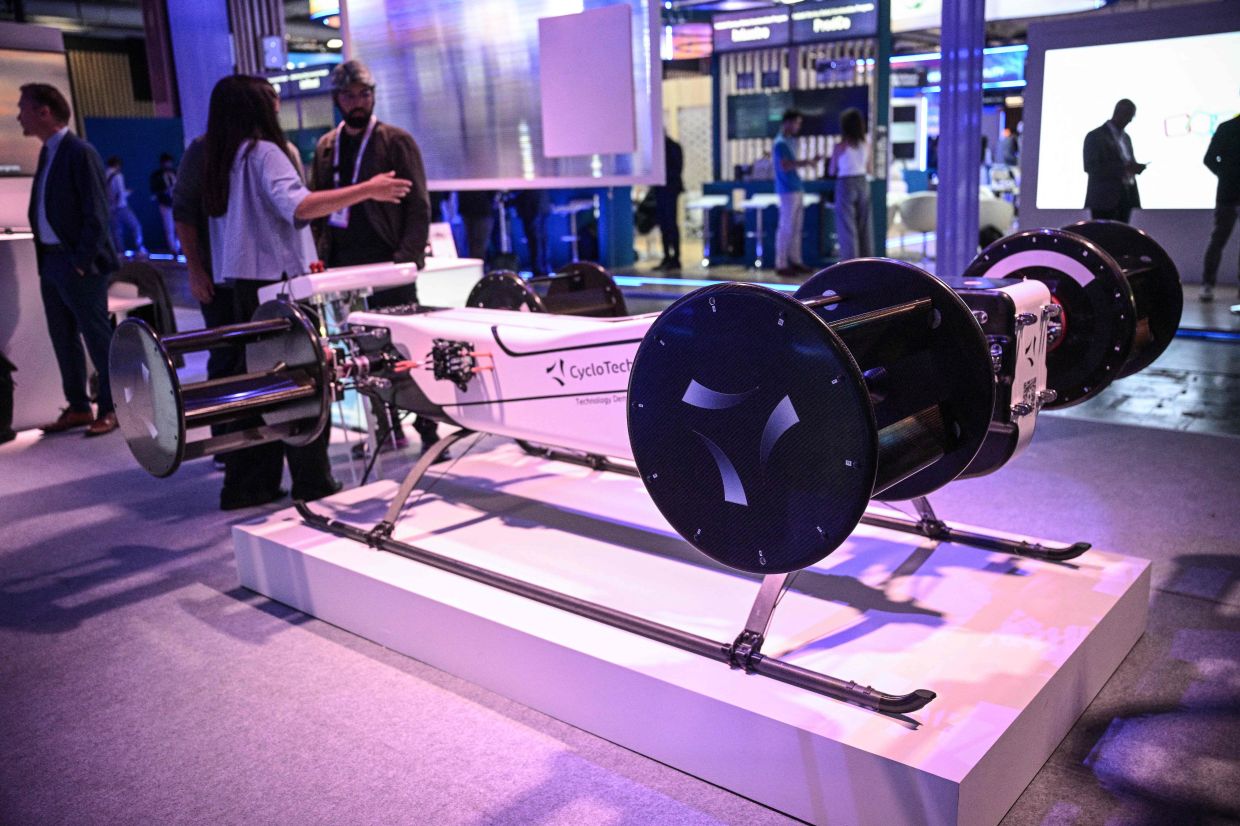
Moving from healthcare to aerial mobility, Austrian startup CycloTech is reinventing drone motor design with implications for urban logistics and emergency response. Quadcopter drones have already proven their worth in coordinated light shows and, more grimly, in military operations across Ukraine. Yet CycloTech argues that existing drone architecture imposes performance constraints. The company's innovation centres on a radically different motor design—shaped like an open cylinder with walls composed of several wing-shaped blades rather than traditional spinning propellers. This unconventional geometry generates fundamentally different flight capabilities. Marketing chief Andrea Marchsteiner outlines the transformative possibilities: the drone can maintain a hover position like a conventional helicopter, accelerate forward with aircraft-like efficiency, execute mid-air braking manoeuvres, and even reverse direction. Such manoeuvrability opens applications currently impractical with existing technology, from last-mile package delivery in dense urban neighbourhoods to aerial passenger transport and military reconnaissance.
The company, which employs 65 engineers and developers, has already secured €40 million in venture funding. CycloTech now seeks additional capital and strategic partnerships with existing drone manufacturers willing to integrate its motors into their platforms. For Southeast Asian logistics companies and e-commerce platforms wrestling with delivery bottlenecks in congested cities like Bangkok, Jakarta and Manila, this technology represents a potential game-changer in solving the final-kilometre problem that has resisted conventional solutions.
While drones expand possibilities in the physical realm, French cybersecurity firm Whispeak confronts an invisible but accelerating threat in the digital domain. The company originally developed voice-recognition technology to authenticate banking customers calling financial institutions. But the rapid advancement of generative artificial intelligence has transformed the threat landscape. Audio deepfakes—synthetic voice recordings that convincingly impersonate real people—can now be generated with less than ten seconds of sample audio, often using free or inexpensive software. This capability has spawned a new category of fraud targeting vulnerable populations through spoofed calls from purported family members or authority figures requesting money or sensitive information.
Florent Van Calster, Whispeak's chief executive, describes a three-year research effort that culminated in what the company claims is the world's most effective audio deepfake detector. The system leverages sophisticated machine learning models to identify telltale synthetic characteristics in voice recordings. Van Calster reports that the detection accuracy averages below one percent false positives during testing, a rate that would satisfy demanding security standards. However, he acknowledges an uncomfortable reality: the competition between deepfake creators and detectors resembles an endless game of technological cat-and-mouse. As fraudsters' tools improve, detection systems must continuously evolve to identify new synthesis artifacts. Whispeak has already begun collaborating with France's Bouygues telecom operator to screen calls for deepfake characteristics and alert users to suspicious audio. For Malaysian telecommunications regulators and financial institutions grappling with voice fraud losses, such technology could form a critical defensive layer as artificial intelligence tools proliferate.
Across the exhibition, Hong Kong-based PointFit approaches athlete performance monitoring through an entirely different technological pathway. Professional athletes have traditionally relied on blood tests and heart-rate monitors to assess their physical condition during training and competition. These methods work, yet they remain incomplete. Kenny Oktavius, PointFit's founder, has been developing his alternative approach since 2019, when he was still a university student. His solution takes the form of a simple adhesive patch equipped with a miniaturized sensor that reads biomarker levels—glucose, cortisol and similar compounds—directly from the wearer's sweat rather than requiring invasive blood draws.
The system's sophistication emerges from artificial intelligence that constructs a personalized performance baseline for each user. Rather than comparing every athlete against identical benchmark values, PointFit's algorithms adjust expected results based on individual demographic factors and ambient environmental conditions including temperature. This customization addresses a fundamental limitation of conventional monitoring: two athletes showing identical heart rates may be in drastically different physiological states. Oktavius illustrates the point with marathon runners sponsored by major athletic brands who nonetheless sometimes collapse during races despite wearing expensive monitoring equipment. Heart rate tells only part of the physiological story; biomarker analysis reveals the complete picture that hospitals depend upon when diagnosing medical emergencies. The startup has already partnered with Red Bull's Athlete Performance Centre and Puma's Nitro Labs division. Oktavius signals ambitions to penetrate the consumer market through retail partnerships with companies like Decathlon and EssilorLuxottica, potentially bringing professional-grade performance monitoring within reach of recreational athletes across Southeast Asia.
These four innovations illustrate how startup ecosystems are converging on solutions addressing genuine inefficiencies and risks across multiple sectors. Healthcare systems in Malaysia and throughout the region continue seeking improvements in surgical outcomes and cost reduction. Logistics networks struggle with urban delivery challenges that conventional infrastructure cannot solve. Financial and communications networks face escalating fraud threats from synthetic media. And athletes at all levels pursue better understanding of their physiological states to optimize training and prevent injuries. The Paris Vivatech festival demonstrates that solutions to these problems are no longer theoretical but approaching practical reality.