The Penang Chinese Town Hall (PCTH) has concluded its 2025 financial year in modest surplus, bringing in total income of RM12.61 million against expenditure of RM12.55 million, leaving a gain of RM59,191. The organisation's annual report reveals a financial structure heavily dependent on philanthropic contributions, reflecting its deep roots in community fundraising and charitable work across the northern peninsula. This lean surplus, while positive, underscores the careful stewardship required to maintain such an institution in an increasingly competitive charitable landscape.
Philanthropic donations constitute the lifeblood of PCTH's operations, representing RM11.24 million of the organisation's income portfolio. Supplementing this primary revenue stream are rental and maintenance fees worth RM439,671, auditorium rental income of RM361,245, and anniversary-related receipts totalling RM222,498. The diversity of these revenue sources demonstrates PCTH's evolution beyond traditional fundraising into a multifaceted community and events hub. The reliance on donations, however, also signals vulnerability to economic downturns and shifting philanthropic priorities, a reality many heritage institutions across Southeast Asia confront as traditional donor bases age and younger generations reshape their charitable engagement patterns.
On the expenditure side, the organisation's spending patterns mirror its income structure, with donations and charitable disbursements dominating outflows at RM11.12 million, representing approximately 88.6 percent of total spending. This figure marks a significant decline from the RM12.35 million distributed in 2024, suggesting either more targeted charitable allocation or possibly reduced donation requests during the year. Conversely, personnel costs have climbed, with salaries and allowances rising to RM502,625 from RM452,761 in the previous year—a jump of roughly 11 percent that reflects either expanded staffing or enhanced compensation as the organisation invests in institutional capacity.
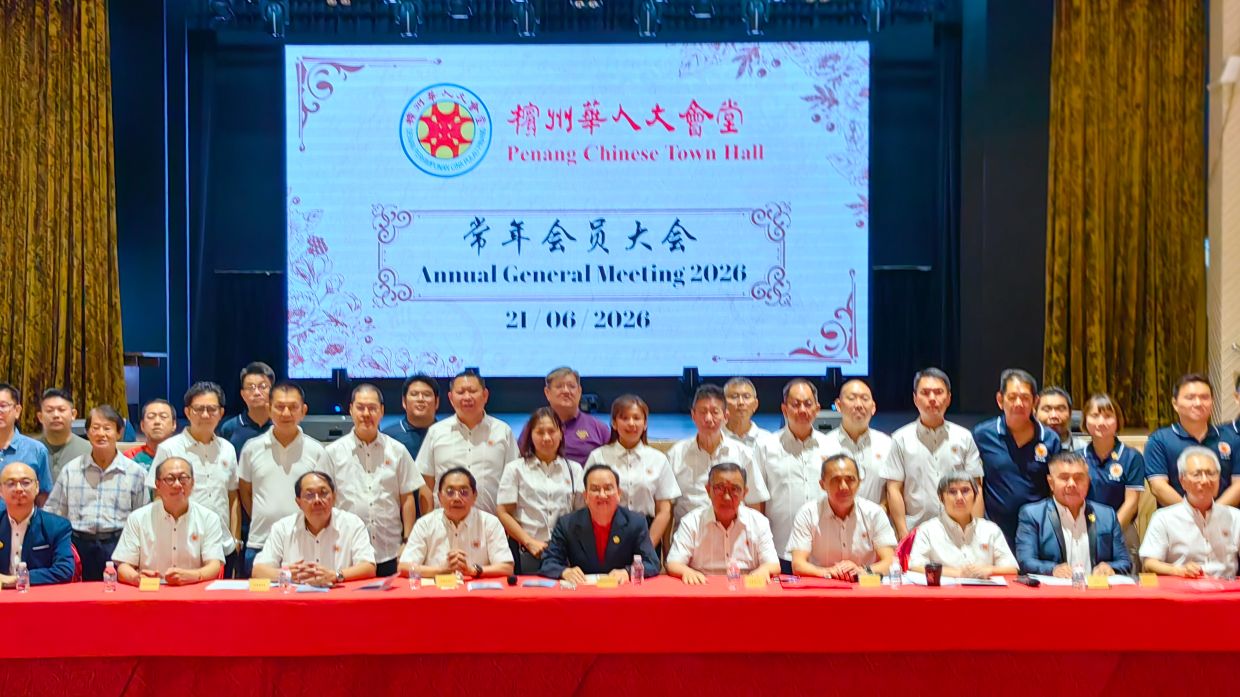
During its annual general meeting held on June 21, attended by approximately 200 members, PCTH leadership used the occasion to articulate broader civic concerns extending beyond financial stewardship. Chairman Tan Sri Prof Tan Khoon Hai addressed the assembled membership with pointed remarks about electoral participation, framing voting not merely as a procedural obligation but as a fundamental expression of national engagement. With Johor and Negri Sembilan scheduled to conduct state elections during the year, his comments carried immediate relevance for members in those jurisdictions.
Tan's exhortation encouraged voters to approach electoral choices with rationality and forethought, weighing candidates and party platforms against concrete performance records and stated manifestos. He emphasised that the selection of elected representatives carries implications far beyond parochial local concerns, instead shaping the nation's trajectory across multiple dimensions. His framing connected individual voting decisions to national outcomes in unity, economic vitality, and social equilibrium—a perspective increasingly prominent among civil society leaders across Malaysia as they seek to elevate public discourse around elections beyond transactional or communal lines.
Among the organisation's capital initiatives, PCTH has completed an extensive renovation and modernisation of its Ping Zhang Hall, transforming it into a contemporary multipurpose venue. The upgraded facility now offers spacious, comfortable environments equipped with professional-grade sound systems, sophisticated lighting infrastructure, and state-of-the-art LED technology. These enhancements position the hall as an attractive option for diverse gatherings, from corporate dinners and association celebrations to anniversary events, charity functions, and miscellaneous community assemblies. Such facility improvements are critical for heritage institutions seeking to remain financially sustainable while preserving cultural relevance in an era when venue selection increasingly depends on technical capabilities and contemporary aesthetic standards.
Looking ahead regionally, PCTH has signalled ambitions to position Penang as a nexus for artificial intelligence cooperation across Asia. The organisation will jointly organise the 2026 China-Asean Artificial Intelligence Cooperation Forum, scheduled for November in Penang, in partnership with business and technology entities from China and Asean member states. This initiative reflects PCTH's recognition that community institutions can catalyse economic development and technological advancement by convening relevant stakeholders and facilitating knowledge exchange.
Penang's historical identity as the Silicon Valley of the East, combined with its established prominence as Malaysia's electrical and electronics manufacturing hub, provides a credible foundation for such technological ambition. The forum aims to assemble leading experts, business executives, and industry specialists from across the region to examine cutting-edge artificial intelligence technologies, real-world industrial applications, and mechanisms for cross-border collaboration. By positioning itself at the centre of such discussion, PCTH is leveraging its institutional credibility and convening power to influence regional narratives around technological development and cooperation.
The forum initiative carries particular significance for Malaysia and Southeast Asia, as the region competes for positioning within global artificial intelligence development hierarchies. The emphasis on China-Asean collaboration reflects both the technological sophistication of Chinese AI advancement and the region's desire to access such expertise while building indigenous capability. For Penang specifically, hosting such a forum reinforces its aspirations as a regional innovation centre and potentially attracts talent, investment, and partnerships related to artificial intelligence ventures. Tan encouraged PCTH members with relevant expertise to participate actively, transforming the forum into a vehicle for institutional networking while strengthening Penang's role within broader Asian technological cooperation frameworks.