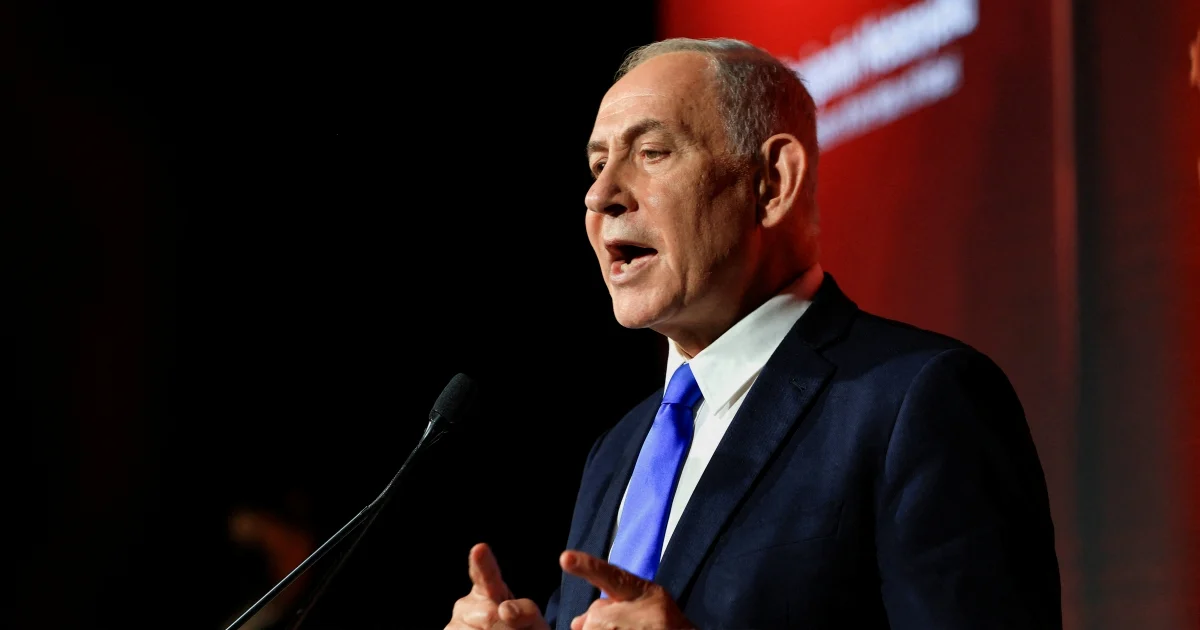
Israeli Prime Minister Benjamin Netanyahu reasserted on Sunday that his country's military presence in southern Lebanon would persist indefinitely, contingent on security conditions and strategic requirements. The statement underscores the evolving military calculus in the region and signals that Israel views its positioning in Lebanese territory as a cornerstone of its broader Middle Eastern defence architecture rather than a temporary operational measure.
Netanyahu's remarks come at a pivotal moment in Israeli-Lebanese relations, marked by escalating tensions and cross-border military operations. The announcement that troops will remain "as long as necessary"—language that deliberately avoids specifying an exit timeline—reflects Israel's determination to maintain strategic leverage in the region. This indefinite commitment contrasts sharply with ceasefire agreements that typically envision defined withdrawal timelines, suggesting either fundamentally different negotiation parameters or a significant hardening of Israel's position regarding its southern neighbour.
The declaration carries substantial implications for stability across the Levant. Lebanon, already grappling with severe economic collapse, currency devaluation, and a fragile governing structure, faces the prospect of prolonged Israeli military presence within its borders. This situation complicates Lebanon's already byzantine political landscape, where various armed factions, including Hezbollah, maintain considerable sway. The Israeli military footprint inevitably influences calculations by these groups, potentially creating conditions for renewed escalation rather than de-escalation.
From a Southeast Asian perspective, developments in the Levantine geopolitical ecosystem warrant careful attention. Malaysian interests extend across multiple dimensions—economic ties through regional trade networks, religious and cultural connections with Muslim populations in conflict zones, and the broader implications for global stability that ripple through energy markets and international relations frameworks. Sustained Israeli military operations in Lebanon could provoke regional actors aligned with Iran, potentially widening conflict zones and drawing in state and non-state actors with whom Malaysia maintains diplomatic relationships.
Netanyahu's concurrent emphasis on preventing Iranian nuclear advancement reveals the interconnected nature of Israel's regional security concerns. The Israeli leadership views Lebanon and Iran as components of the same strategic puzzle. From Israel's standpoint, maintaining military capabilities in southern Lebanon serves multiple purposes: deterring Hezbollah operations, monitoring Iranian influence flowing through Lebanese territory, and positioning forces for potential future operations. This integrated strategic vision explains why Netanyahu would highlight both objectives simultaneously rather than treating them as separate policy domains.
The Iranian nuclear dimension adds another layer of regional complexity that extends beyond immediate Israeli-Lebanese dynamics. International efforts to manage Iran's nuclear programme through diplomatic channels have faced considerable headwinds in recent years, with the Joint Comprehensive Plan of Action effectively moribund. Israel has consistently positioned itself as the guarantor of last resort against Iranian nuclearisation, viewing its military capabilities as the ultimate deterrent. This stance shapes Israeli decision-making across multiple theatres, including Lebanon.
For Malaysian readers and policymakers, understanding the persistence of Israeli forces in Lebanon requires recognising that this is not merely a bilateral Israeli-Lebanese matter. The positioning reflects broader regional competition between Israel, Iran, and various state and non-state actors across the Levant. Malaysia, as a significant Muslim-majority nation with substantial diplomatic reach across the Global South, occupies a unique position regarding these dynamics. Malaysian foreign policy has historically emphasised both support for Palestinian causes and engagement with regional stability frameworks.
The indefinite nature of Netanyahu's commitment raises questions about Palestinian peace prospects as well. With Israeli forces entrenched in Lebanese territory, resources committed to southern Lebanon operations, and strategic attention focused on Iran-related concerns, the political and military bandwidth available for Israeli-Palestinian negotiations appears constrained. This dynamic may have indirect consequences for Malaysian advocacy positions within international forums addressing Middle Eastern conflicts.
Historically, Israeli military deployments in Lebanese territory have proven contentious with significant unintended consequences. Previous Israeli operations in Lebanon, including the 1982 invasion and subsequent occupations, generated prolonged instability, civilian suffering, and protracted international disputes. Netanyahu's pronouncement that current forces will remain "as long as necessary" invokes comparisons to these historical precedents, though the current strategic context differs considerably from Cold War-era dynamics that characterised earlier Israeli-Lebanese military engagements.
The economic ramifications for Lebanon cannot be overlooked. Foreign investment, already severely depressed by sovereign debt crises and banking system collapse, will remain constrained so long as Israeli military presence persists. Regional reconstruction and development initiatives face uncertainty, affecting not only Lebanese welfare but also economic opportunities for Malaysian enterprises and investment vehicles operating across the Levantine marketplace. Prolonged instability translates into foregone development dividends that could have benefited the broader region.
Netanyahu's statement also reflects domestic Israeli political calculations. The Prime Minister faces ongoing legal challenges and domestic political pressures requiring demonstration of security achievements and strategic resolve. Announcing indefinite military presence in Lebanon functions partly as a domestic political message, signalling to Israeli voters that security concerns remain paramount and that strategic gains will not be hastily abandoned for diplomatic convenience. This internal political dynamic, while typically secondary to international relations analysis, substantially influences how long-term commitments materialise in practice.
Looking forward, the trajectory of Israeli forces in southern Lebanon will likely depend on multiple variables including Hezbollah's operational decisions, international diplomatic pressure, humanitarian concerns, and economic sustainability of prolonged military deployments. Malaysia and other Global South nations should monitor these developments carefully, as regional stability affects broader geopolitical alignments, economic opportunities, and the precedents established regarding military occupation and withdrawal timelines in contested territories.