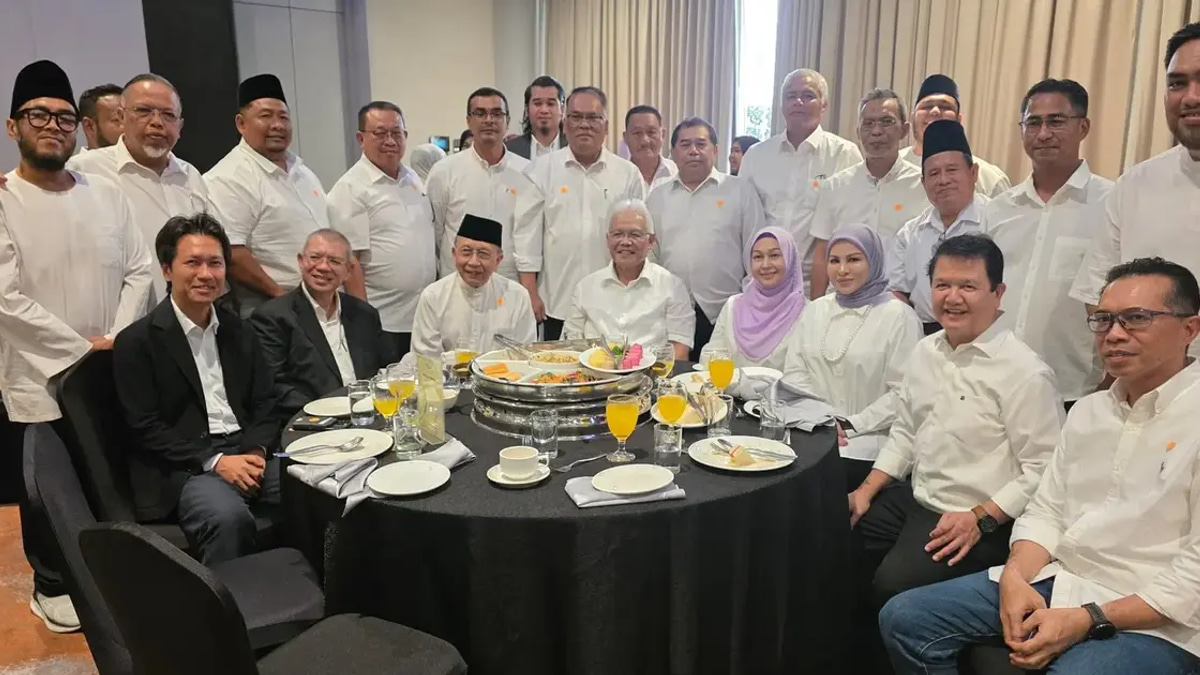
Amanah's decision to surrender the Puteri Wangsa parliamentary seat to PKR marks another significant adjustment in Pakatan Harapan's internal seat allocation strategy, as the ruling coalition continues refining its electoral positioning across key constituencies. The agreement emerged following direct negotiations between the two parties, with Amanah ultimately deciding to prioritise broader coalition harmony over contesting this particular seat in Johor.
The Puteri Wangsa constituency, located in Johor state, has become a focal point for coalition seat-sharing discussions as Pakatan Harapan prepares for potential electoral contests. By allowing PKR to assume responsibility for this seat, Amanah signals its willingness to make strategic concessions that strengthen the bloc's overall competitive standing. This decision does not represent a diminishment of Amanah's political standing but rather reflects the complex mathematics involved in optimising coalition representation across diverse Malaysian constituencies.
For PKR, securing the Puteri Wangsa seat adds to its growing roster of constituencies within Johor, reinforcing its position as the coalition's primary force in the state. The party has been steadily consolidating electoral influence through similar seat negotiations across peninsular Malaysia. This arrangement allows PKR to deploy resources and campaign machinery in constituencies where it believes it can mount the strongest challenge against opposition candidates.
Seat-sharing arrangements within Pakatan Harapan have become increasingly sophisticated since the coalition's 2018 formation. While such negotiations occasionally generate internal friction, the broader objective remains strengthening the coalition's ability to retain federal power and expand influence at state level. Johor holds particular strategic importance given its size and the number of federal constituencies it encompasses, making every seat allocation consequential for national parliamentary arithmetic.
Amanah's concession strategy reflects the party's confidence in other constituencies where it maintains stronger traditional support bases. Rather than spread resources thin across multiple marginal seats, Amanah can concentrate efforts in areas where party machinery and voter networks are more established. This targeted approach often proves more electorally efficient than attempting to contest seats where coalition partners enjoy structural advantages or established incumbent positions.
The negotiation process between Amanah and PKR demonstrates the maturity of coalition governance mechanisms within Pakatan Harapan. Unlike earlier periods when seat allocation disputes threatened coalition cohesion, the two parties managed this discussion through established channels and reached a mutually acceptable outcome. Such arrangements, while sometimes frustrating individual party members eager for electoral opportunity, ultimately serve the coalition's collective interest in maintaining unified governance.
For Malaysian voters and political observers, these internal coalition negotiations carry important implications for understanding how the ruling government functions beyond parliament. Seat-sharing reflects each coalition component's assessment of electoral viability, internal party strength, and strategic priorities. Amanah's willingness to step back from Puteri Wangsa suggests party leadership's confidence in retaining influence through alternative pathways and maintaining relevance within Pakatan's power structure.
The decision also reflects broader dynamics within Malaysian politics where smaller coalition partners must constantly balance assertiveness with pragmatism. Amanah, while significant, operates within a coalition structure where PKR holds substantial weight given its parliamentary numbers. Demonstrating flexibility on seat allocation decisions helps smaller partners maintain their standing as serious, reliable coalition members rather than appearing obstructionist.
Geographically, Johor's importance to national politics cannot be overstated. The state has been a traditional opposition stronghold in recent decades, though Pakatan Harapan has worked to consolidate and expand influence here. Every federal seat matters in Johor given the state's substantial parliamentary representation. Coalition efficiency in seat allocation directly impacts the bloc's ability to improve its parliamentary strength, particularly in states where margins remain competitive.
Moving forward, this precedent may influence how other coalition seat disputes are resolved. When parties observe Amanah receiving recognition for cooperative behaviour, it creates incentives for similar flexibility across the coalition structure. Conversely, it establishes expectations that larger coalition partners like PKR will reciprocate with support on issues important to smaller members, maintaining the delicate balance that keeps Pakatan Harapan functioning as a cohesive electoral and governing force.
The broader political context suggests Pakatan Harapan continues professionalising its internal coordination mechanisms. Coalition survival depends not on perfect electoral parity among members but on each component accepting the allocation system as fundamentally fair and strategically sound. Amanah's acceptance of the Puteri Wangsa arrangement underscores that the coalition has developed sufficient institutional trust to manage contentious seat negotiations without rupture. This contrasts sharply with earlier coalition experiences where seat disputes generated public acrimony and parliamentary instability, suggesting Malaysia's ruling coalition has matured considerably in managing internal complexity.