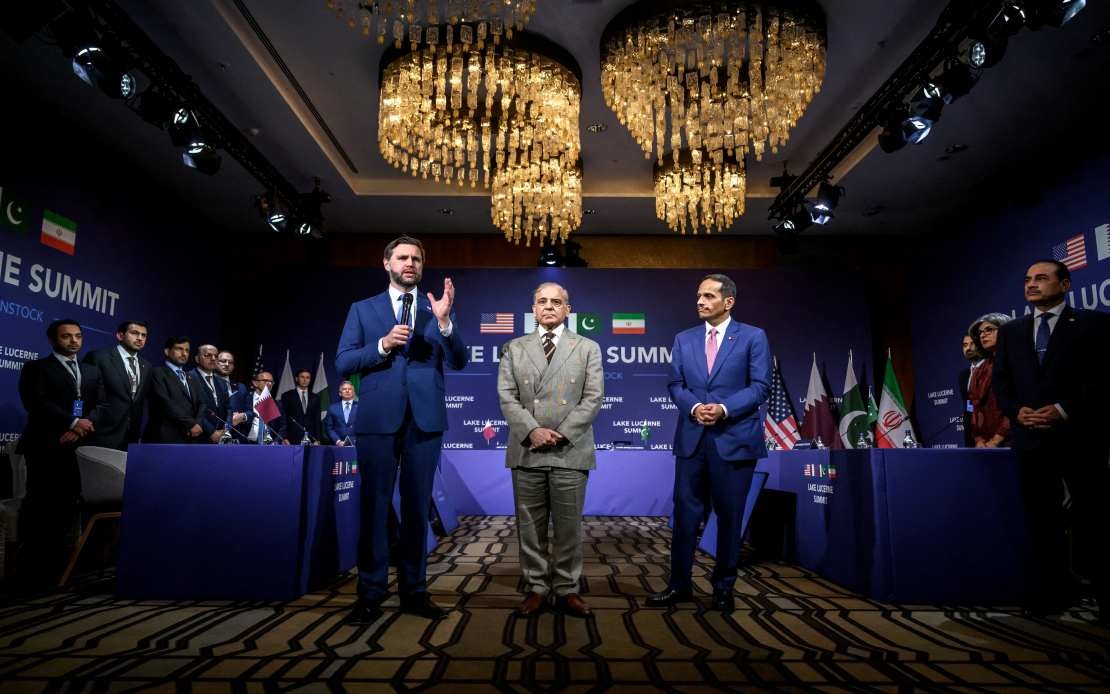
Delegations from Iran and the United States have wrapped up the opening session of multilateral negotiations in Switzerland, marking a significant diplomatic development following months of escalating tensions across West Asia. The talks, which brought together senior representatives from both nations with Qatar and Pakistan serving as intermediaries, represent the first substantive engagement between Tehran and Washington under a new framework agreement signed just days earlier to address the protracted regional conflict.
The initial session lasted approximately eighty minutes before the participating teams suspended proceedings to enable each delegation to confer internally on the discussions and next steps forward. Iranian officials confirmed through the semi-official Fars News Agency that this first round had concluded as scheduled, though neither side released extensive commentary on the substance of their exchanges or the trajectory of negotiations moving ahead.
The delegations assembled in Switzerland following announcement by Qatar that formal talks would commence to examine implementation mechanisms for the interim accord. This agreement, finalised on Wednesday, centres on resolving the underlying disputes that have destabilised the Gulf region and addressing the critical question of restoring commercial passage through the Strait of Hormuz, one of the world's most vital maritime chokepoints for global energy supplies.
Leading the American contingent is Vice President JD Vance, underscoring the high-level political commitment Washington has invested in these discussions. The Iranian delegation, reflecting equivalent seniority, includes Parliament Speaker Mohammad Bagher Qalibaf and Foreign Minister Abbas Araghchi. Pakistan's role as primary mediator reflects Islamabad's longstanding interests in regional stability and its historical channels with both Tehran and Washington.
The choice of Switzerland as the venue carries symbolic weight, as the country has long served as neutral ground for international negotiations and maintains diplomatic infrastructure designed to facilitate sensitive talks. The Bürgenstock location, where these discussions are occurring, provides the kind of secluded setting that allows negotiators space for candid exchanges away from immediate public scrutiny and domestic political pressures.
For Malaysia and Southeast Asian states, the implications of this diplomatic thaw merit close attention. The Strait of Hormuz remains critical infrastructure for regional trade, with significant volumes of oil and liquefied natural gas flowing through its waters to Asian markets. Any escalation of Iran-US tensions risks supply disruptions that directly affect energy prices and economic stability across the region. Conversely, successful de-escalation through these talks could help stabilise energy markets and reduce the risk premium currently embedded in global commodity prices.
The interim agreement itself represents a carefully calibrated compromise that both sides apparently deemed preferable to continued military posturing. That Tehran and Washington moved swiftly to commence implementation discussions suggests both capitals see genuine value in moving past the recent confrontational phase, though fundamental disagreements likely remain on numerous substantive issues that will require sustained negotiation.
The suspension of talks after the opening session to permit internal consultations is standard practice in complex multilateral diplomacy, allowing each delegation to assess the positions articulated and recalibrate their own approach. The lack of announced scheduling for subsequent rounds leaves room for flexibility while preserving momentum. How quickly talks resume will offer clues about whether both sides perceive progress and feel incentivised to continue engagement.
Qatar and Pakistan's mediation role reflects the broader regional dynamics at play. Both nations maintain diplomatic relationships across the sectarian and geopolitical divides that characterise West Asian politics, positioning them to serve as credible intermediaries. Qatar's hosting of preliminary discussions and financial resources give it leverage, while Pakistan's direct borders with Iran and traditional ties to Gulf Arab states provide different avenues for informal diplomacy.
The broader context involves not just bilateral Iran-US relations but also the complex ecosystem of regional powers, proxy conflicts, and sectarian tensions that have made West Asia volatile. Any sustainable resolution must address underlying grievances while creating confidence-building mechanisms that convince both sides that agreements will be honoured. The interim accord appears designed as a stepping stone toward more comprehensive arrangements.
For observers in Southeast Asia, this diplomatic process underscores how major power competition and regional conflicts can indirectly affect distant markets and supply chains. Malaysia's trade networks, energy security, and maritime interests all tie to stability in West Asian waters. The successful management of Iran-US tensions through negotiation rather than escalation remains in the region's collective interest.
The coming weeks will prove crucial in determining whether this opening diplomatic initiative can sustain momentum toward substantive agreements on implementation details. The engagement of such senior figures from both sides suggests serious intent, yet historical precedent warns that initial enthusiasm can dissipate when negotiators confront the harder work of translating principles into concrete operational arrangements.