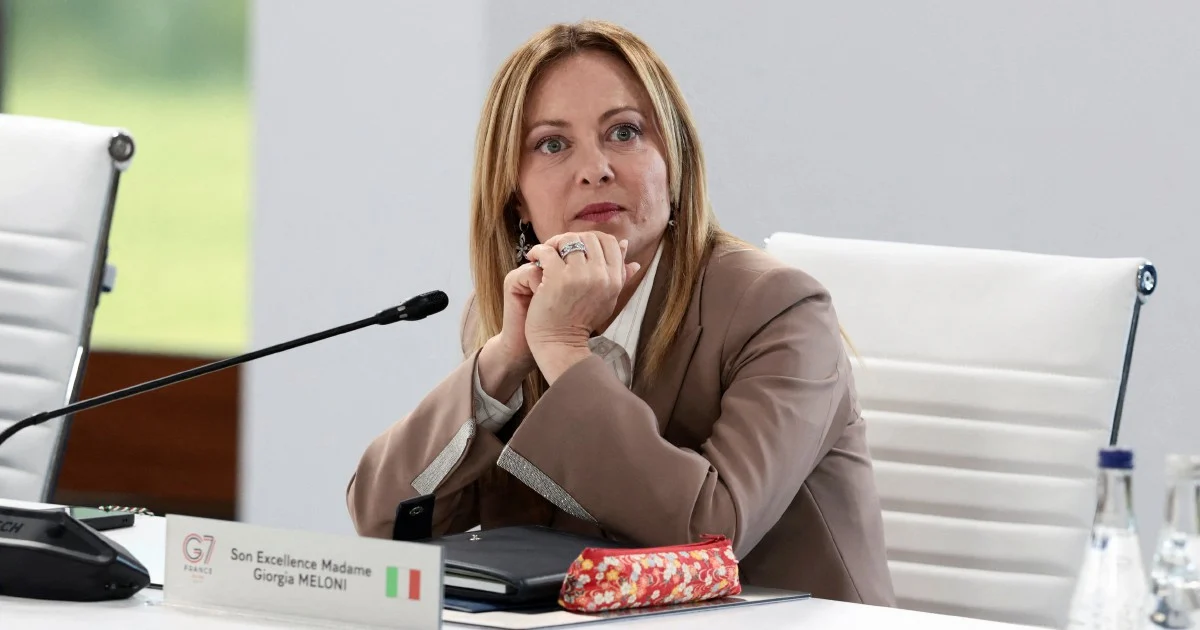
Giorgia Meloni arrived at Donald Trump's presidential inauguration in January 2025 as the sole European leader granted an invitation to the ceremony—a distinction that seemed to herald an unprecedented period of warmth between the Italian government and the Trump administration. The Italian Prime Minister's presence at this exclusive event was widely interpreted as validation of her standing within Trump's inner circle and a signal that Rome would enjoy privileged status within a recalibrated Western alliance during the incoming presidency.
The symbolic importance of Meloni's invitation cannot be overstated in the context of European politics. For months before the inauguration, observers had noted her cultivation of a close relationship with Trump, positioning Italy as a reliable counterweight to what she and others viewed as overly cautious or ideologically misaligned European capitals. This alignment appeared to offer Italy concrete diplomatic advantages and the prospect of greater influence over American policy decisions affecting Europe and the Mediterranean region.
Yet what promised to be a sustained period of Italian-American collaboration has rapidly deteriorated into public disagreement and mutual criticism. The transformation from Trump confidant to Trump critic reflects not merely a personal falling-out between leaders but deeper substantive differences over policy priorities that have emerged as the administration's agenda has taken concrete form. Meloni's willingness to challenge Trump publicly marks a departure from her earlier posture of deference and suggests that Italian national interests may diverge more sharply from White House objectives than initially anticipated.
The causes of this rupture remain multifaceted. Trade disputes, differing approaches to European security architecture, disagreements over immigration policy, and competing visions for engagement with other nations have all contributed to the deterioration. Each issue represents not merely a tactical difference but a fundamental conflict between Rome's interpretation of its strategic position and Washington's increasingly unilateral approach to international relations. Meloni finds herself navigating pressure from both directions—maintaining the transatlantic alliance while protecting Italian and broader European interests that increasingly appear incompatible with Trump's policies.
For Southeast Asian observers, this European drama carries significant implications. The loosening of the Italian-American bond, despite initial expectations of unprecedented closeness, suggests that even carefully cultivated relationships with the Trump administration remain fragile and subject to sudden reorientation. Nations in this region, many of which have sought to maintain balanced relationships across great power rivalries, may draw lessons from Italy's experience about the durability and reliability of bilateral partnerships forged during a presidential transition.
The Italian case also illuminates broader fractures within the Western alliance that Trump's return to office has accelerated. Rather than creating a unified bloc aligned with American leadership, the Trump administration's transactional approach to diplomacy and its willingness to pursue policies controversial among traditional allies has generated resistance even from leaders initially sympathetic to his worldview. Meloni's rightward political positioning and her earlier apparent alignment with Trump ideologically proved insufficient to prevent disagreements once concrete policy implementation began.
Internally, Meloni faces domestic political constraints that may limit her ability to maintain close alignment with Washington. Italian public opinion, European Union membership obligations, and coalition government dynamics all impose bounds on how far she can follow American leadership, particularly on contentious issues affecting Europe's economic interests or security arrangements. These domestic anchors may have become more salient as Trump's actual policies diverged from the benign expectations some had harboured during the transition period.
The diplomatic sophistication required to manage a deteriorating relationship with the world's most powerful nation while maintaining Italy's position within European structures and NATO represents an acute challenge for Meloni's government. Public criticism of Trump, while necessary to signal independence to domestic and European audiences, simultaneously risks provoking retaliatory measures or diminished access to American policymakers. Italy must carefully calibrate between defending its interests and avoiding permanent damage to bilateral relations.
Regionally, the Italian-American friction may create openings for other European nations to reshape their own relationships with Washington on terms more advantageous to them. Germany, France, and smaller European states have been watching Rome's experience closely, drawing conclusions about the costs and benefits of close alignment with Trump administration policies. The Italian example demonstrates that proximity to power does not necessarily translate into policy influence when fundamental interests diverge.
Looking forward, whether Meloni and Trump can repair their relationship or whether this rupture marks a more permanent realignment remains uncertain. The trajectory suggests that the initial promise of a golden age in Italian-American relations was perhaps always illusory, reflecting wishful thinking rather than realistic assessment of the interests at stake. As Trump's second term unfolds, Italy's shift from favoured ally to critic may prove merely a precursor to broader European reassessment of America's role and reliability as a strategic partner.
For Malaysia and the broader Indo-Pacific region, these European developments underscore an enduring principle: great power relationships remain fundamentally mercurial, driven by concrete national interests rather than ideological compatibility or personal rapport between leaders. Nations pursuing their own strategic autonomy must approach partnerships with realistic expectations and maintain flexibility to adjust course as circumstances change.