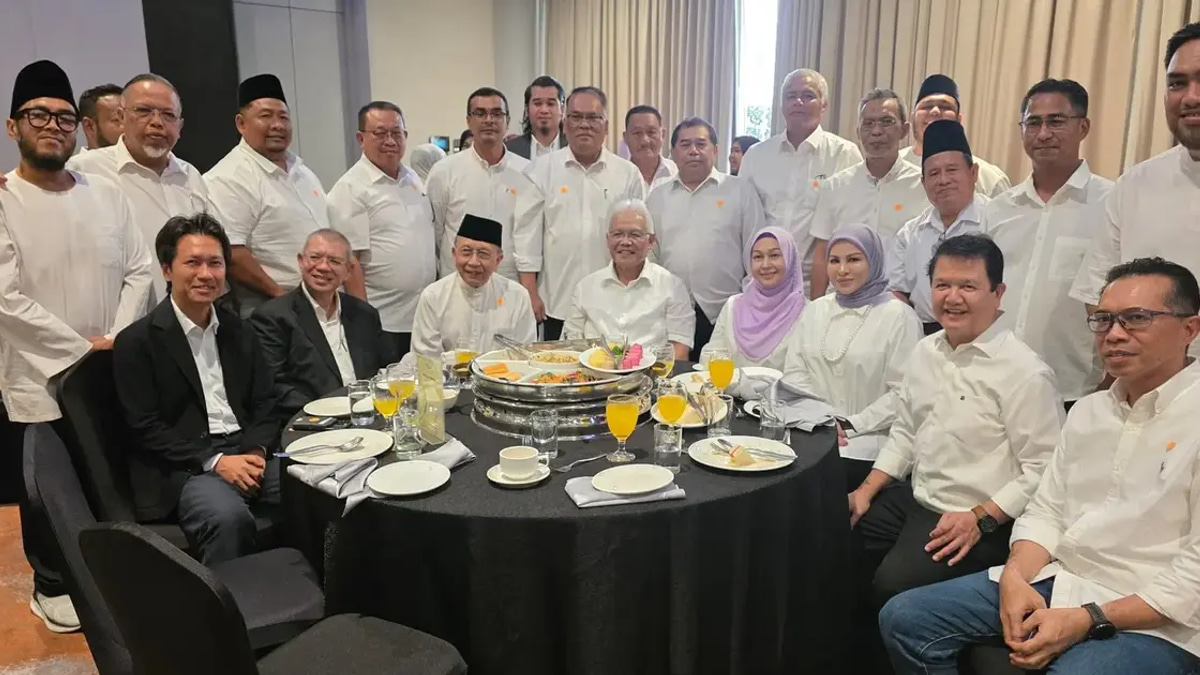
Parliament's return to session today brings renewed focus to one of the nation's most consequential legislative undertakings: a constitutional amendment intended to disentangle the dual roles currently held by the attorney-general. The proposed reform represents a fundamental restructuring of Malaysia's prosecutorial and legal authority framework, addressing longstanding debates about institutional independence and the concentration of executive power within a single office.
The current system, which vests both the attorney-general and public prosecutor functions in one individual, has long attracted scrutiny from judicial observers and governance advocates who argue that such consolidation can blur the lines between political and prosecutorial decision-making. By establishing these as separate positions, the amendment seeks to create clearer institutional boundaries and strengthen the independence of Malaysia's prosecution authority from potential political influence. This structural separation mirrors judicial arrangements in numerous Commonwealth jurisdictions and reflects evolving thinking about how to safeguard the integrity of the criminal justice system.
The attorney-general's portfolio encompasses multiple responsibilities: serving as the government's chief legal advisor, overseeing the legal affairs of the state, and historically managing the public prosecution function. Critics contend that maintaining all these powers in one office can create conflicts of interest, particularly when decisions about criminal prosecutions might intersect with broader political considerations or governmental legal strategy. The proposed bifurcation would allow each role to operate with distinct mandates and accountability structures, theoretically reducing the risk of prosecutorial decisions being influenced by factors beyond the merits of individual cases.
For Malaysian governance, this amendment carries implications extending well beyond constitutional technicality. The credibility of the criminal justice system depends significantly on public confidence that prosecutorial decisions rest on evidence and law rather than political calculation. By establishing a dedicated public prosecutor position independent from the attorney-general's portfolio, policymakers hope to reinforce the perception and reality of prosecutorial neutrality. This becomes particularly important in contexts where high-profile cases or prosecutions affecting political figures might otherwise invite questions about impartiality.
The timing of the bill's return to the parliamentary agenda reflects broader momentum within the current administration to advance institutional reforms. Several recent legislative sessions have witnessed growing appetite among government and opposition legislators for measures aimed at strengthening democratic institutions and reducing concentrated authority. The separation of the attorney-general and public prosecutor roles fits within this pattern of governance modernisation, even as specific implementation details remain subjects of parliamentary deliberation.
Implementing such a structural change requires careful attention to numerous transitional and operational questions. Parliament must determine how prosecutorial authority and resources will be allocated between the two offices, what the respective appointment procedures will entail, and how conflicts or ambiguities in jurisdiction will be resolved. The amendment must also clarify reporting relationships, budget allocation, and the division of legal functions currently consolidated within the attorney-general's domain. These technical considerations will substantially determine whether the reform achieves its intended benefits.
Regional context adds another dimension to this debate. Several Southeast Asian neighbours maintain separated attorney-general and public prosecutor structures, providing potential models for Malaysian policymakers. Singapore, for instance, distinguishes between the attorney-general's role and prosecutorial functions, though within a somewhat different constitutional framework. Examining comparative approaches can illuminate potential pitfalls and design solutions that have proven effective elsewhere, though Malaysia's distinct constitutional history and institutional architecture require thoughtful adaptation rather than direct replication.
The political landscape surrounding this amendment reveals interesting cross-party dynamics. Prosecutorial independence has garnered support from constituencies spanning the political spectrum, suggesting that concerns about concentrated prosecutorial power transcend typical partisan divisions. Both government and opposition legislators have acknowledged the logic of separating these functions, though disagreements may emerge regarding implementation details, transition timelines, and the specific powers and independence safeguards attached to each position.
Public understanding of the proposed change, however, remains limited. Many Malaysians may not fully grasp why distinguishing between the attorney-general and public prosecutor matters practically, or how the change would affect their interactions with the criminal justice system. Parliament and interested organisations would benefit from sustained public communication explaining the rationale, expected benefits, and potential implementation challenges associated with the amendment. Building informed public discourse around prosecutorial independence ultimately strengthens democratic ownership of institutional reforms.
The debate ahead will likely touch on sensitive questions about prosecutorial discretion, accountability mechanisms for the new public prosecutor position, and safeguards against political pressure on either office. Parliament must establish clear statutory frameworks ensuring that prosecutorial independence does not translate into unaccountable power, while equally protecting the public prosecutor from inappropriate political interference. Striking this balance will prove critical to the amendment's long-term success and legitimacy.
As lawmakers reconvene to deliberate this amendment, they advance a conversation about Malaysia's institutional architecture that extends well beyond technical constitutional changes. The separation of attorney-general and public prosecutor roles speaks to fundamental questions about how executive power should be organised, how institutional independence can be preserved, and what structural safeguards best serve democratic governance and rule of law. Parliament's handling of this bill will signal the nation's commitment to strengthening these foundational principles.