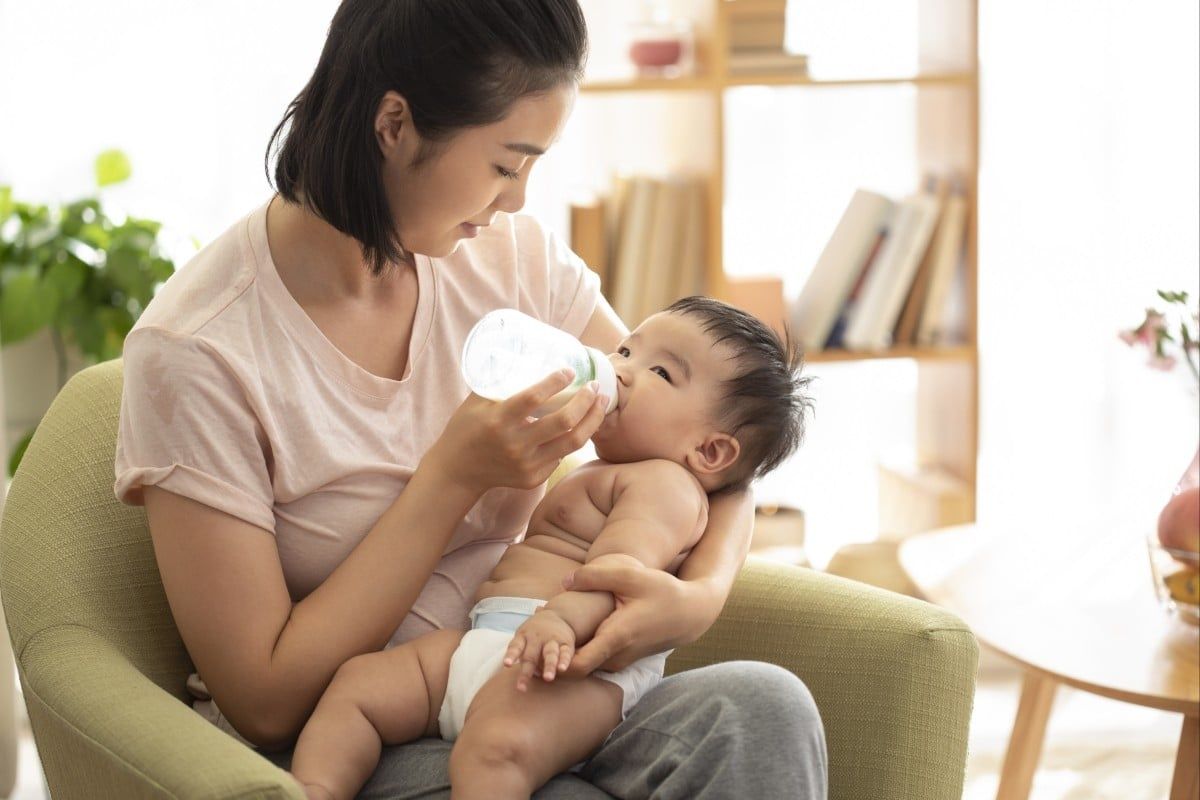
A three-month-old boy in China's Guangdong province required intensive care treatment after developing acute poisoning from consuming infant formula prepared with an unconventional ingredient—vegetable juice instead of water. The incident highlights growing concerns among medical professionals about unsafe feeding practices among well-meaning parents who attempt to enhance their babies' nutrition through homemade modifications to standard formula preparation.
The infant was brought to Zhongshan Women and Children's Hospital in a critical state, displaying alarming physical symptoms that prompted emergency admission. His body had taken on a bluish-purple discoloration, his mouth had turned purplish-blue, and he was experiencing severe respiratory distress. These dramatic changes occurred shortly after the baby consumed milk prepared according to his parents' improvised method. The hospital's diagnostic team quickly identified the cause: the infant had suffered acute nitrite toxicity, a serious condition that can rapidly compromise oxygen transport throughout the body.
The parents' reasoning, while rooted in good intentions, reflected a common misconception about infant nutrition. They believed that vegetable juice would provide superior nutritional value compared to plain water, and therefore decided to use it as a base for mixing the baby formula powder. This decision, made without medical consultation, inadvertently exposed their vulnerable son to dangerous chemical compounds that accumulate during vegetable preparation.
Doctors at the hospital explained the mechanism behind the poisoning to the parents and subsequently issued detailed guidance about proper formula preparation. When vegetables are boiled for extended periods, the cooking process causes nitrates naturally present in the vegetables to convert into nitrites, which accumulate in the liquid. These nitrite compounds are particularly hazardous when introduced into an infant's system because babies at three months old have digestive and kidney systems that remain substantially underdeveloped. Their bodies simply lack the physiological capacity to safely process or eliminate high concentrations of nitrites.
Once nitrites enter the bloodstream, they chemically bind to haemoglobin molecules, interfering with the protein's fundamental oxygen-carrying function. This disruption explains why the infant's skin, mouth, and fingernails displayed the characteristic purple discolouration—a visible indicator that his blood's capacity to transport oxygen throughout his body had been severely compromised. The condition can deteriorate rapidly and poses genuine risk to an infant's survival if untreated.
Following two days of medical intervention in the hospital, the infant recovered sufficiently to be discharged in mid-June. His recovery underscores the importance of rapid hospitalisation and professional medical treatment when concerning symptoms emerge. However, the incident has prompted paediatricians across China to strengthen their messaging about formula preparation safety. Dr. Cao Qi, a paediatrician based at Nanning No 1 People's Hospital in Guangxi Zhuang autonomous region, used social media platforms to communicate the critical nature of prompt medical response. He emphasised that delaying hospital admission by even minutes can create life-threatening consequences for affected infants.
Dr. Cao also addressed a broader cultural pattern that concerns medical professionals in China. He cautioned parents against following trends or acting on personal subjective judgement when making feeding decisions for young babies. His warning reflects recognition that natural or traditional foods, while potentially beneficial for older children and adults, may be fundamentally unsuitable for infants whose bodies cannot process them safely. This distinction between age-appropriate nutrition remains poorly understood among some parents who view traditional or natural approaches as inherently superior to evidence-based feeding guidelines.
The incident is not isolated within China's social media landscape, where stories of unusual infant feeding practices regularly generate significant public attention and discussion. Earlier cases have demonstrated how parental attempts at nutritional enhancement can result in serious harm. Last year, a 52-day-old infant in Henan province required hospitalisation after his grandmother added honey to his drinking water. The honey introduced botulism-causing bacteria, which produced toxins that paralysed the infant's muscles—a condition distinct but equally serious to the nitrite poisoning case.
These recurring incidents reflect a pattern in which informal family knowledge, cultural traditions, or internet-sourced information sometimes overrides medical guidance in infant care decision-making. For Malaysian parents and those across Southeast Asia, these cases carry important lessons about the critical importance of consulting healthcare professionals before introducing any modifications to standard infant formula preparation. Medical guidelines for infant feeding exist because extensive research has identified which substances and preparation methods maintain infant safety.
The medical consensus is unambiguous: infant formula powder should be mixed exclusively with warm water. Parents should strictly avoid substituting vegetable juice, rice water, fruit juices, soups, or other liquids in place of water. Each alternative carries potential risks, whether from accumulated nitrites, bacterial contamination, osmotic imbalance, or other nutritional or chemical hazards. For parents seeking to provide additional nutrition to their infants, the appropriate course is to consult their paediatrician, who can recommend safe and developmentally appropriate options based on the child's specific age and health status.
The broader implications for Southeast Asian healthcare systems include the need for continued public education campaigns emphasizing proper infant feeding practices. Hospitals and public health agencies should consider targeted outreach to new and expectant parents, addressing common misconceptions about infant nutrition and clarifying why standard medical guidelines exist. Language accessibility and cultural sensitivity in these communications will be essential for reaching diverse communities where traditional feeding practices may hold particular influence.