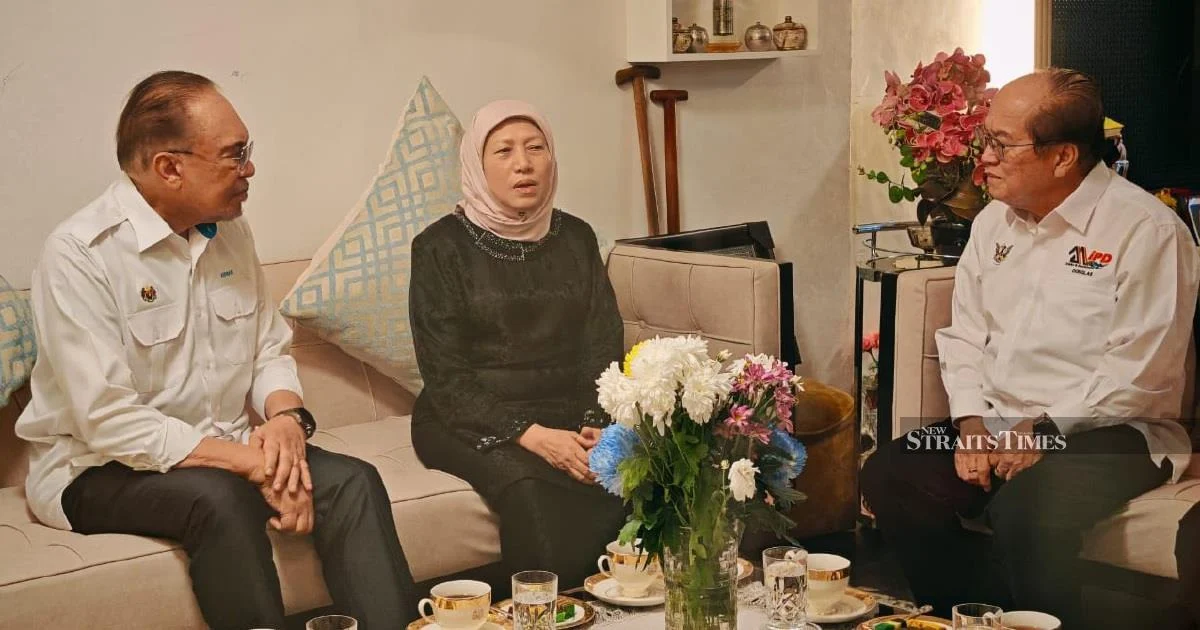
Prime Minister Datuk Seri Anwar Ibrahim travelled to Kuching to extend his sympathies to Women, Family and Community Development Minister Datuk Seri Nancy Shukri, whose husband Datuk Kamil Misuari has recently passed away. The visit underscores the bonds of solidarity within Malaysia's political leadership during moments of personal loss and reflects customary practices of support among senior government figures.
The passing of Datuk Kamil Misuari represents a significant loss for Nancy Shukri, a prominent political figure who has held various ministerial portfolios throughout her career. As one of Malaysia's senior female ministers, her contributions to women's welfare and family policy have shaped national discourse on social development. The prime minister's decision to personally attend the condolence visit signals the government's recognition of Shukri's standing and the importance of maintaining institutional goodwill during difficult family circumstances.
Condolence visits by heads of government serve multiple purposes within Malaysia's political ecosystem. They demonstrate public acknowledgment of personal tragedy while reinforcing networks of mutual support that extend across party lines and factional divides. Such gestures, though ceremonial in nature, carry symbolic weight in a political culture that values personal relationships alongside institutional hierarchies. The timing and visibility of Anwar's visit would have been noted by observers of Malaysian politics keen to gauge the stability and cohesion of the current administration.
Nancy Shukri's appointment to the Women, Family and Community Development Ministry positions her at the forefront of social policy implementation. Her portfolio encompasses critical areas including women's empowerment, family support services, and community development programmes that affect millions of Malaysians. During periods of ministerial transition or personal distraction, maintaining public confidence in the continuity of these services becomes paramount, making visible displays of support from the prime minister particularly significant.
The choice of location in Kuching reflects the practical realities of Malaysian governance, where senior officials frequently travel across the country for official engagements. Sarawak, as one of Malaysia's largest states, hosts numerous federal ministers and government appointments. The journey itself demonstrates the priority Anwar assigned to this personal matter, balancing his broader administrative responsibilities with the demands of political propriety.
Within Malaysia's federal structure, maintaining harmonious relationships between federal and state-level leadership remains essential for policy implementation and electoral success. Nancy Shukri's representation of her constituency and her ministerial role both require sustained engagement with stakeholders across multiple jurisdictions. The prime minister's presence in Sarawak during this personal occasion provided an opportunity to reinforce these institutional connections.
The role of condolence in Malaysian political culture draws from both Islamic traditions and Westminster parliamentary conventions. As a Muslim-majority nation, Malaysia's leadership typically observes Islamic protocols regarding death and mourning, which have become intertwined with modern state practice. These rituals serve to humanise political figures and remind the public that leaders experience the same personal losses as ordinary citizens, though often under greater public scrutiny.
Shukri's continued effectiveness in her ministerial role during a period of personal bereavement depends partly on the visible support structures available to her. Government colleagues' acknowledgment of her situation, particularly from the prime minister, helps establish a framework within which she can manage both personal grieving and professional responsibilities. This balance becomes especially important for female ministers, who often face heightened expectations regarding their performance and availability.
The incident also illustrates broader patterns within Malaysia's political landscape regarding the treatment of women in senior leadership positions. While Nancy Shukri has established herself as a durable political figure with substantial experience, the vulnerability created by personal loss remains universal. How the government collectively responds to such moments contributes to the broader workplace culture within federal administration and sends signals about institutional values regarding compassion and work-life balance.
Moving forward, observers will monitor whether this show of solidarity translates into practical support for Shukri's ministry and her continued engagement with pending policy initiatives. The Women, Family and Community Development portfolio contains numerous ongoing programmes and legislative matters requiring consistent attention. Anwar's visit may serve as a public marker of the administration's commitment to ensuring that ministerial functions continue uninterrupted despite personal circumstances.
For Malaysian readers, such moments offer insight into the human dimensions of governance that often remain hidden from public view. Political leadership involves individuals navigating personal tragedy while maintaining national responsibilities. The prime minister's condolence visit represents a recognition of this dual reality and affirms that institutional support systems exist within government structures to help senior officials during vulnerable periods.