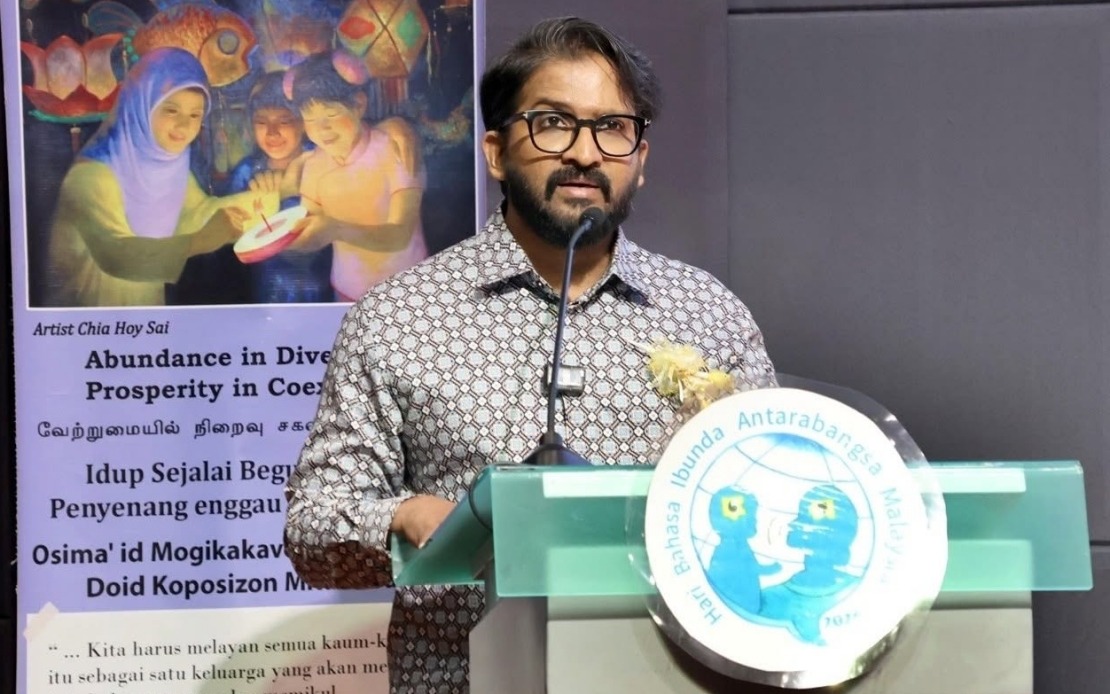
Malaysia's Deputy National Unity Minister R. Yuneswaran has advocated for a renewed emphasis on mother-tongue education, positioning language proficiency as a practical tool to mitigate the divisive 3R issues—concerning race, religion and royalty—that have become increasingly visible on social media platforms. The minister's intervention comes as digital platforms continue to amplify contentious discussions around these sensitive topics, raising concerns among government officials about their corrosive effect on social cohesion.
Yuneswaran's argument rests on a straightforward proposition: many of the misunderstandings that fuel 3R conflicts originate from insufficient knowledge of one another's histories, languages and cultural backgrounds. Rather than viewing linguistic diversity as an obstacle to unity, he contends that deeper engagement with mother-tongue learning—whether Malay, Tamil, Mandarin, or other languages spoken across the country—creates pathways for genuine intercommunal understanding. This framing positions language not merely as a communication tool but as a vessel carrying identity, heritage and the values that define distinct communities within Malaysia's pluralistic society.
The minister drew attention to Malaysia's remarkable linguistic landscape, noting the existence of approximately 130 languages across the nation. This extraordinary diversity, he suggested, should be recognised as a civilisational asset rather than a potential flashpoint for division. By treating multilingualism as a strength, Yuneswaran implicitly challenges narratives that frame linguistic or cultural difference as inherently problematic or threatening to national identity. For Malaysian policymakers grappling with the challenge of maintaining unity amid increasing polarisation, this perspective offers a constructive alternative to zero-sum approaches that pit one community's linguistic interests against another's.
Addressing a common concern among educators and parents, Yuneswaran explicitly rejected the notion that proficiency in one's mother tongue necessarily compromises facility with the national language or other languages. Drawing on his own background—having studied in both Chinese and national school systems—he offered personal testimony that multilingual competence operates additively rather than competitively. This distinction carries particular weight in the Malaysian context, where ongoing debates about language policy sometimes rest on the assumption that resources devoted to minority-language education detract from national-language instruction. The minister's position suggests instead that mother-tongue learning and national-language mastery can coexist and mutually reinforce one another.
Yuneswaran further emphasised that acquiring one's mother tongue fosters deeper appreciation for one's own cultural heritage while simultaneously generating greater respect for the cultural traditions of others. This reciprocal mechanism offers insight into how language education might function as a societal immunisation against divisive tendencies. When individuals possess robust grounding in their own linguistic and cultural traditions, they develop greater security and confidence in their own identity—a psychological state that, paradoxically, may enhance rather than diminish their capacity for intercultural empathy and understanding.
The minister's remarks align with the stated priorities of the National Unity Ministry under the 13th Malaysia Plan, which has been tasked with advancing nation-building objectives centred on understanding, respect and reciprocal learning. This institutional framing suggests that mother-tongue education and multicultural competence are no longer peripheral concerns but rather central to the government's approach to long-term social stability. The integration of language policy within a broader nation-building framework acknowledges that addressing divisive social tensions requires sustained, multifaceted intervention extending well beyond crisis management of individual 3R incidents.
The challenge underlying Yuneswaran's proposal is substantial. Social media platforms have fundamentally altered the velocity and reach with which 3R discussions spread, often amplifying the most inflammatory voices while marginalising nuanced perspectives. Educational interventions, by contrast, operate on generational timescales and require sustained institutional commitment. Yet the deputy minister's emphasis on understanding as the foundation for unity suggests a recognition that technological and regulatory responses alone cannot resolve conflicts rooted in genuine misunderstanding or ignorance. Rather, the underlying causes must be addressed through transformative education that equips citizens with the linguistic and cultural literacy necessary for authentic engagement across community lines.
For Malaysian educational institutions, Yuneswaran's remarks carry implications extending beyond classroom language instruction. Schools serving diverse student populations might consider curricula that explicitly connect language learning to cultural history and heritage, helping students understand not merely how to speak their mother tongues but why these languages carry significance for their communities. Similarly, extracurricular programmes could facilitate cross-cultural dialogue in which students with different linguistic backgrounds explain the cultural values and historical narratives embedded within their languages, transforming language learning into a vehicle for intercommunal connection.
The minister's invocation of language as a unifying force rather than a divisive element represents a deliberate reframing of a perennially contentious policy domain in Malaysia. Historical debates over language have sometimes pitted the national language against minority languages in zero-sum competition. By arguing instead that multilingual proficiency serves national unity, Yuneswaran attempts to transcend this binary thinking. However, translating this vision into practical policy will require sustained commitment from educators, policymakers and civil society—alongside the willingness of diverse communities to invest time and resources in acquiring languages beyond those they speak at home. The ultimate test of the deputy minister's thesis will arrive not from policy pronouncements but from whether renewed emphasis on mother-tongue education actually correlates with reduced tensions and increased intercommunal understanding in Malaysia's digital and physical public spheres.