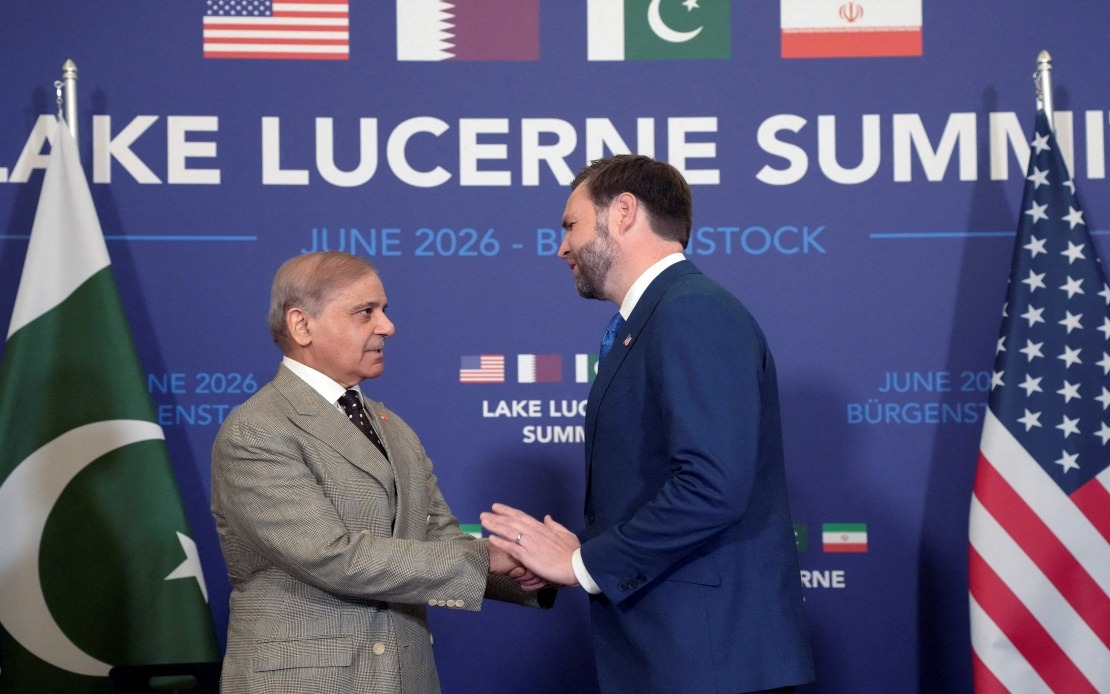
A significant diplomatic engagement unfolded in the Swiss Alpine resort of Burgenstock on Sunday, as senior representatives from the United States and Pakistan sat down for strategic discussions. Vice President JD Vance, alongside special envoys Steve Witkoff and Jared Kushner, welcomed Pakistan's Prime Minister Shehbaz Sharif and Pakistan Army Chief Field Marshal Asim Munir for talks that underscored the deepening coordination between Washington and Islamabad on regional security matters. The closed-door meeting reflected the sensitive nature of discussions that extend well beyond bilateral Pakistan-US relations, touching on the broader Middle Eastern geopolitical landscape.
The timing of these talks proved particularly significant, coinciding with the commencement of technical-level negotiations between the United States and Iran at the same venue. Pakistan and Qatar, both serving as mediators in the protracted dispute between Washington and Tehran, anchored these parallel discussions. The layered diplomatic architecture suggested careful choreography by all parties to address multiple interconnected security challenges simultaneously, with each nation's representatives positioned to contribute specialised expertise to the negotiating process.
Underpinning these negotiations lies a recently signed memorandum between Iran and the United States, finalised remotely in the early hours of June 18. This agreement formally ceases the military conflict that erupted on February 28, marking a potential turning point in one of the Middle East's most volatile bilateral relationships. The accord represents months of patient diplomacy, though fundamental disagreements on crucial issues remain unresolved and will demand sustained engagement across coming weeks.
The memorandum establishes specific timelines that will govern the normalisation of US-Iran relations. The United States committed to lifting its naval blockade that has constrained Iranian commerce, whilst Iran undertook corresponding responsibility to restore unrestricted shipping through the Strait of Hormuz. These maritime provisions carry substantial implications for global energy markets and regional commerce, given the critical role of the Hormuz waterway in international oil and liquefied natural gas transportation. Any disruption to shipping in this chokepoint reverberates through global supply chains and energy prices.
However, perhaps the most consequential element of the agreement concerns Iran's nuclear programme, an issue that has catalysed US-Iran tensions for decades. The memorandum obligates Iran to forgo the acquisition of nuclear weapons, though details of verification and enforcement mechanisms remain to be negotiated. Rather than settling the nuclear question definitively, the parties agreed to pursue a comprehensive nuclear agreement through separate technical negotiations, with a 60-day window established for these discussions to conclude. This staged approach reflects the enormous complexity surrounding confidence-building measures and international oversight of Iran's atomic activities.
Iran's principal negotiating objective centres on sanctions relief. The regime has consistently demanded that the United States lift comprehensive economic sanctions that have crippled its economy and isolated it from international financial systems. From Tehran's perspective, nuclear concessions must yield tangible economic benefits, otherwise domestic political resistance to any agreement would prove insurmountable. The White House and its European allies face the difficult calculus of determining what sanctions reductions might be warranted as reciprocal steps, whilst maintaining sufficient leverage to ensure Iranian compliance with whatever nuclear commitments emerge from the 60-day timeline.
Pakistan's prominent role in these negotiations reflects its unique geopolitical position as a bridge between the Western-aligned regional order and non-aligned powers like Iran. Islamabad has long maintained complex relationships with both Washington and Tehran, balancing strategic partnerships against historical tensions and sectarian considerations within Pakistan itself. Prime Minister Shehbaz Sharif's participation, alongside Field Marshal Asim Munir who commands Pakistan's military, signalled that Islamabad views these negotiations as worthy of the highest-level attention and wished to position itself as an indispensable facilitator in Middle Eastern diplomacy.
For Southeast Asian observers, these developments hold indirect but meaningful implications. A reduction in US-Iran tensions could reshape global energy markets and reduce insurance premiums on shipping through critical waterways, benefiting economies like Malaysia, Singapore, and Thailand that depend heavily on stable maritime trade. Conversely, if negotiations falter, regional instability could trigger commodity price volatility and redirect American strategic focus away from Indo-Pacific affairs, where Southeast Asian security interests concentrate.
The choice of Switzerland as the negotiating venue carried symbolic weight. The country's formal neutrality and experience hosting previous landmark nuclear negotiations, including the Joint Comprehensive Plan of Action signed in Vienna in 2015, lent credibility to the process. Switzerland's role as custodian of international law and neutral mediator has long made it an appropriate setting for sensitive great-power diplomacy, though the venue itself cannot guarantee successful outcomes when fundamental interests diverge sharply.
The technical-level discussions beginning on Sunday would occupy negotiators for weeks as they worked through intricate details of implementation, verification protocols, sanctions architecture, and nuclear programme limitations. These unglamorous but essential conversations determine whether diplomatic breakthroughs translate into durable agreements or dissolve into mutual recriminations. The participation of Qatar alongside Pakistan ensured that Sunni-aligned and non-aligned mediators could both contribute perspectives to navigate between American and Iranian positions.
Looking ahead, the 60-day nuclear negotiation window represents a critical deadline. Success would require both Washington and Tehran to demonstrate flexibility on issues where previous administrations proved unyielding. Pakistan's diplomatic engagement at Burgenstock suggested Islamabad intended to remain actively involved in shepherding negotiations toward conclusion, leveraging its historical ties to both great powers and its stakes in regional stability. Whether this multilayered diplomatic effort yields enduring peace or merely postpones renewed confrontation remains the central question occupying policymakers across multiple continents.