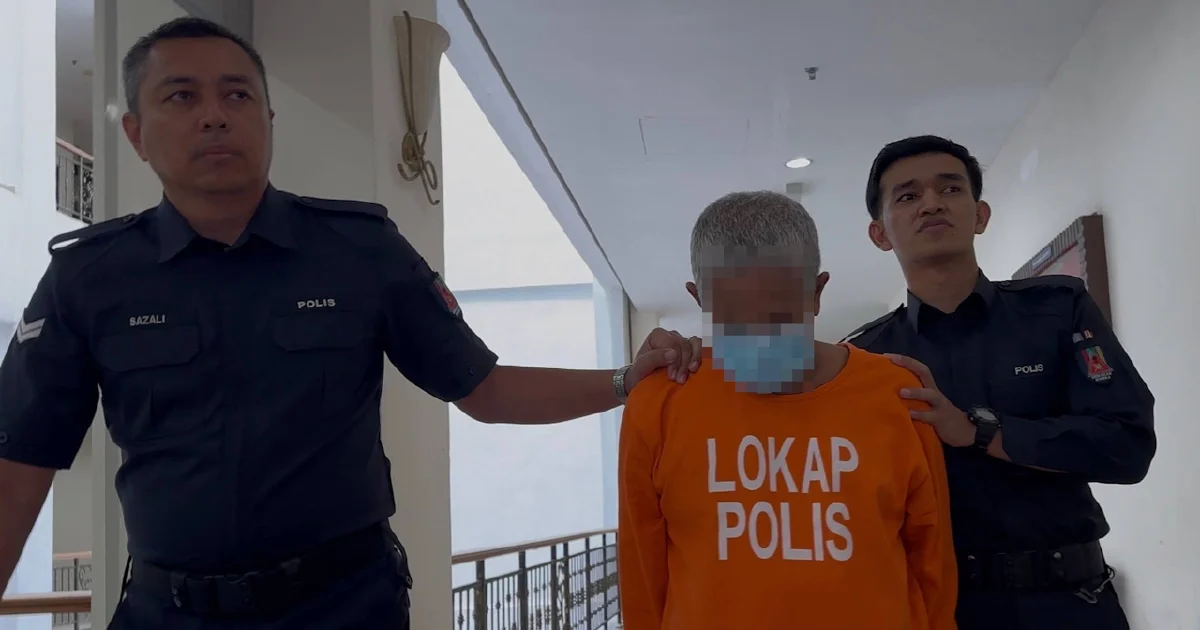
A Muar Sessions Court has handed down a substantial 33-year custodial sentence to a 67-year-old pensioner who pleaded guilty to raping and sexually assaulting his two granddaughters. The court additionally imposed 14 strokes of the cane as part of the conviction, which stems from five separate criminal charges brought against the elderly man. His admission of guilt to all charges meant the matter proceeded swiftly through the judiciary, with the judge determining the appropriate punishment based on the severity and number of offences committed against young family members in his care.
The case emerged from what appears to be a serious breach of familial trust, with the accused having access to his granddaughters in domestic circumstances where they should have been protected. The fact that two children were victimised by the same offender suggests a pattern of behaviour that went undetected or unreported for some period. Such cases typically cause significant trauma within families, as the perpetrator occupies a position of authority and assumed safeguarding responsibility. The victims in this instance will likely require extensive psychological support and counselling to process their experiences and rebuild their sense of security within family structures.
Malaysia's approach to sexual offences against minors reflects an increasingly stringent judicial stance aimed at protecting vulnerable populations. The courts have been empowered under the Penal Code to impose severe penalties including lengthy prison sentences and caning for such offences, recognising that child sexual abuse causes profound and lasting harm. The imposition of both custodial and corporal punishment in this case demonstrates the gravity with which Malaysian courts treat violations of children by those in positions of trust. The 33-year sentence represents a substantial portion of the offender's remaining lifespan, effectively removing him from society during what would be his final years.
The sentencing also sends a clear deterrent message to potential offenders within the community that such behaviour will result in severe legal consequences. Caning, whilst controversial in some quarters, remains part of Malaysia's criminal justice framework for specific offences, and its inclusion here underscores the courts' assessment of the aggravating circumstances. The fact that the offender targeted his own granddaughters—individuals bound to him by blood and subject to his authority as a family elder—constitutes an exceptionally serious violation of the duty of care that grandparents are expected to maintain.
Family-based sexual abuse remains a significant problem across Southeast Asia, though actual prevalence figures are difficult to establish due to underreporting driven by shame, cultural factors, and concerns about family fragmentation. In Malaysia, welfare agencies and law enforcement have sought to improve reporting mechanisms and victim support services, yet many cases remain hidden behind closed family doors. The willingness of authorities to prosecute aggressively in cases like this one may encourage other victims to come forward, though significant barriers to reporting still exist, particularly when the perpetrator is an authority figure within the household.
The conviction also raises important questions about child safeguarding within extended family networks. Grandparents often spend significant time with grandchildren, particularly in multi-generational households that remain common across Malaysia and the broader region. While the vast majority of such relationships are entirely protective and beneficial, cases like this underscore the necessity for parents and guardians to maintain vigilance and create environments where children feel empowered to disclose abuse without fear of social stigma or family breakdown. Schools, healthcare providers, and community organisations play important roles in identifying warning signs and providing pathways to report concerns.
The Muar Sessions Court's decision reflects Malaysia's legal framework under the Penal Code, which prescribes specific punishments for sexual offences against children. The maximum sentences available to judges provide flexibility to account for the particular circumstances of each case, including the number of victims, frequency of offences, and relationship between perpetrator and victim. In this instance, the judge clearly determined that the aggravating factors—the vulnerability of the victims, the breach of family trust, and the involvement of two children—warranted a sentence at the severe end of the available scale.
The sentencing carries implications for victim support and rehabilitation services within the Malaysian criminal justice system. Following conviction, the focus typically shifts to ensuring that victims have access to counselling, legal aid for civil proceedings if desired, and social welfare assistance. Child protection agencies must coordinate with courts and law enforcement to ensure continuity of care, particularly where the victims may need to remain in the family home or relocate to safe accommodation. The trauma of abuse, compounded by the necessity of formal proceedings and court testimony, requires multidisciplinary support extending well beyond the criminal justice process itself.
This case also highlights the importance of training for professionals who encounter potential victims of familial sexual abuse. Teachers, doctors, social workers, and law enforcement personnel require ongoing education to recognise signs of abuse that children may not explicitly verbalise. In many instances, behavioural changes, withdrawal from normal activities, or age-inappropriate knowledge of sexual matters may provide the first indicators that a child is being victimised. Early intervention can prevent further abuse and provide crucial support to victims before additional trauma accumulates. The Malaysian judiciary's clear rejection of such conduct through substantial sentencing reinforces professional and community awareness that such violations will not be tolerated.


%22%2F%3E%3C%2Fpattern%3E%3C%2Fdefs%3E%3Crect%20width%3D%22100%25%22%20height%3D%22100%25%22%20fill%3D%22url(%23ph4w4yvg)%22%2F%3E%3Crect%20width%3D%22100%25%22%20height%3D%22100%25%22%20fill%3D%22url(%23ph4w4yvp)%22%2F%3E%3Ctext%20x%3D%2250%25%22%20y%3D%2250%25%22%20text-anchor%3D%22middle%22%20dominant-baseline%3D%22central%22%20fill%3D%22rgba(255%2C255%2C255%2C0.95)%22%20font-family%3D%22Georgia%2C%20'Times%20New%20Roman'%2C%20serif%22%20font-weight%3D%22700%22%20font-size%3D%22226%22%20letter-spacing%3D%22-0.02em%22%3EPenang%3C%2Ftext%3E%3C%2Fsvg%3E)