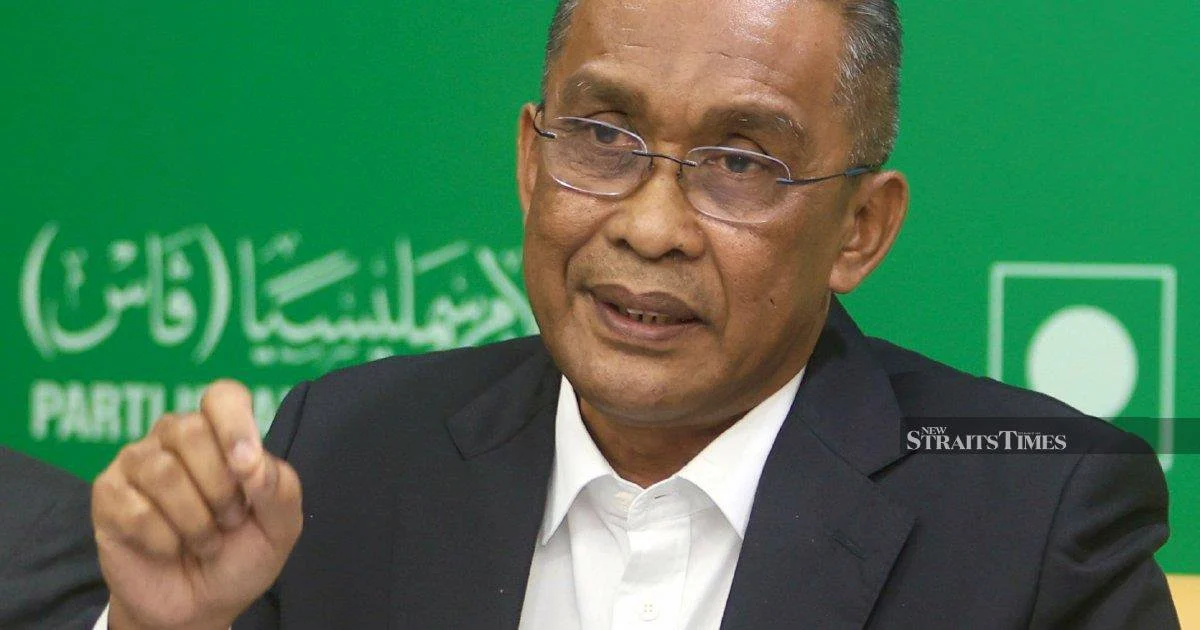
The Registrar of Societies (RoS) has formally recognised the leadership transition within Perikatan Nasional, solidifying Datuk Seri Dr Ahmad Samsuri Mokhtar's position as the coalition's chairman. This administrative confirmation represents a crucial checkpoint in PN's evolving political structure, as the regulatory body has now documented the organisational shift that will govern how the opposition coalition functions moving forward. The registration confirmation provides the legal foundation for the new leadership arrangement and clarifies the decision-making hierarchy that member parties and external observers must respect.
Under the newly formalised governance structure, any activity, gathering, or formal meeting conducted in PN's name must first secure explicit approval from Chairman Datuk Seri Dr Ahmad Samsuri Mokhtar. This requirement extends across all wings and operational divisions of the coalition, ensuring centralised oversight of the political entity's public movements and strategic initiatives. The directive effectively consolidates executive authority within the chairman's office, a development that reflects broader efforts to strengthen coordination among the coalition's constituent parties and prevent parallel or contradictory public positions that might undermine collective messaging.
For Malaysian political observers and analysts tracking PN's evolution, this administrative formalisation carries significance beyond mere procedural compliance. The explicit requirement for chairmanship approval signals an attempt to impose stricter internal discipline and coherent strategic direction across a coalition that has historically managed competing interests among its member parties. UMNO's departure and the coalition's subsequent restructuring required clearer governance mechanisms to maintain unity and prevent the kind of internal fragmentation that had plagued previous iterations of opposition alliances. The RoS confirmation essentially enshrines these new controls within the formal constitutional framework that governs the coalition.
The leadership transition itself reflects PN's ongoing repositioning within Malaysia's competitive political landscape. As opposition coalitions seek to consolidate strength ahead of anticipated electoral contests, establishing clear chains of command and decision-making protocols becomes essential for operational effectiveness. The chairman's elevated authority over activity approvals ensures that PN can respond swiftly to political developments and coordinate member parties' activities without the delays that might accompany consensus-seeking approaches. This centralisation approach mirrors strategies adopted by other major political coalitions seeking to enhance their institutional coherence and public impact.
For member parties within PN, the formalised approval requirement introduces operational considerations that previous arrangements may not have enforced as stringently. Party leaders and officials must now channel their proposed events, statements, and campaigns through the chairman's office for clearance, a process that could either accelerate decision-making through efficient approval pathways or introduce bottlenecks depending on implementation practices. The practical implications of this requirement will become evident as PN members attempt to balance their individual party interests with coalition-wide directives, a perpetual tension in multi-party political arrangements.
The RoS confirmation also carries implications for member party autonomy within the broader coalition framework. While individual parties retain their distinct identities and internal decision-making structures, their ability to deploy PN's name or claim to represent the coalition's collective stance now depends on formal approval from the chairman. This delineation prevents rogue elements within member parties from misrepresenting coalition positions or conducting unauthorised activities under PN's banner, a safeguard that protects the coalition's public credibility and strategic consistency.
Regionally, the formalisation of PN's internal governance reflects broader trends within Southeast Asian opposition politics, where coalitions increasingly adopt hierarchical structures to enhance institutional durability and strategic coherence. Malaysia's experience with various opposition alliances demonstrates that loose, consensus-based arrangements struggle to maintain unity under electoral pressure, prompting parties to accept more centralised governance in exchange for enhanced coordination and mutual protection. Ahmad Samsuri Mokhtar's newly confirmed authority positions him as the coalition's principal political spokesperson and strategic decision-maker, roles that demand careful management of competing interests.
The approval requirement also establishes a documented record of coalition activities and decisions traceable to the chairman's office, creating accountability mechanisms that democratic governance principles increasingly demand. This administrative formality protects the coalition against accusations of spontaneous or uncoordinated political activity, while simultaneously providing members with defensible explanations for initiatives undertaken in PN's name. The RoS confirmation thus serves multiple governance functions beyond simple procedural compliance.
Looking forward, the effectiveness of this formalised leadership structure will depend substantially on Ahmad Samsuri Mokhtar's approach to approval decisions and his ability to balance member parties' competing demands with coalition-wide strategic objectives. Whether the approval mechanism becomes a tool for inclusive decision-making or evolves into a centralising instrument that marginalises certain parties will likely shape PN's trajectory and cohesion in coming political cycles. The RoS confirmation provides the formal legal basis for the system, but its success ultimately depends on how the chairman exercises authority and whether member parties perceive the arrangement as serving collective interests.


%22%2F%3E%3C%2Fpattern%3E%3C%2Fdefs%3E%3Crect%20width%3D%22100%25%22%20height%3D%22100%25%22%20fill%3D%22url(%23ph4w4yvg)%22%2F%3E%3Crect%20width%3D%22100%25%22%20height%3D%22100%25%22%20fill%3D%22url(%23ph4w4yvp)%22%2F%3E%3Ctext%20x%3D%2250%25%22%20y%3D%2250%25%22%20text-anchor%3D%22middle%22%20dominant-baseline%3D%22central%22%20fill%3D%22rgba(255%2C255%2C255%2C0.95)%22%20font-family%3D%22Georgia%2C%20'Times%20New%20Roman'%2C%20serif%22%20font-weight%3D%22700%22%20font-size%3D%22226%22%20letter-spacing%3D%22-0.02em%22%3EPenang%3C%2Ftext%3E%3C%2Fsvg%3E)