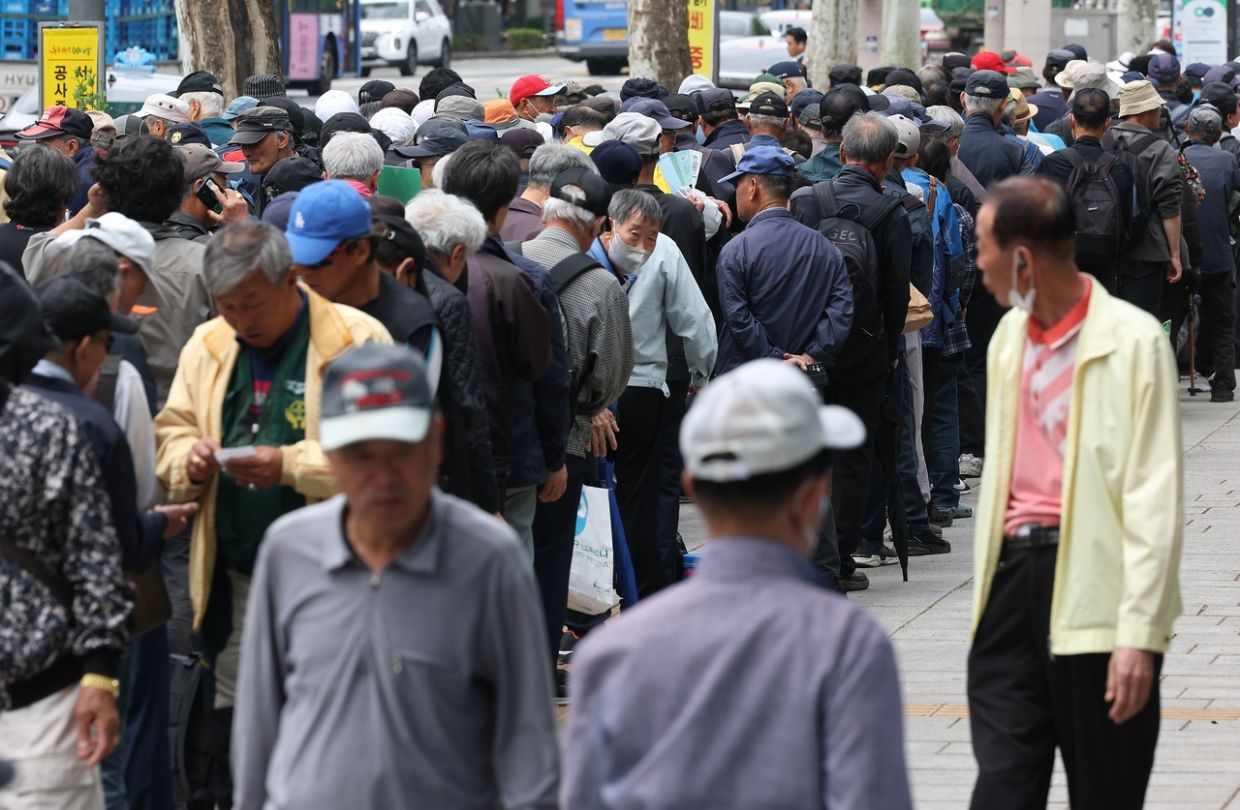
South Korea's capital is grappling with a thorny fiscal dilemma: whether it can afford to extend free public transport to its growing elderly population. The Seoul Metropolitan Council is considering legislation to provide free or heavily subsidised bus fares for residents aged 70 and older, building on an existing policy that already grants free subway access to those aged 65 and above. The proposal advanced through a council committee in mid-June and faces a plenary vote, though the expansion of such welfare benefits has triggered sharp debate about the city's ability to sustain escalating costs alongside its rapidly ageing demographic profile.
The initiative represents a campaign commitment made by Seoul Mayor Oh Se-hoon during local elections and reflects broader political momentum to address perceived gaps in transport accessibility for seniors. Currently, the inconsistency between free subway use and paid bus fares creates a two-tier system that disadvantages older residents living in areas with limited subway coverage or those who depend primarily on buses for daily mobility. Supporters of the measure argue this disparity leaves vulnerable seniors bearing unnecessary transportation expenses, particularly in peripheral neighbourhoods where buses form the backbone of public transit infrastructure.
Several South Korean municipalities have already moved ahead with such programmes, establishing a regional precedent that proponents cite as evidence of feasibility. Daegu initiated free bus rides for seniors in 2023 and has mapped out a gradual reduction in the eligibility age threshold from 75 to 70 by 2028, demonstrating a phased approach to implementation. Daejeon currently offers free bus rides to residents aged 70 and older, while Incheon announced plans to launch a comparable scheme for the 75-and-above age group during the same year. These examples suggest that other major cities view such subsidies as politically necessary responses to senior welfare demands.
However, the financial projections paint a sobering picture for Seoul's municipal budget. The city's own secretariat has calculated that providing universal free bus fares to all residents aged 70 and older would require initial annual expenditure of approximately 104.7 billion won (roughly US$68 million) from 2027 onwards. The burden intensifies as demographics shift: Seoul's population aged 70 and above is projected to expand from approximately 1.27 million currently to 1.63 million by 2031, pushing annual costs to 127.5 billion won. Over a five-year horizon, total outlays could reach nearly 579 billion won, representing a substantial addition to the city's existing welfare commitments.
These prospective costs must be understood within Seoul's current transport subsidy framework. The city already channels more than 450 billion won annually to compensate private bus operators for their operational losses, effectively underwriting a quasi-public transit system that struggles to maintain financial equilibrium. Beyond this baseline expenditure, Seoul Metro—the subway operator—absorbs enormous losses from providing free or discounted rides to seniors, people with disabilities, and holders of national merit cards. According to Seoul Metro's own accounting, these demographic groups generated average annual losses of 364.5 billion won over the preceding five years, with the figure climbing to 448.8 billion won in 2025 alone. Against this backdrop, introducing another major transport subsidy without corresponding revenue enhancements appears fiscally problematic.
Additional pressures loom on the horizon. Recent court rulings affecting how ordinary wages are calculated in South Korea's labour code are expected to inflate wage costs significantly across the bus industry, compounding existing financial strain on operators. This labour cost escalation arrives at precisely the moment when municipal authorities are contemplating expanded subsidies, creating a potential fiscal squeeze that could compromise service quality or force fare increases for non-subsidised passengers. The timing highlights a fundamental tension: expanding welfare benefits while the underlying economics of service provision deteriorate.
Critics have raised pointed questions about consistency in Seoul's budgetary priorities and the precedent the decision might establish. How, they ask, can the city justify expanding bus subsidies while simultaneously claiming inability to cover the mounting costs of free subway rides for seniors? Seoul Metro has repeatedly petitioned the national government to assume responsibility for losses incurred through providing free travel to elderly users and other eligible groups, arguing that municipal finances cannot sustain this burden indefinitely. Expanding subsidies across another transport mode without resolving this fundamental disagreement about cost responsibility risks creating a fiscal crisis that extends beyond buses to the entire public transport system.
Policy experts have sounded warnings about the political economy of welfare expansion. Sohn Jong-pil, a senior researcher at the Fiscal Reform Institute, cautioned that cash-type welfare programmes are notoriously difficult to scale back once introduced. Politicians face formidable electoral pressure to maintain or expand benefits, making reversals unpopular and politically costly. Sohn argues that policymakers must proceed with uncommon caution, ensuring that any expansion is accompanied by genuine strengthening of public accountability within the semi-public bus system—a structural reform that has eluded Seoul thus far.
Proponents counter that cost estimates may exaggerate the actual financial burden, pointing to the flexibility inherent in the proposed ordinance. The legislation does not mandate immediate universal free rides for all seniors aged 70 and older. Rather, it establishes a legal framework authorising the city to determine eligibility criteria, benefit levels, and support mechanisms. This flexibility opens alternative pathways to implementation: limiting subsidies to low-income seniors, capping the number of subsidised trips per user, restricting support to off-peak hours, or offering partial fare discounts rather than complete exemptions. Such targeted approaches could significantly reduce upfront costs while still addressing the primary concern of transport accessibility for vulnerable elderly residents.
CityOffice officials have characterised the ordinance as framework legislation rather than a commitment to immediate comprehensive provision. According to city statements, the measure creates an institutional foundation enabling future programme design, allowing policymakers time to develop implementation mechanisms that balance welfare objectives with fiscal sustainability. This framing suggests that passage would not automatically trigger immediate expenditures at the upper end of cost projections, instead granting officials discretion to pilot schemes, test eligibility mechanisms, and assess actual demand before full rollout.
The debate unfolding in Seoul carries broader significance for Southeast Asian and East Asian cities confronting similar demographic transitions. As populations across the region age rapidly, municipal authorities must determine how to provide meaningful welfare support to seniors without destabilising public finances. Seoul's dilemma represents a microcosm of challenges facing rapidly developing economies struggling to build adequate social infrastructure for expanding elderly populations. The decisions taken here will likely influence policy discussions elsewhere in the region, particularly in cities with comparable transport systems and comparable proportions of senior citizens.
Ultimately, Seoul's choice reflects a fundamental question about urban governance priorities in an ageing society. The city must reconcile its political commitment to senior welfare with the hard constraints of municipal finance, the expectations of other constituencies dependent on public services, and the sustainability of transport operators struggling with structural losses. Whether the council approves the ordinance in its plenary session remains uncertain, but the underlying tension—between expanding elderly welfare provision and fiscal realism—will likely persist regardless of the immediate outcome.
%22%2F%3E%3C%2Fpattern%3E%3C%2Fdefs%3E%3Crect%20width%3D%22100%25%22%20height%3D%22100%25%22%20fill%3D%22url(%23ph3tt8dg)%22%2F%3E%3Crect%20width%3D%22100%25%22%20height%3D%22100%25%22%20fill%3D%22url(%23ph3tt8dp)%22%2F%3E%3Ctext%20x%3D%2250%25%22%20y%3D%2250%25%22%20text-anchor%3D%22middle%22%20dominant-baseline%3D%22central%22%20fill%3D%22rgba(255%2C255%2C255%2C0.95)%22%20font-family%3D%22Georgia%2C%20'Times%20New%20Roman'%2C%20serif%22%20font-weight%3D%22700%22%20font-size%3D%22226%22%20letter-spacing%3D%22-0.02em%22%3EDiesel%3C%2Ftext%3E%3C%2Fsvg%3E)
%22%2F%3E%3C%2Fpattern%3E%3C%2Fdefs%3E%3Crect%20width%3D%22100%25%22%20height%3D%22100%25%22%20fill%3D%22url(%23ph5y615g)%22%2F%3E%3Crect%20width%3D%22100%25%22%20height%3D%22100%25%22%20fill%3D%22url(%23ph5y615p)%22%2F%3E%3Ctext%20x%3D%2250%25%22%20y%3D%2250%25%22%20text-anchor%3D%22middle%22%20dominant-baseline%3D%22central%22%20fill%3D%22rgba(255%2C255%2C255%2C0.95)%22%20font-family%3D%22Georgia%2C%20'Times%20New%20Roman'%2C%20serif%22%20font-weight%3D%22700%22%20font-size%3D%22320%22%20letter-spacing%3D%22-0.02em%22%3ERim%3C%2Ftext%3E%3C%2Fsvg%3E)