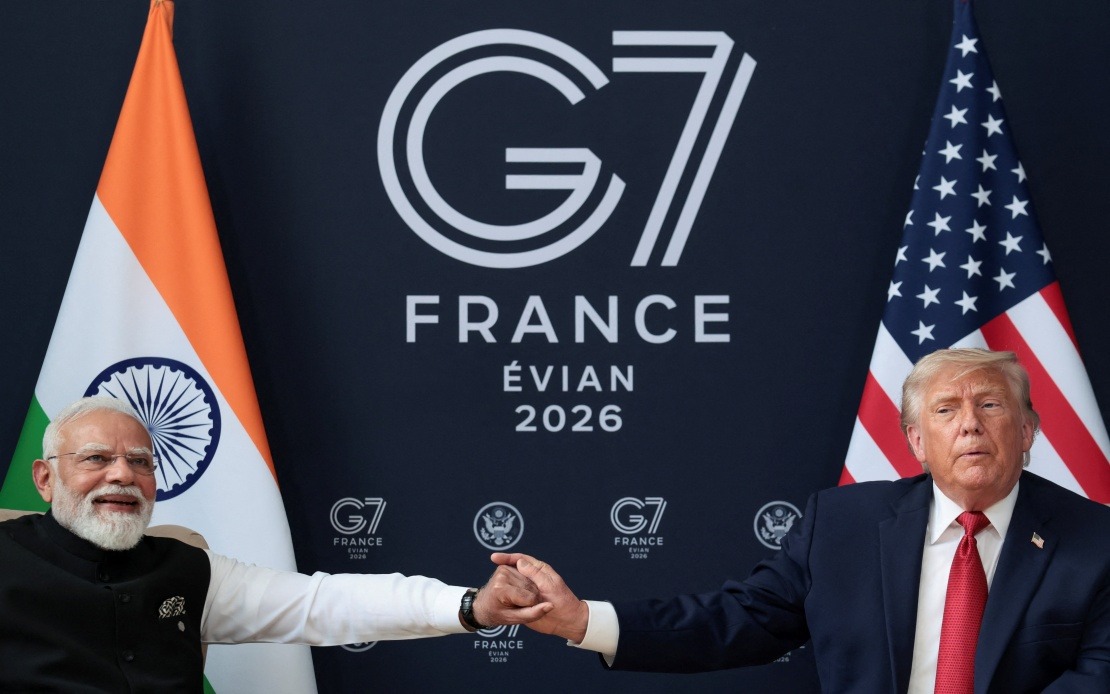
New Delhi has announced substantial momentum in efforts to finalise a comprehensive trade agreement with Washington, marking a potential breakthrough in prolonged negotiations between the two nations. The development emerged following bilateral discussions between Prime Minister Narendra Modi and US President Donald Trump during their meeting at the Group of Seven summit in Evian, France, where trade formed a central topic of conversation between the two leaders.
India's Ministry of External Affairs characterised the negotiations as having reached a pivotal juncture, with both governments expressing optimism about reaching a balanced and mutually beneficial accord. Officials from each country have been instructed to accelerate work toward finalising terms that would prove commercially viable for both trading partners. The ministry further indicated that such an agreement would represent a landmark achievement in bilateral economic ties, reflecting months of intensive diplomatic and technical negotiations.
The momentum gained in recent weeks represents a turning point in what has been a protracted negotiation process. Both capitals appear committed to overcoming previous bottlenecks that had stalled progress. The stated timeline suggests neither government views further delays as acceptable, with both sides keen to demonstrate tangible economic wins to their respective domestic constituencies. This shift in tone suggests that technical obstacles previously deemed insurmountable may have become more tractable through compromises from both sides.
Trump, when questioned about the ongoing discussions, offered praise for Modi's negotiating acumen, characterising the Indian leader as among the world's most formidable dealmakers. His remarks underscore the challenging nature of these talks, where each side seeks to maximise advantage while maintaining the appearance of achieving balance. The American president's acknowledgment of Modi's toughness reflects the reality that India has resisted pressure to make unilateral concessions, instead holding firm on protecting domestic interests while exploring opportunities for expanded market access in the United States.
The backdrop to these negotiations includes a complicated recent history of tariff escalations. In early 2025, Trump's administration imposed substantial levies on Indian goods, applying 25 percent tariffs across multiple product categories whilst simultaneously imposing an additional 25 percent penalty targeting Indian purchases of Russian petroleum. These measures reflected broader American efforts to reshape global trade relationships and retaliate against what Washington viewed as unfair practices. India absorbed these tariffs whilst simultaneously engaging constructively in negotiations, suggesting both sides recognised the mutual benefit of resolving disputes through dialogue rather than tit-for-tat retaliation.
An interim trade agreement reached in February of this year provided some relief to Indian exporters, with the United States reducing certain tariffs to 18 percent from previous levels. This earlier accord served as a foundation for current negotiations, demonstrating that both governments could find common ground despite their divergent economic priorities. The February agreement functioned partly as a confidence-building measure, proving that even amid broader global trade tensions, targeted bilateral accords remained achievable.
US Trade Representative Jamieson Greer's planned visit to India in the coming week signals Washington's commitment to maintaining momentum. Senior-level technical delegations typically focus on resolving granular issues that negotiators view as essential to any final agreement. Greer's presence in New Delhi would likely involve detailed discussions with Indian counterparts across multiple sectors, from agricultural products to manufactured goods, services, and intellectual property protections. Such visits often prove decisive in breaking logjams that have frustrated negotiating teams.
For Malaysia and other Southeast Asian economies, developments in US-India trade relations carry significant implications. A deeper US-India trade partnership could reshape regional supply chains, particularly given India's expanding role as an alternative to China-dependent manufacturing networks. Malaysian companies across sectors ranging from electronics to petrochemicals monitor India-US trade developments closely, assessing potential ripple effects on their own export opportunities and competitive positioning.
The current negotiations also reflect broader geopolitical considerations extending beyond commerce. Closer US-India trade integration aligns with Washington's strategy to strengthen relationships with major democracies and counter Beijing's economic influence across Asia. India's role as a counterbalance to Chinese economic dominance has elevated New Delhi's importance to American strategic calculations, lending negotiating power that smaller trading partners may lack.
The emphasis on achieving a "commercially meaningful" agreement suggests that both sides intend any final accord to deliver tangible economic benefits rather than serving purely symbolic purposes. This pragmatic approach indicates negotiators understand that domestic constituencies in both nations require evidence of concrete gains. Indian exporters keen to access American markets and American businesses seeking expanded opportunities in India's vast consumer economy represent constituencies with strong interests in a successful conclusion.
Regional observers note that successful US-India trade negotiations could establish a template for how Washington approaches commerce with other democracies in Asia and beyond. If the negotiations produce an agreement that both sides characterise as balanced rather than winner-take-all, it could ease global trade tensions that have escalated significantly in recent years. Conversely, if negotiations collapse, both nations would face questions about their respective commitment to pursuing trade solutions through negotiation rather than tariff escalation.
The timeline for finalising a comprehensive agreement remains undefined, though the emphasis on accelerating negotiations suggests completion could occur within months rather than years. Such speed would represent notable progress given the complexity typically involved in bilateral trade agreements, which must address agricultural access, manufacturing standards, intellectual property, services liberalisation, and numerous other technical domains. Both governments appear motivated to demonstrate dealmaking capacity and deliver wins to their constituencies.


