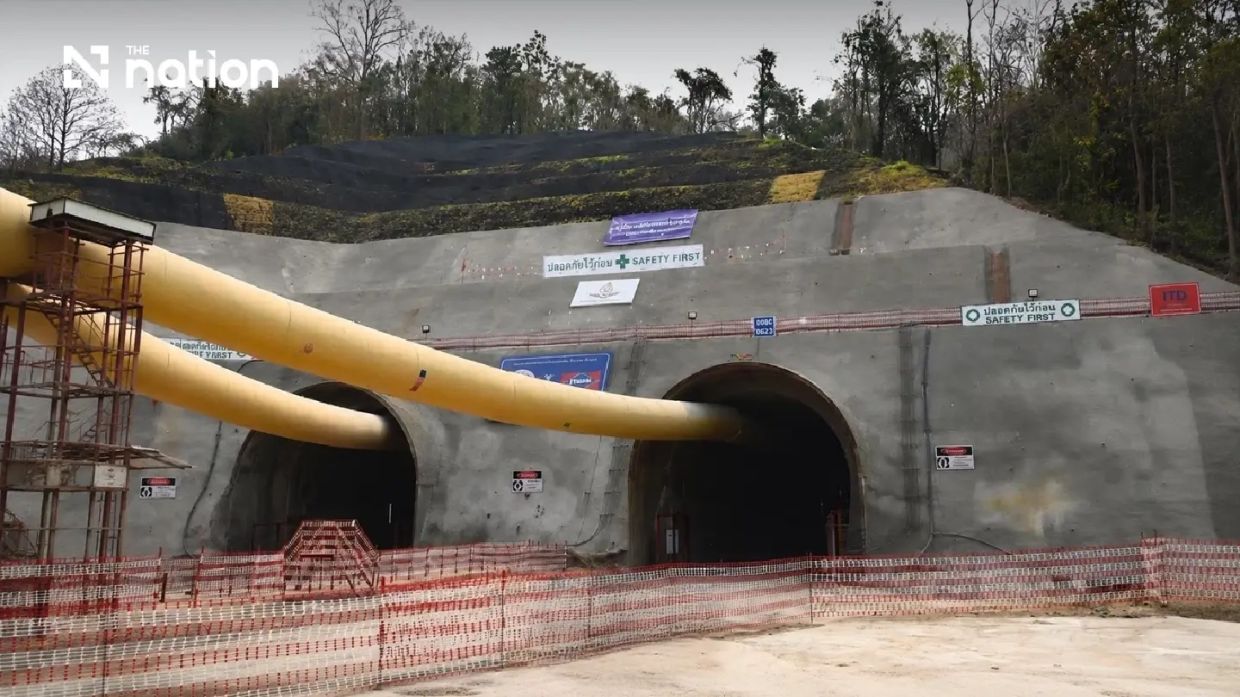
A tragedy unfolded at Thailand's ambitious Doi Luang railway tunnel in Chiang Rai province on Saturday evening when a structural collapse claimed two lives and left seven workers injured during active construction work. The accident occurred at approximately 8:35pm within the tunnel, which forms a critical component of the State Railway of Thailand's Den Chai-Chiang Rai-Chiang Khong railway line. The incident has cast a spotlight on workplace safety protocols within one of Southeast Asia's most significant infrastructure ventures, prompting immediate intervention from senior government officials and a comprehensive investigation into the circumstances surrounding the collapse.
According to Deputy Transport Minister Siripong Angkasakulkiat's initial assessment, preliminary evidence suggests that falling rocks dislodged from the tunnel wall may have triggered the catastrophic failure of the scaffolding system while construction crews were actively engaged in installing waterproofing materials. However, earlier reports had referenced complications within the shotcrete work area, indicating that the precise sequence of events remains under examination by technical specialists. The uncertainty surrounding the root cause underscores the complexity of tunnel construction work, where multiple operational activities occur simultaneously in confined underground environments with inherent geological hazards.
The human toll of the accident reflected varying degrees of severity among those present at the site. Two workers lost their lives, while three colleagues sustained serious injuries requiring intensive medical intervention and four others suffered minor injuries. All affected personnel were promptly transported to medical facilities for treatment and ongoing care. The rapid response from emergency services and the project's medical protocols helped mitigate what could have been far more devastating consequences had rescue operations been delayed or poorly coordinated.
The response from Thailand's transport ministry was swift and decisive. Siripong confirmed that the accident scene had been immediately secured and sealed off to prevent further incidents, with the project's dedicated safety unit assuming operational control of the site. A thorough investigation was initiated to establish the definitive cause of the collapse and identify any systemic safety lapses or procedural failures that may have contributed to the disaster. This multi-layered investigative approach reflects international best practices in construction accident analysis, where engineering assessments run parallel to administrative and safety audits.
The Doi Luang tunnel itself represents a remarkable feat of civil engineering within the mountainous terrain of Chiang Saen district. The 3.4-kilometre underground passage has already been bored completely through the surrounding rock formation, with the current phase focused on finishing works and essential systems integration. This stage of construction is particularly critical as workers must operate within an enclosed environment while managing complex technical installations, creating inherent vulnerability to accidents if supervision and safety protocols falter.
The tunnel project sits within a far larger transportation corridor expansion. Contract 3 of the broader Chiang Rai-Chiang Khong section carries an overall value of 19.385 billion Thai baht and encompasses a comprehensive range of construction activities spread across approximately 87 kilometres. Beyond the tunnel itself, the contract includes elevated and ground-level railway tracks, three mainline stations, three minor halts, signalling infrastructure, telecommunications systems, and ancillary facilities necessary for modern railway operations. This scale and complexity suggest that safety management across the entire project must be exceptionally rigorous and well-resourced.
The construction consortium responsible for delivering Contract 3 comprises three established Thai and regional contractors. CH. Karnchang Public Company Limited brings extensive domestic experience, while Sino-Thai Engineering & Construction Public Company Limited contributes cross-border expertise and technology. Chiangmai Construction Co., Ltd. rounds out the CKST-DC3 Joint Venture with local knowledge and operational capacity. The combination of these three entities suggests a deliberate effort to pool complementary capabilities, yet the accident raises questions about whether safety coordination across such joint ventures receives equivalent emphasis to technical coordination.
For Malaysia and the broader Southeast Asian region, this incident carries significant implications. The Den Chai-Chiang Rai-Chiang Khong railway initiative represents the type of transnational infrastructure development that regional governments are increasingly pursuing to enhance connectivity and economic integration. The project's ambition to link Thailand's interior with its northern borders reflects aspirations shared across the region for improved transport networks. However, the Chiang Rai tunnel collapse serves as a sobering reminder that accelerated construction timelines and ambitious project scopes must never compromise worker safety or quality assurance protocols.
The State Railway of Thailand's Special Projects and Construction Department moved quickly to conduct its own site inspection, indicating that multiple levels of government oversight are now focused on the accident and its implications. This layered supervisory approach, while potentially indicating bureaucratic complexity, ensures that findings from various technical authorities can be cross-referenced to identify systemic issues rather than attributing the collapse to isolated negligence. The commitment to detailed investigation signals that Thai authorities are taking the incident seriously and are unlikely to permit a swift resumption of work without comprehensive remediation measures.
As investigations continue and the ministry prepares further public statements, workers and their families await answers about what went wrong and what safeguards will be strengthened. The incident underscores an uncomfortable truth about infrastructure development: the ambition to build modern transport systems can create dangerous working conditions if the human elements—training, supervision, equipment maintenance, and environmental monitoring—do not keep pace with project scope and budget. The railway tunnel collapse in Chiang Rai serves as a cautionary tale for all regional nations pursuing rapid infrastructure expansion.
Beyond the immediate tragedy, this accident may prompt a broader review of construction safety standards across Thailand's railway modernisation programmes and similar projects throughout Southeast Asia. The technical investigation findings could influence how future tunnel projects are managed, particularly regarding rockfall risk assessment, worker positioning during waterproofing operations, and scaffold design verification. These lessons, once documented and disseminated, have the potential to prevent similar catastrophes across the region's growing portfolio of complex underground infrastructure works.