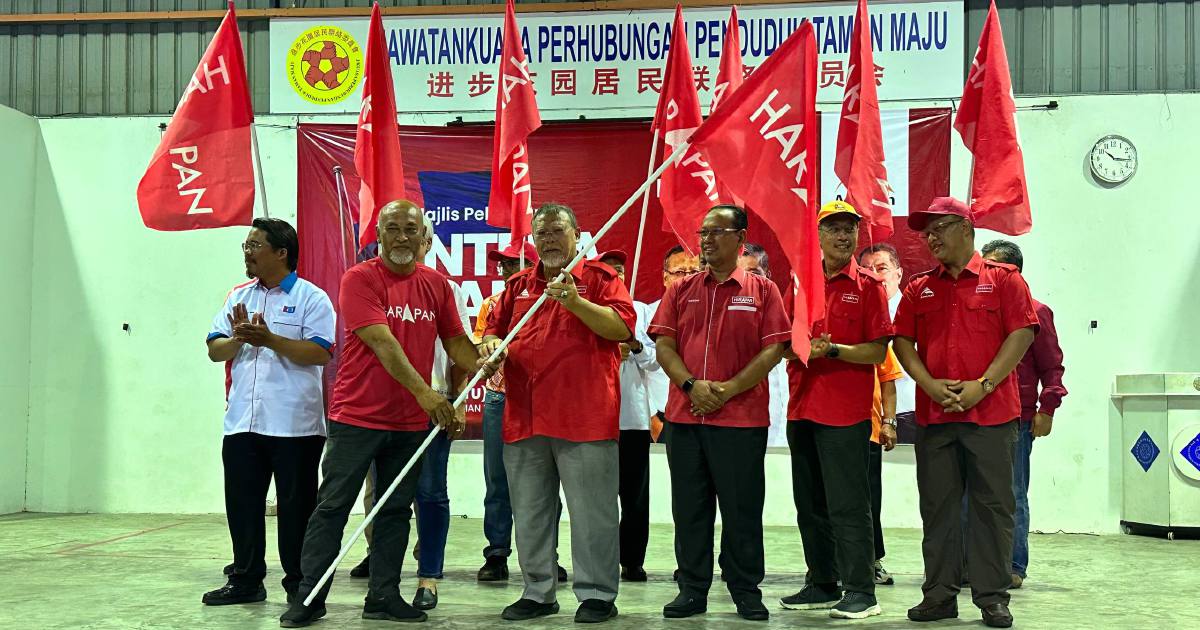
Johor's Amanah wing has outlined an ambitious electoral strategy for the July 11 state election, declaring its intention to capture at least six of the ten state assembly seats it is fielding candidates in across the northern zone. The party's confidence reflects what leadership views as growing momentum within their strongholds in this region, where Amanah has been intensifying grassroots engagement and attempting to consolidate support ahead of the crucial ballot.
The northern zone of Johor has emerged as a crucial battleground in the state's political landscape, with multiple factions vying for voter favour across constituencies that span from urban centres to semi-rural areas. Amanah's decision to contest exactly ten seats in this region suggests a carefully calibrated approach, balancing the party's resources and ground machinery with realistic assessments of winnable constituencies. The organisation has apparently identified specific areas where its message resonates most strongly with voters, particularly among urban populations and younger demographics who have traditionally formed a significant part of its base.
This electoral aspiration comes at a time when Johor politics remains highly competitive. The July 11 election presents an opportunity for various opposition and coalition parties to either consolidate gains or attempt territorial expansion. For Amanah specifically, meeting or exceeding the six-seat target would represent meaningful progress in a state where it has historically struggled to establish dominance, despite its presence as a component of the broader Pakatan Harapan coalition framework.
The party's northern zone campaign appears to hinge on several factors. Local party officials have reportedly been emphasising Amanah's track record on specific issues affecting voters in their constituencies, ranging from infrastructure development to local governance and community welfare. By narrowing focus to particular seats where organisational strength and voter receptivity appear strongest, the party hopes to maximise its effective utilisation of campaign resources and volunteer networks.
Regional political observers note that seat acquisition in Johor state elections often turns on nuanced local dynamics rather than purely statewide patterns. This reality has compelled Amanah and competing parties to adopt highly granular campaign strategies that address neighbourhood-specific concerns. The party's confidence in securing six seats suggests that internal polling or engagement metrics have indicated positive sentiment within target constituencies, though the competitive environment remains fluid.
For Malaysian readers following Johor politics, Amanah's performance in this election carries implications beyond the state itself. Johor has historically served as a bellwether for wider regional political trends, and the party's success or shortfall will influence perceptions of opposition coalition viability heading into future national electoral cycles. Strong showings in state elections generally provide morale boosts and fundraising advantages for parties at national level.
The timing of the July 11 election also intersects with broader national political developments, meaning that Johor voters will effectively be making choices that carry ramifications for federal coalitions and balance of power in Parliament. Amanah's northern zone strategy thus forms part of a larger calculus involving multiple stakeholders across the political spectrum.
Opposition parties contesting Johor elections typically invest heavily in the northern zone due to its demographic diversity and historical swing patterns. The fact that Amanah has committed to a specific numerical target suggests organisational confidence, though it remains to be seen whether ground realities on voting day will align with internal expectations. Past Malaysian elections have frequently produced surprises, with incumbent advantages, local sentiment shifts, and voter mobilisation variations complicating predictions.
Amanah's six-seat ambition also reflects the party's broader positioning within Pakatan Harapan. As one component of the coalition, seat acquisition directly affects the party's leverage in post-election negotiations and governmental formations. Johor specifically has seen occasions where the distribution of state assembly seats significantly influenced subsequent coalition dynamics and ministerial allocations.
The party's campaign messaging for the northern zone has reportedly focused on distinguishing Amanah from competing parties while emphasising its coalition credentials and stability. In constituencies where voters harbour doubts about opposition unity or government formation prospects, this messaging angle appears designed to reassure rather than energise. Conversely, in areas of stronger opposition sentiment, Amanah has potentially leaned more heavily into critiques of incumbent governance.
As voters prepare for the July 11 polling, the various parties' seat targets will serve as benchmarks against which electoral performance will be judged. Amanah's specific claim of at least six wins from ten contested northern zone seats places clear expectations on the party, making the eventual outcome transparently measurable. Whether the party meets, exceeds, or falls short of this target will carry significance for internal party morale and external perceptions of its electoral viability throughout Southeast Asia's most politically volatile state.

%22%2F%3E%3C%2Fpattern%3E%3C%2Fdefs%3E%3Crect%20width%3D%22100%25%22%20height%3D%22100%25%22%20fill%3D%22url(%23ph1a04ig)%22%2F%3E%3Crect%20width%3D%22100%25%22%20height%3D%22100%25%22%20fill%3D%22url(%23ph1a04ip)%22%2F%3E%3Ctext%20x%3D%2250%25%22%20y%3D%2250%25%22%20text-anchor%3D%22middle%22%20dominant-baseline%3D%22central%22%20fill%3D%22rgba(255%2C255%2C255%2C0.95)%22%20font-family%3D%22Georgia%2C%20'Times%20New%20Roman'%2C%20serif%22%20font-weight%3D%22700%22%20font-size%3D%22151%22%20letter-spacing%3D%22-0.02em%22%3EBezzecchi%3C%2Ftext%3E%3C%2Fsvg%3E)