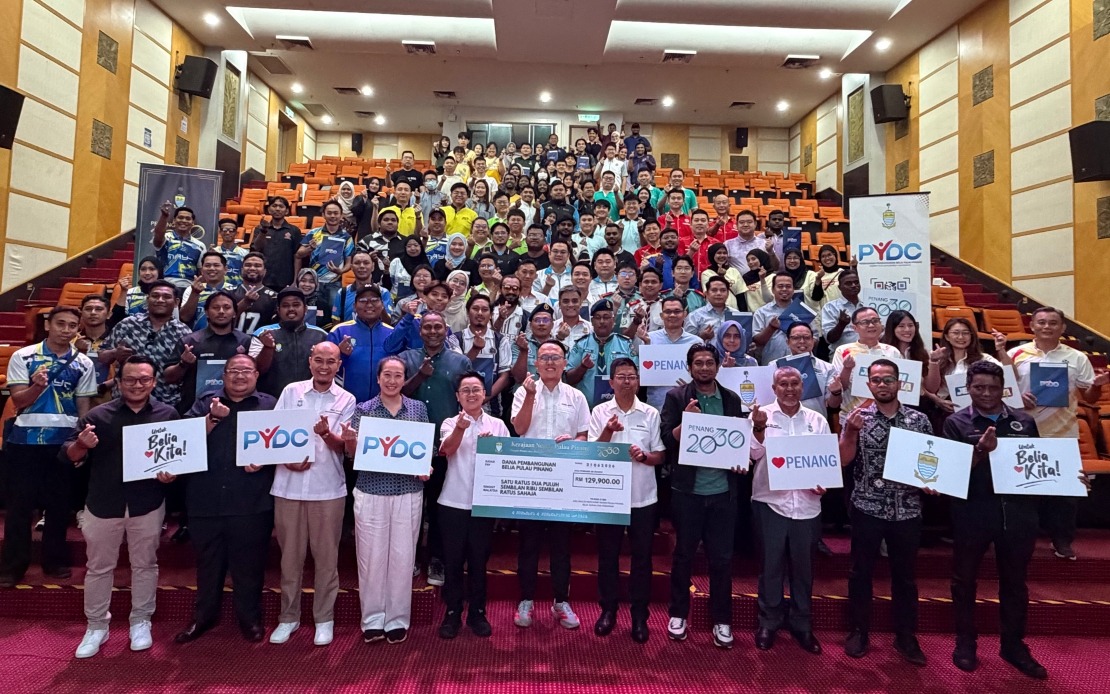
The Penang state government has greenlit RM129,900 in funding for 68 youth development initiatives across the state, channelled through 48 youth associations as part of its broader commitment to nurturing young talent and fostering civic engagement. The allocation represents a carefully targeted investment in programmes designed to equip young Malaysians with practical skills, enhanced employability prospects, and a stronger sense of social responsibility. Daniel Gooi Zi Sen, chairman of the Penang Youth, Sports and Health Committee, outlined the strategic thinking behind this funding initiative during an announcement in George Town, framing the disbursement as far more than straightforward financial assistance to qualifying organisations.
The RM129,900 forms part of a larger RM200,000 budget approved at a state-level Executive Council Meeting, demonstrating governmental prioritisation of youth affairs alongside sports and health portfolios. This budgetary commitment reflects recognition that young people represent a critical demographic for long-term state development and that investing in youth-led programmes yields measurable returns across multiple sectors of society. The programmes themselves span several thematic areas, including technical and vocational skills development, activities aimed at boosting marketability in competitive job markets, organised volunteerism initiatives that encourage social contribution, and leadership training designed to cultivate the next generation of community leaders and change agents.
Gooi's characterisation of the funds as a manifestation of governmental trust in youth associations carries particular significance in the Malaysian context, where grassroots youth organisations often operate with limited resources and heavy reliance on ad-hoc funding. By framing the allocation as an expression of confidence in young people's capacity to generate ideas and implement meaningful initiatives, the statement elevates youth associations beyond mere grant recipients to recognised partners in community development. This approach acknowledges that sustainable social progress emerges not from top-down programmes imposed by government structures, but from youth-led efforts rooted in understanding of local needs and grassroots circumstances.
The emphasis on realising ideas, creativity, and initiatives through organised programmes speaks to a fundamental shift in how authorities across Southeast Asia approach youth engagement. Rather than channelling young people into predetermined frameworks, there is increasing recognition that allowing youth associations autonomy in programme design, while providing financial backing and accountability structures, generates both more authentic solutions to community challenges and deeper engagement from participating young people. This philosophy aligns with international best practices in youth development and mirrors approaches being adopted across other Malaysian states seeking to move beyond outdated patronage models.
Crucially, Gooi articulated a requirement that recipient organisations operate with integrity, transparency, and efficient management practices. This stipulation indicates that while the funding represents trust, it is not unconditional trust; rather, it operates within a framework of accountability where associations must demonstrate responsible stewardship of public resources. For recipient organisations, this means maintaining clear financial records, documenting programme activities and outcomes, and remaining answerable to both the government and the communities they serve. Such requirements, while demanding, ultimately strengthen grassroots organisations by encouraging the development of professional management standards and institutional legitimacy.
A particularly insightful dimension of Gooi's remarks concerns how programme success should be evaluated and measured. Rather than reducing achievement to simple metrics of activity completion—how many events were held, how many participants attended—he proposed a more sophisticated evaluation framework that weighs long-term impact on participants and broader community benefits. This represents a nuanced understanding that youth programmes often generate benefits that only become apparent months or years after implementation, including shifts in participants' confidence, employment outcomes, civic engagement patterns, and their influence on peers. Such deep-impact thinking distinguishes genuinely transformative youth initiatives from those offering superficial entertainment or engagement.
For Malaysian readers, particularly those involved in youth work or grassroots community development, this Penang initiative offers several lessons and opportunities. The allocation demonstrates that state governments remain committed to investing in young people despite budget pressures, and it provides a concrete model for how sustained youth funding can be operationalised. The emphasis on diverse programme types—from skills training to leadership development—reflects understanding that different young people have different needs and aspirations, requiring a portfolio approach rather than one-size-fits-all solutions. Moreover, the focus on transparency and impact measurement sets expectations that could usefully be adopted across other states and at federal level.
Regionally, Penang's approach contributes to broader Southeast Asian conversations about youth development in an era of economic uncertainty and rapid social change. As countries across ASEAN grapple with youth unemployment, political disengagement, and questions about how to prepare young people for increasingly uncertain futures, initiatives like this reflect a commitment to pragmatic, evidence-informed investment in youth capabilities. The programme allocations across skills, employability, volunteerism, and leadership directly address priority areas identified in regional youth development frameworks and national development plans.
Looking ahead, the success of this initiative will depend significantly on execution quality by the 48 recipient associations and the effectiveness of government support and oversight mechanisms. Organisations receiving funding will need to balance autonomy in programme design with accountability requirements, maintain momentum across their selected initiatives throughout the year, and systematically document the impacts their work generates. The Penang government, meanwhile, will need to ensure sufficient support infrastructure exists—including technical guidance, monitoring frameworks, and avenues for organisations to share learning—to maximise the effectiveness of this investment across the 68 separate programmes.
The RM129,900 allocation ultimately represents more than budgetary expenditure; it constitutes a declaration of faith in young people's capacity to drive positive change when provided with resources, space, and recognition. As Penang implements this programme throughout the year, outcomes will provide valuable evidence about whether such trust-based approaches to youth funding generate the tangible community benefits and participant development outcomes that government strategists anticipate. For other Malaysian states considering youth funding priorities, the Penang experience will offer important insights into what works when resources are deliberately distributed to multiple associations pursuing diverse programme objectives, all unified by commitment to long-term community impact.

%22%2F%3E%3C%2Fpattern%3E%3C%2Fdefs%3E%3Crect%20width%3D%22100%25%22%20height%3D%22100%25%22%20fill%3D%22url(%23ph1a04ig)%22%2F%3E%3Crect%20width%3D%22100%25%22%20height%3D%22100%25%22%20fill%3D%22url(%23ph1a04ip)%22%2F%3E%3Ctext%20x%3D%2250%25%22%20y%3D%2250%25%22%20text-anchor%3D%22middle%22%20dominant-baseline%3D%22central%22%20fill%3D%22rgba(255%2C255%2C255%2C0.95)%22%20font-family%3D%22Georgia%2C%20'Times%20New%20Roman'%2C%20serif%22%20font-weight%3D%22700%22%20font-size%3D%22151%22%20letter-spacing%3D%22-0.02em%22%3EBezzecchi%3C%2Ftext%3E%3C%2Fsvg%3E)