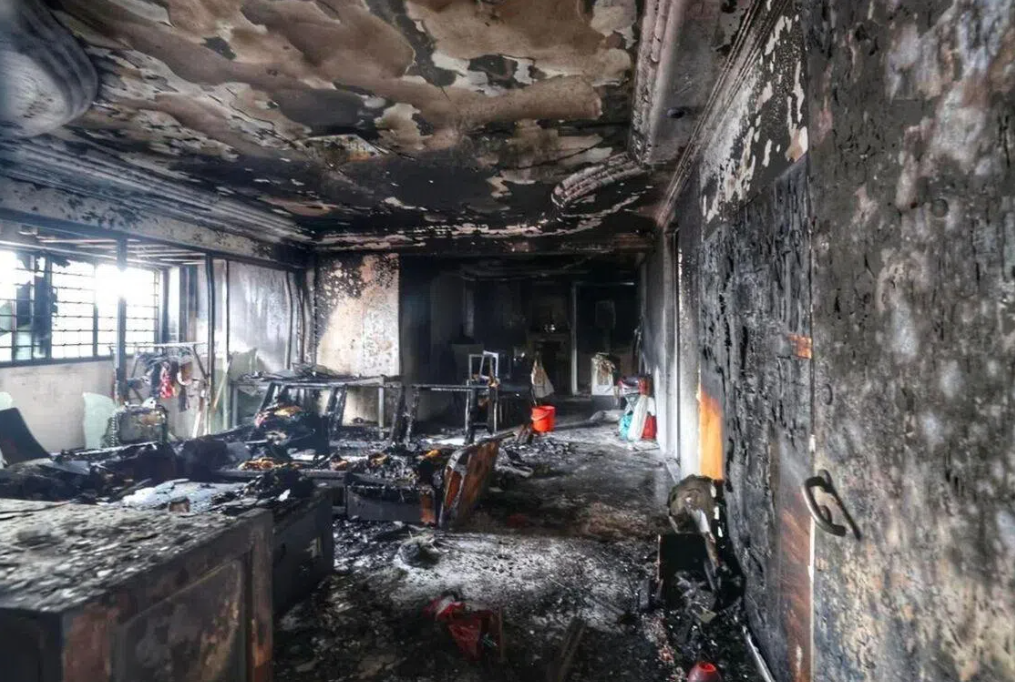
A pre-dawn fire in a high-rise residential unit in Jurong West left two people hospitalised and prompted the evacuation of dozens of residents in the early hours of June 17. The Singapore Civil Defence Force responded to the emergency at Block 842 Jurong West Street 81 at approximately 3.35am, where firefighters discovered flames engulfing the living room of a 13th-storey flat. The swift intervention of emergency responders prevented a potential tragedy, though investigators have determined that an electrical fault in the living room sparked the initial blaze.
Upon entering the smoke-filled unit, SCDF personnel deployed water jets to suppress the fire, bringing it under control within a short timeframe. The two residents who required rescue from the burning flat were transported to Singapore General Hospital for treatment of their injuries, while their two family members were also admitted for medical evaluation. As a precautionary measure, approximately 40 residents from neighbouring units were evacuated to ensure their safety, reflecting the serious risk posed by high-storey residential fires in densely populated Housing and Development Board developments.
An 18-year-old student living directly above the affected unit played a crucial role in alerting residents to the danger. The young man, who had been awake playing video games, noticed smoke seeping through windows in the floor below and immediately took action. "When I touched the door, it was very hot," he recounted to reporters, describing how he frantically knocked on neighbouring doors to warn residents to leave their homes. He then raced back to his own unit to alert his family before running downstairs to summon emergency services.
The student's quick thinking proved invaluable when a young woman from the burning flat appeared at his door seeking assistance. With singed hair and her face darkened by soot, she asked to borrow towels to attend to injuries sustained by her father. The observer also recalled seeing a man with severe burns covering his back and arms, displaying the telltale bright red discoloration characteristic of thermal injuries. These details underscore the immediate danger residents faced as the fire spread through their living space.
When journalists from Lianhe Zaobao visited the scene later that afternoon around 4pm, the devastation was plainly visible. The interior walls and ceiling of the unit were completely blackened by smoke and heat, while the windows had been shattered, likely due to the intense temperature within. A 12th-floor resident reported witnessing at least five fire engines positioned outside the block, reflecting the scale of the emergency response mobilised to contain the situation and assist affected households.
The incident underscores the persistent risks associated with electrical fires in residential settings, particularly in multi-storey apartment blocks where a single unit's fire can threaten numerous neighbouring homes. Investigators determined that the living room's electrical system was the ignition point, a common source of residential fires across Singapore and the broader Southeast Asian region. Such fires often originate from faulty wiring, overloaded circuits, or defective appliances that generate dangerous heat levels.
In response to the incident and broader fire safety concerns, the Singapore Civil Defence Force has reinforced public guidance on preventing electrical fires in homes. The agency emphasises the importance of avoiding overloaded electrical outlets, which can cause insulation breakdown and arcing. Residents are advised to switch off appliances when they are not actively in use, a simple practice that eliminates unnecessary electrical hazards during periods when equipment is idle, particularly overnight.
The SCDF has also highlighted the critical need for consumers to purchase only electrical appliances and plugs bearing the Safety Mark certification, issued by Singapore's Consumer Product Safety Office. This official accreditation ensures that devices have undergone rigorous testing to confirm they meet established safety standards and pose minimal fire risk. Importing or using non-certified electrical equipment significantly increases the danger of electrical malfunctions and subsequent fires.
Additionally, authorities have warned against leaving batteries and electronic devices charging unattended overnight or for extended periods. This practice is particularly hazardous for lithium-ion batteries commonly found in smartphones, laptops, and power banks, which can experience thermal runaway if overcharged or charged continuously without interruption. The accumulation of heat within these devices can potentially ignite surrounding materials, particularly in confined spaces or on upholstered furniture.
The broader context reveals an escalating fire hazard across Singapore. According to the latest annual statistics released by SCDF in February, the total number of fires climbed by three per cent from 1,990 incidents in 2024 to 2,050 in 2025, a concerning upward trend. Residential buildings account for more than half of these fires, with 1,051 incidents recorded within homes during the most recent reporting period, indicating that domestic fire safety remains a critical public health issue.
For Malaysia and other Southeast Asian nations with similar housing densities and climates, the Jurong West incident offers instructive lessons. High-rise public and private residential developments throughout the region face comparable electrical fire risks, particularly in aging buildings where wiring may deteriorate and maintenance standards vary. The quick response of Singapore's emergency services and the pivotal role played by alert residents underscore the importance of community vigilance and established protocols for rapid evacuation.
The incident also highlights how electrical fires represent a preventable danger if residents adopt disciplined habits and authorities enforce stringent product safety standards. Public awareness campaigns emphasising electrical safety, combined with enforcement of certification requirements for electrical products sold domestically, can meaningfully reduce incident rates. Malaysian residents and authorities might consider whether their fire prevention frameworks align with Singapore's approach, particularly regarding product safety certification and public education on the hazards of extended device charging and circuit overloading.
Moving forward, the Jurong West fire serves as a sobering reminder that electrical hazards lurk in ordinary homes, often unnoticed until they ignite. The survival of residents in this incident depended on rapid emergency response, community alertness, and the presence of functioning safety systems. By internalising these lessons and implementing the preventive measures outlined by fire safety experts, households throughout Southeast Asia can substantially reduce their exposure to residential fire risks.


