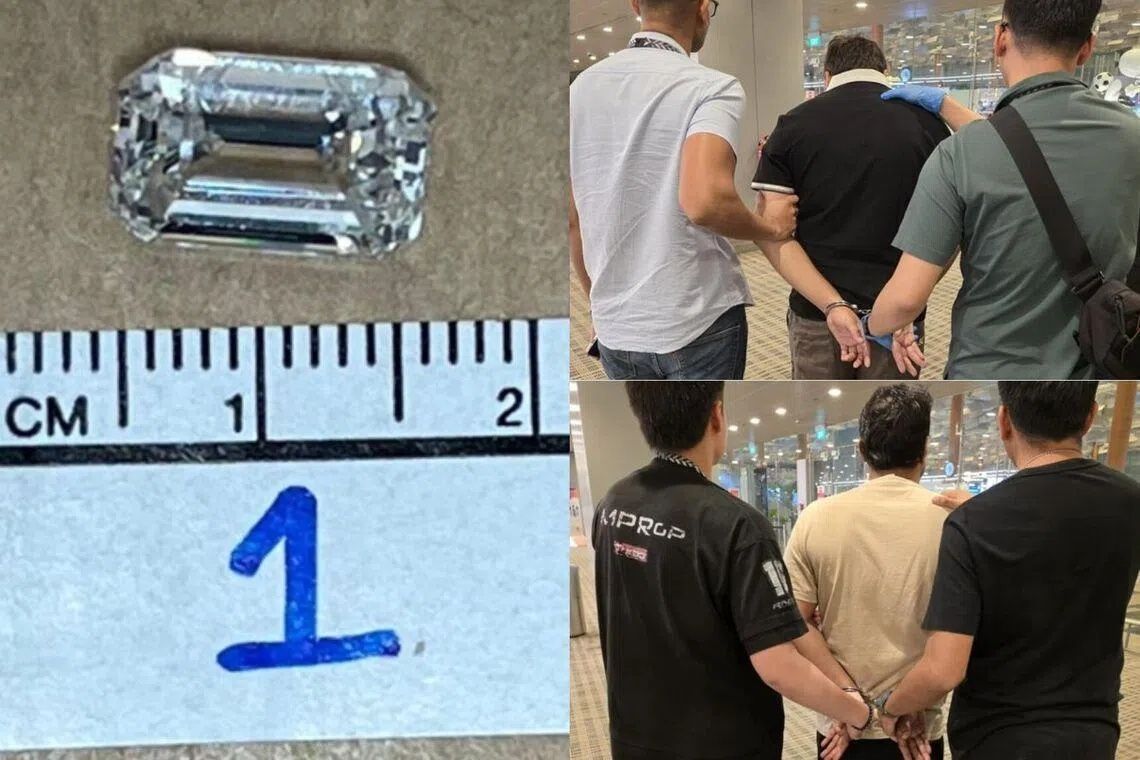
Singapore authorities have arrested two men in connection with the theft of a diamond valued at more than S$235,000 from a jewellery store in Chinatown, marking another significant recovery in the city-state's ongoing crackdown on commercial theft. The arrests came shortly after the incident occurred on Kreta Ayer Road on June 19, when police received a distress call at 3.40pm alerting them to the missing gemstone. Officers from the Central Police Division and Police Operations Command Centre moved swiftly to apprehend the suspects, ultimately locating and detaining them at Changi Airport Terminal 3 on the same day. The swift recovery of the stolen diamond demonstrates the effectiveness of Singapore's integrated law enforcement response to high-value crimes.
The modus operandi employed in this case reveals a sophisticated sleight-of-hand technique that has become increasingly common across Asian luxury retail markets. According to preliminary investigation findings, the two suspects entered the jewellery store exhibiting genuine interest in purchasing the diamond. While the shop staff attended to them and presented the gem for their examination, the men executed what investigators believe was a practiced exchange, substituting the genuine diamond with a replica. The substitution proved skilful enough to evade immediate detection, and the pair subsequently departed the premises without completing any transaction, a behaviour that should have triggered heightened vigilance.
The shop assistant's diligence proved crucial to uncovering the theft. Following standard operating procedure, the staff member conducted a routine inspection after the customers left and discovered the switch. This discovery triggered an immediate alert to law enforcement, initiating a response that would yield results within hours. The rapid identification of the suspects came through a combination of investigative techniques including CCTV analysis from the jewellery store itself and police surveillance camera footage in the Chinatown vicinity. Ground-level inquiries by uniformed and plainclothes officers supplemented the technical intelligence gathering, creating a multi-layered approach that enabled officers to establish identities and track the suspects' movements to the airport.
While police have not disclosed the nationalities of either suspect, the circumstances of their apprehension at Changi Airport's international terminal suggest they may have been attempting to leave Singapore immediately following the theft. This pattern is consistent with organised retail crime operations that target high-value items with the intention of smuggling them overseas for sale in international markets. The speed with which the suspects were intercepted prevented the diamond from entering potentially untraceable export channels, significantly increasing the likelihood of successful prosecution and recovery. The recovery of the stolen merchandise as case evidence strengthens the legal position considerably.
The charges now facing both men carry substantial penal consequences that underscore Singapore's firm stance on commercial theft. Each suspect faces charges of theft in a dwelling committed with common intention, an offence that carries a maximum sentence of seven years' imprisonment alongside monetary penalties upon conviction. The common intention element indicates that prosecutors will argue both men acted in concert and with shared purpose in executing the scheme. This legal framework reflects Singapore's preventive approach to organised retail crime, imposing sentence lengths intended to deter would-be offenders from targeting the retail sector.
The incident carries particular relevance for Southeast Asia's jewellery industry, where similar switch-and-swap techniques have proliferated across multiple jurisdictions. Thailand, Malaysia, and the Philippines have all reported increasing incidents of diamond and precious gemstone thefts employing comparable methods. The accessibility of high-quality counterfeit stones and the rising international demand for luxury goods create a profitable environment for organised retail crime networks. Singapore's jewellery sector, concentrated in areas like Chinatown and Raffles Place, represents an attractive target for such operations due to the concentration of high-value inventory and regular foot traffic.
In response to this theft, Singapore Police Force issued a formal advisory to all retail establishments trading in luxury items, urging heightened vigilance against similar techniques. The statement specifically warned shop owners and staff to remain alert to customers displaying excessive interest in examining high-value items, particularly when multiple individuals work in apparent coordination. Police recommended implementing additional verification procedures when handling gemstones, such as immediate cursory examination after customer interaction and the maintenance of detailed photographic or video records of items before and after customer viewing. These recommendations represent practical mitigation strategies that retail management can implement without substantially disrupting the customer experience.
The incident also highlights the continuing importance of security infrastructure in commercial settings. While CCTV footage proved instrumental in solving this case, the gap between the actual theft and its discovery by shop staff underscores the need for real-time monitoring systems that alert management to suspicious activity. Some forward-thinking retailers in Singapore have invested in advanced gemstone imaging technology that creates digital records capable of detecting microscopic differences between genuine stones and counterfeits. The cost-benefit analysis of such investments becomes increasingly favourable as the value of average inventory rises.
For Malaysian jewellery retailers, this case offers valuable lessons regarding vulnerability assessment and staff training protocols. The jewellery trade in Malaysia, particularly in Kuala Lumpur's Pavilion KL and Mid Valley Megamall, involves similar high-value transactions and faces comparable threats from organised retail crime. Malaysian retailers would benefit from implementing comparable verification procedures and encouraging staff to report suspicious customer behaviour patterns. The involvement of multiple suspects in coordinated activity, often with one individual engaging staff while others position themselves strategically, represents a recognisable pattern that trained personnel can identify and interrupt.
The successful resolution of this case demonstrates Singapore's investment in integrated law enforcement capabilities, combining human intelligence work with technological surveillance and rapid response protocols. The deployment of resources across the Central Police Division and Police Operations Command Centre reflects a coordinated approach that smaller regional jurisdictions might struggle to replicate. Nevertheless, the fundamental investigative principles—meticulous CCTV analysis, ground-level inquiries, rapid apprehension, and evidence preservation—remain applicable across all jurisdictions regardless of resource constraints. The case will likely feature in training curricula for retail security personnel and law enforcement agencies throughout Southeast Asia as a teaching example of both perpetrator methodology and effective police response.