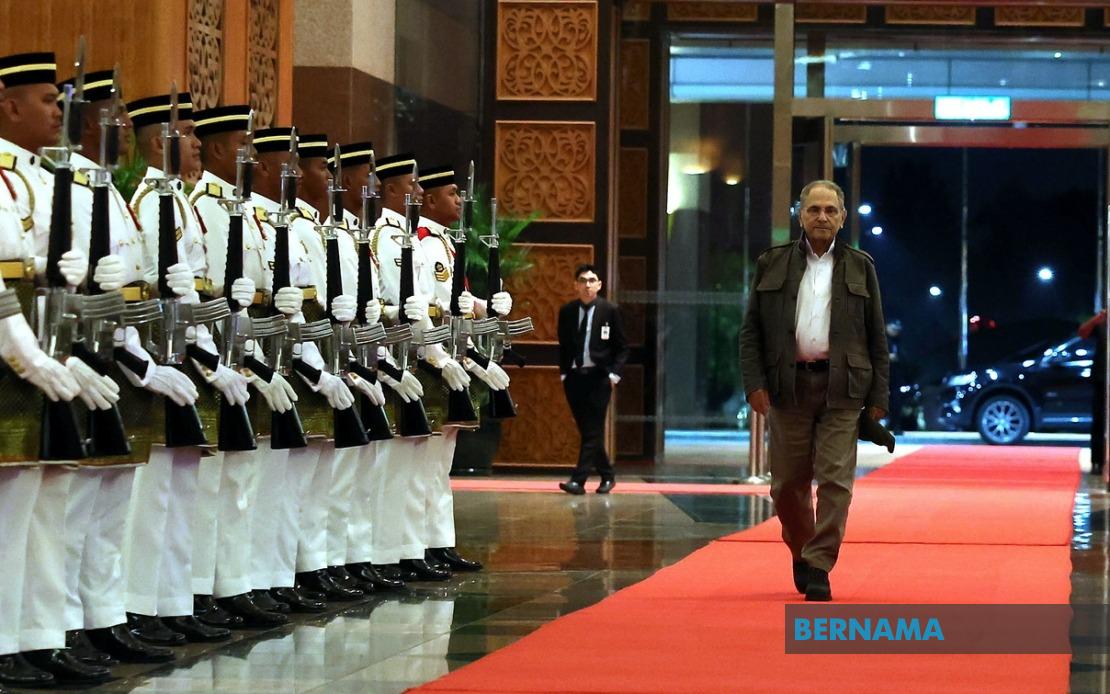
Timor-Leste President Jose Ramos-Horta departed Malaysia in the early hours of June 17, concluding a five-day state visit that underscored the deepening partnership between the two Southeast Asian neighbours. The Nobel Peace Prize laureate and his delegation made their way to Kuala Lumpur International Airport Terminal 1 to board a Batik Air flight, with his departure marked by ceremonial protocols befitting a visiting head of state. The timing of the visit—occurring just months after Timor-Leste's formal accession to ASEAN as the bloc's eleventh member in October 2025—signals the strategic importance both nations place on bilateral engagement during a pivotal period for regional integration.
Ramos-Horta's presence in Malaysia carried particular significance given his country's nascent membership in the Association of Southeast Asian Nations. During the visit, he participated in a high-profile dialogue session entitled "A Changing World, Enduring Values" on June 15, where he publicly described the relationship between Dili and Kuala Lumpur as "exceptionally good." His remarks acknowledged Malaysia's demonstrated commitment to security, democratic governance, and economic advancement—qualities Timor-Leste views as exemplary as it continues consolidating its own institutions following decades of conflict and instability.
The President's comments reflected appreciation for Malaysia's historical role in supporting Timor-Leste's trajectory toward independence and stability. Malaysia maintained a visible presence during the critical 1999 peacekeeping operations that followed the popular consultation vote on independence, a historical fact that carries weight in contemporary bilateral relations. Beyond these historical gestures, Malaysia provided crucial diplomatic backing for Timor-Leste's ASEAN accession bid during its recent ASEAN chairmanship, demonstrating practical commitment to the younger nation's regional integration objectives.
Economic cooperation emerged as a central theme throughout the presidential visit. Ramos-Horta extended a formal invitation to Malaysian investors to consider opportunities within Timor-Leste's infrastructure development sector, framing the proposition in terms of fiscal prudence and institutional strength. He highlighted his country's relatively low debt levels and the existence of a sovereign wealth fund—both attractive factors for foreign direct investment. Additionally, the President referenced backing from multilateral financial institutions, suggesting that infrastructure projects would benefit from international financing frameworks that Malaysian companies could leverage for joint ventures and partnerships.
Prime Minister Datuk Seri Anwar Ibrahim hosted an official luncheon for Ramos-Horta at the Seri Perdana Complex, providing a venue for substantive discussions between the two leaders. During this engagement, both officials exchanged perspectives on potential avenues for expanded cooperation spanning trade, investment flows, human capital development, education initiatives, and technical training programmes. Such high-level engagement reflects the Malaysian government's recognition that Timor-Leste's emergence as an ASEAN member creates new opportunities for bilateral engagement across multiple sectors and levels of society.
Existing trade data reveals the current scale of economic interaction between the two countries. In 2024, bilateral commerce totalled USD18.72 million, equivalent to approximately RM85.68 million. The composition of this trade reflects Malaysia's current economic advantage: Malaysian exports reached USD18.37 million (RM84.06 million), while imports from Timor-Leste totalled merely USD0.35 million (RM1.62 million). These figures underscore an asymmetrical trade relationship wherein Malaysia supplies manufactured goods and services to Timor-Leste, while Timor-Leste's export capacity remains underdeveloped—a dynamic that infrastructure investment and economic cooperation could gradually reshape.
The disparity in trade flows presents both challenge and opportunity for policymakers in both capitals. For Malaysia, Timor-Leste represents an emerging market with demographic dynamism and untapped resource potential. For Timor-Leste, Malaysian expertise in manufacturing, services, and infrastructure development offers practical pathways to economic diversification beyond petroleum dependency. The trade statistics also highlight why Ramos-Horta's infrastructure invitation carries strategic weight; developing Timor-Leste's productive capacity would inevitably increase demand for Malaysian capital goods, services, and expertise, gradually rebalancing the trade relationship.
Ramos-Horta's confidence in Timor-Leste's capacity to host ASEAN in 2029 reflects ambitious planning by the Dili government. The President indicated that infrastructure and facility development was being accelerated to meet hosting requirements for the regional bloc's summit and associated meetings. This undertaking, while logistically demanding, represents a critical milestone in Timor-Leste's emergence as a fully integrated ASEAN member capable of executing regional responsibilities. Malaysian experience hosting ASEAN meetings and summits—accumulated over decades of participation—positions Kuala Lumpur as a potential source of technical advisory support and best-practice sharing as Dili prepares for the 2029 commitment.
The visit also reflects broader Southeast Asian dynamics as the region adjusts to the full inclusion of all ten ASEAN member states plus Timor-Leste. The addition of Timor-Leste completes ASEAN's original geographic framework and brings a new voice to regional deliberations, particularly on maritime security, ASEAN-China relations, and development cooperation. Malaysia's deliberate cultivation of warm relations with the Ramos-Horta administration signals an intent to position itself as a reliable partner for Timor-Leste's integration process, potentially strengthening Malaysia's influence within ASEAN councils as new dynamics emerge.
Looking forward, the visit establishes a foundation for deepening ties across multiple dimensions. The combination of historical goodwill, diplomatic support for regional integration, and concrete economic opportunities creates a framework within which bilateral relations can expand substantially. For Malaysian stakeholders—whether investors, educational institutions, or technical training providers—the presidential visit signals a green light for expanding engagement with Timor-Leste. Conversely, for Timorese officials, Malaysia represents a tested model of regional integration and economic development worth emulating as the nation navigates its ASEAN membership and broader Southeast Asian responsibilities.