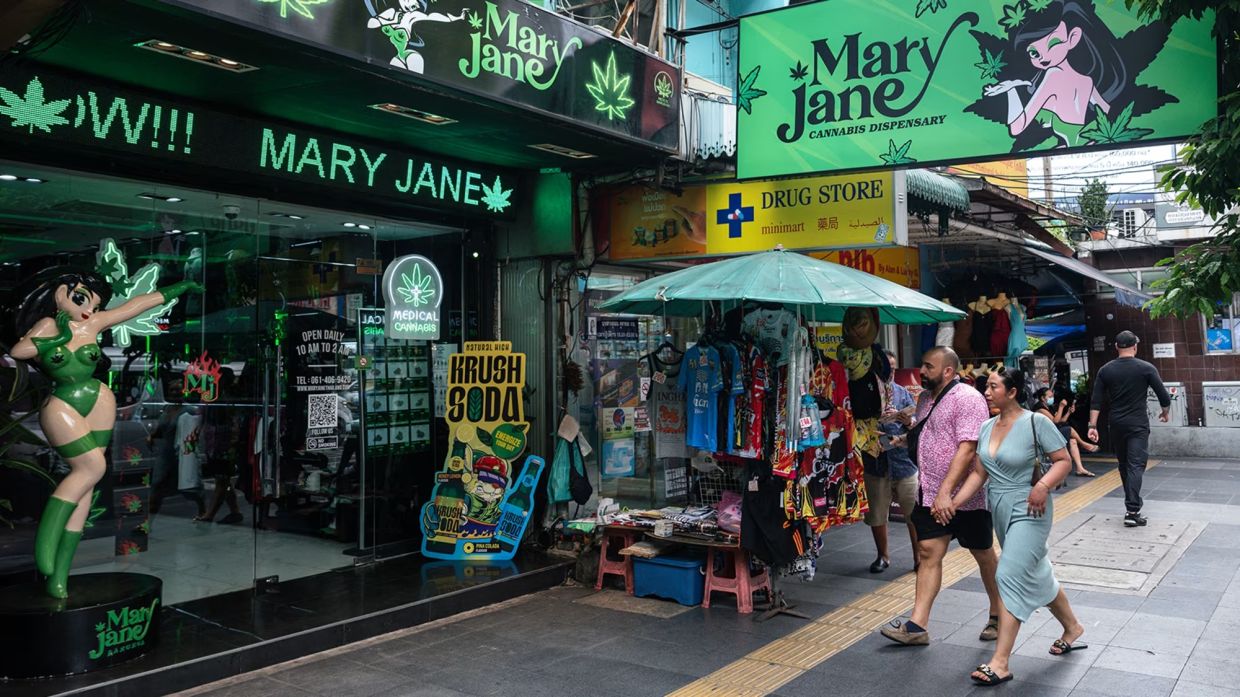
Thailand's cannabis regulatory landscape has become the subject of intense political and public health debate, with lawmakers and officials increasingly questioning whether the current framework adequately protects consumers and maintains order. The House Public Health Committee convened a substantial meeting on June 18 to determine the future of cannabis governance, bringing together a diverse coalition of stakeholders with fundamentally opposing visions for how the plant should be managed. The deliberations highlighted a growing recognition among some policymakers that the June 2022 liberalisation of cannabis has created unintended consequences that now demand urgent attention.
The committee, led by Sakoltee Phattiyakul, assembled medical professionals, public health experts, drug harm researchers, and representatives from traditional medicine and food safety authorities to evaluate whether cannabis should be reclassified as a controlled narcotic, at least temporarily. This convening represents a significant pivot in Thailand's approach to the substance, which was decriminalised nearly three years ago as part of a broader policy shift toward medical and industrial applications. The tension underlying the meeting reflects a fundamental challenge facing regulators throughout Southeast Asia: how to balance emerging economic opportunities against documented public health and social risks in an environment where enforcement capacity remains limited.
Dr Tewan Thaneerat, the deputy director-general overseeing cannabis governance within the Department of Thai Traditional and Alternative Medicine, explained that cannabis currently operates under the Protection and Promotion of Thai Traditional Medicine Wisdom Act 1999, positioning it as a controlled herb rather than a prohibited substance. However, he acknowledged that persistent concerns have accumulated since liberalisation occurred. In June 2025, the Public Health Ministry implemented three regulatory measures designed to govern cultivation for research purposes, retail operations, manufacturing processes, and international commerce, ostensibly bringing Thailand's regime into alignment with international standards. Despite these interventions, enforcement gaps and implementation failures continue to plague the system, suggesting that administrative oversight alone cannot address the structural problems that have emerged.
A draft cannabis and hemp bill currently under development represents the government's primary effort to establish a comprehensive legal framework. This legislation was previously submitted to the Cabinet during an earlier administration but failed to progress before Parliament dissolved. The current Public Health Ministry remains committed to advancing the bill forward, and it is now undergoing public consultation hearings scheduled to conclude by late July, after which the draft will return to the Cabinet for consideration. This timeline reveals the slow pace of legislative reform in Thailand, creating a vacuum in which unregulated activity has proliferated and stakeholders have increasingly conducted business in legal grey zones.
Proponents of tighter controls, including Ekkapop Sittiwantana from the People's Party, argue that cannabis should temporarily revert to narcotic status until comprehensive legislation is finalised. His argument centres on the proliferation of unregistered growing operations and informal direct sales networks that bypass official channels entirely. By allowing cannabis plants to operate outside formal registration systems, policymakers have inadvertently created opportunities for what Ekkapop characterises as grey businesses—entities that technically operate semi-legally but lack genuine oversight. This mechanism enables ordinary criminal enterprises to disguise their activities as legitimate operations, fundamentally undermining the regulatory intent.
Associate Professor Dr Smith Srisont, speaking for a coalition of medical professionals and civic organisations focused on drug-related harms, reinforced concerns that the current system has failed to protect public health despite theoretical safeguards. While cannabis extracts exceeding 0.2 per cent THC remain classified as narcotics under existing law, practical enforcement has proven inadequate. Smith Srisont highlighted a particular vulnerability: cannabis flowers themselves are classified as controlled herbs, but other plant components fall outside criminal prohibitions when cultivated. This creates an obvious loophole in which operators can technically comply with regulations while producing and distributing cannabis in forms that circumvent intended controls. His recommendation mirrors Ekkapop's position that temporary recriminalisation, followed by implementation of a dedicated regulatory statute, would represent a more coherent sequencing strategy than the current approach.
The Food and Drug Administration presented its perspective on product safety and licensing architecture, explaining that herbal medicines derived from cannabis remain subject to rigorous oversight across production, importation, and retail channels. The agency has maintained an inspection regime to verify that products meet labelling standards and quality specifications, and preliminary findings suggest most tested items have met technical requirements. However, this compliance rate masks the underlying problem that troubles regulators most: a substantial volume of cannabis sales now occurs through channels that operate entirely outside the formal licensing system. The failure lies not in the technical competence of regulatory bodies but in their inability to capture the full scope of commercial cannabis activity within the legal structure.
Those advocating for cannabis operators' rights and industry protection, particularly through the Thai Cannabis Future Network, presented a markedly different narrative rooted in economic and agricultural concerns. They contend that legitimate operators face severe competitive disadvantages against unregistered black-market competitors, smuggled goods, and legal uncertainty that makes long-term planning impossible. The network raised serious allegations that certain government officials have demanded illicit benefits in connection with cannabis licensing decisions, suggesting that corruption and abuse of regulatory authority have compounded the sector's difficulties. Additionally, they pointed out that medical prescription requirements designed to control access have become burdensome—prohibitively expensive for small farmers and farmers—and have been reportedly traded or diverted away from legitimate healthcare contexts. Their argument emphasises cannabis's historical role in traditional medicine and its contemporary economic potential for rural communities, asserting that regulation should not be designed exclusively to serve major corporate investors at the expense of smaller operators and agricultural communities.
Sakoltee, concluding the June 18 meeting, ordered officials to compile comprehensive inventories of all legally licensed cannabis retailers operating in Bangkok and all cannabis products certified by the FDA, signalling serious intent to assess what actually exists within the ostensibly regulated system. He emphasised that cannabis accessibility has become problematic and indicated that any future statutory framework should incorporate spatial restrictions preventing cannabis establishments from locating near schools and educational facilities. This concern reflects growing awareness that young people's access to cannabis products remains inadequately controlled despite liberalisation occurring under medical and agricultural justifications. The committee has also mandated broader epidemiological research into cannabis-related harms and affected populations, suggesting policymakers recognise knowledge gaps that currently constrain evidence-based policymaking.
Looking forward, Sakoltee indicated the committee's openness to considering alternative regulatory bills from government agencies alongside the Public Health Ministry's proposed legislation, suggesting Parliament is preparing for the possibility that a single unified approach may not emerge from executive deliberation. This openness acknowledges that Thailand's cannabis challenge cannot be resolved through technical regulatory fixes alone but instead requires foundational political decisions about what role cannabis should play in Thai society. The next phase of Thailand's cannabis governance will essentially test whether the government can construct a regulatory system that simultaneously accommodates farmers' economic interests, recognises traditional medicine applications, protects public health—particularly youth populations—and maintains sufficient legal certainty that legitimate businesses can operate sustainably.
For Malaysia and other ASEAN neighbours, Thailand's regulatory struggles offer instructive lessons about the practical difficulties of liberalising cannabis policy. Thailand's experience demonstrates that moving cannabis outside criminal prohibition without simultaneously establishing robust administrative capacity and complete legal frameworks creates perverse incentives that ultimately generate more disorder than the original prohibition. The gaps between theory and enforcement, between formal regulations and operational reality, and between competing stakeholder interests have combined to produce an environment where neither public health nor business interests are well-served. Any regional peers contemplating cannabis reform would be wise to observe how Thailand addresses these implementation challenges before pursuing similar policy paths.


