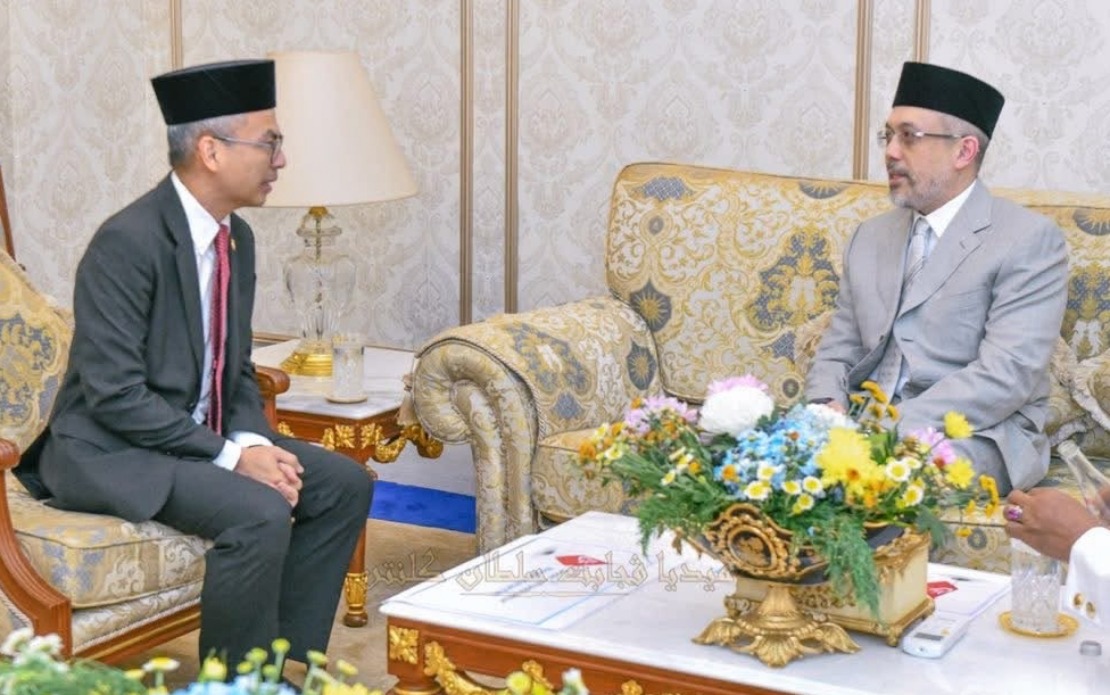
The Crown Prince of Kelantan, Tengku Muhammad Fakhry Petra, received Communications Minister Datuk Fahmi Fadzil at Kota Lama Palace in Kota Bharu on June 17, in a formal audience that underscored the heightened focus on digital misinformation within Malaysia's corridors of power. The meeting, which commenced at 5 pm, represented an important platform for the government's communications leadership to engage directly with state-level royal institutions on matters affecting national interests and institutional credibility.
The Kelantan Sultan's Media Office indicated that the primary purpose of the hour-long audience was to apprise His Highness on recent developments and findings emanating from the Ministry of Communications. This briefing encompassed a comprehensive overview of the ministry's operational scope and strategic initiatives, reflecting the need for transparent communication channels between federal agencies and state-level leadership. Such formal engagements serve both as courtesy protocols and as substantive policy discussions where concerns can be elevated and understood at senior levels of government.
At the forefront of the discussions were escalating concerns regarding the proliferation of fraudulent social media accounts operating within Malaysia's digital ecosystem. The prevalence of such accounts has become a significant governance challenge, as they serve as vehicles for disseminating false information and manufactured content designed to undermine public institutions. This issue carries particular weight given Malaysia's multicultural and sensitive political landscape, where misinformation can rapidly inflame community tensions and erode public trust in governmental and constitutional frameworks.
Particularly troubling to authorities are coordinated campaigns targeting the Malaysian Royal Institution through fake accounts. These operations distribute misleading narratives and negative content that misrepresent the monarchy's roles, statements, and positions. The vulnerability of social media platforms to such manipulation represents a threat not merely to individual reputations but to the fundamental institutional foundations upon which Malaysia's constitutional monarchy operates. The sharing of false news through inauthentic accounts amplifies the reach and perceived credibility of disinformation, creating a compounding effect that proves difficult to counter through conventional fact-checking mechanisms.
The timing of this audience reflects growing recognition within government that coordinated action across federal and state structures is essential to combat digital misinformation. By engaging directly with the Crown Prince, Minister Fahmi demonstrated the ministry's commitment to ensuring that state-level leadership remains informed and aligned on national communications priorities. Such engagement also signals to the public and to international observers that Malaysia's institutions take the integrity of digital discourse seriously and are prepared to act in concert against threats to institutional credibility.
The delegation accompanying Minister Fahmi included Senior Private Secretary MohamadAsif Afifi Mohd Yusof and the Minister's accompanying officer Tuan Ahmad Afifi Hamdan Tuan Aziz, along with ministerial office staff. The presence of multiple officials from both the federal ministry and the Kelantan Sultan's Office indicated that this was a substantive policy engagement rather than a ceremonial courtesy call. The composition of the delegations suggested serious intent to discuss concrete measures and collaborative approaches to addressing the identified challenges in Malaysia's information environment.
During the proceedings, Tengku Muhammad Fakhry accepted a memento from Minister Fahmi, a gesture that traditionally signifies the successful conclusion of formal diplomatic engagements and mutual respect between parties. This symbolic element, while brief in the official account, underscores the collaborative spirit intended to characterize the relationship between the ministry and state-level institutions. Such gestures help reinforce the non-partisan, institutional character of the engagement and signal that the discussion transcended partisan political considerations.
The event concluded with informal networking opportunities, including a friendly meet-and-greet session and photography with attendees. These less formal elements serve an important function in building institutional relationships and demonstrating accessibility between federal and state leadership. Such settings often allow for candid discussions on matters that may not fit neatly into formal agenda items, potentially creating space for exploring collaborative solutions to emerging challenges in communications policy.
From a broader perspective, this audience highlights the asymmetry in Malaysia's digital governance landscape. While social media platforms operate across borders and are nominally subject to international regulatory frameworks, the capacity of bad actors to exploit these platforms to target specific national institutions remains substantial. Malaysia, like many regional democracies, continues to grapple with calibrating responses to misinformation that protect institutional integrity without inadvertently restricting legitimate speech or creating precedents for overreach. The ministry's engagement with state leadership suggests recognition that effective responses require institutional coordination and potentially new collaborative approaches to monitoring and responding to sophisticated disinformation campaigns.
For Malaysian communications policy more broadly, this meeting signals that concerns about fake accounts and coordinated inauthentic behavior have ascended to the highest levels of policy consideration. The fact that a communications minister deemed it necessary to brief a Crown Prince directly on this issue underscores how seriously government perceives the threat. This reflects both the technical challenge of identifying and removing fraudulent accounts at scale and the political sensitivity surrounding any content that touches on Malaysia's constitutional monarchy and national institutions. The audience thus represents a pivot point in how the government intends to address digital misinformation—through institutional coordination rather than isolated ministerial action.