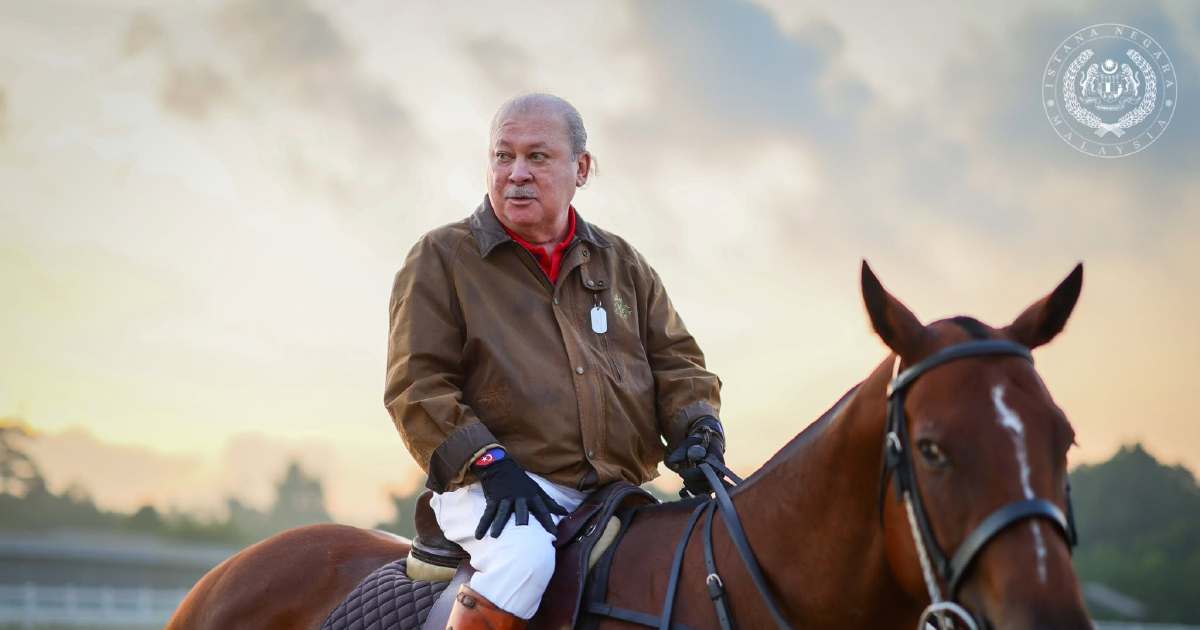
His Majesty Sultan Ibrahim, King of Malaysia, continues to prioritise his personal wellness through an established morning equestrian schedule, with recent observations at the Royal Johor Polo Club in Istana Pasir Pelangi confirming the monarch's ongoing commitment to the discipline. The King executed his riding routine in a measured and relaxed fashion, underscoring a pattern of consistent physical activity that has become a notable feature of his daily schedule since assuming the throne.
The maintenance of such a structured fitness regimen at the Royal Johor Polo Club reflects broader trends among senior officials across Southeast Asia who employ traditional sporting activities as vehicles for maintaining health and stamina. Polo and horse riding have long been associated with the Malaysian monarchy, serving both as cultural heritage and practical exercise in an era when modern leadership demands substantial physical and mental endurance. The King's deliberate approach to his morning activities signals an acknowledgment of the rigorous demands of the highest constitutional office.
The Royal Johor Polo Club, situated at Istana Pasir Pelangi, operates as one of the premier equestrian facilities in Malaysia and serves as a venue for both recreational pursuits and formal sporting events. The setting provides an appropriate environment for the head of state to engage in physical activity whilst maintaining the security protocols and privacy necessary for a reigning monarch. Regular use of such established facilities underscores the institutional nature of the monarchy's engagement with traditional pastimes.
The observed composure and steadiness displayed during the recent riding session carry symbolic weight beyond mere personal fitness. A monarch who demonstrates physical capability and engagement with deliberate, controlled movement projects an image of stability and measured governance to both domestic and international audiences. This visual narrative, carefully observed and documented by official channels, contributes to broader public perception of royal wellness and capacity.
Fitness routines among high-ranking officials have assumed greater prominence in recent years, particularly as scrutiny of leadership competence extends beyond political performance to include demonstrable physical capability. The King's commitment to early morning activity aligns with established best practices promoted by health authorities across Malaysia and the region, effectively modelling behaviour that government agencies actively encourage among the general population. This alignment between royal practice and public health messaging reinforces institutional credibility on wellness matters.
The choice of polo and horse riding as the primary form of exercise connects to Malaysia's equestrian heritage and the historical role of horsemanship in the country's cultural traditions. The continuation of such practices by the current monarch preserves continuity with predecessors whilst simultaneously demonstrating that traditional activities retain relevance and value in contemporary contexts. This balance between heritage and modernity characterises much of the monarchy's public engagement.
The disciplined nature of the King's fitness schedule—specifically the early morning timing—reflects principles of personal organisation that carry broader implications for perceptions of governmental efficiency. Leaders who demonstrate regimented personal habits often benefit from public association with self-discipline and purposefulness, qualities that theoretically extend to their executive functions. The documented consistency of the King's equestrian activities serves as an implicit statement about organisational capability.
From a regional perspective, the maintenance of traditional sporting practices by Southeast Asian monarchs demonstrates the resilience of historical customs alongside modernisation. Whilst many nations have transitioned entirely toward contemporary gym-based fitness regimens, the continued prominence of horse riding among senior leaders suggests deliberate preservation of cultural practices. For Malaysia specifically, this represents an assertion of distinct identity within the broader region.
The security arrangements surrounding the King's routine at the Royal Johor Polo Club represent a significant logistical undertaking that remains largely invisible to public observation. The seamless execution of such activities depends on established protocols involving multiple agencies, illustrating the complex infrastructure required to support royal functions. The apparent ease and casualness of the observed riding session masks substantial coordination efforts.
The King's demonstrated equestrian proficiency and regular engagement with horsemanship also carries implications for diplomatic and cultural representation. Official delegations and state visits often include activities showcasing national character and values, with the monarch's personal sporting abilities contributing to Malaysia's international presentation. Competence in traditional pursuits enhances the country's cultural narrative on the global stage.
Moving forward, the continuation of the King's established fitness routine provides a template for institutional consistency and forward planning. The documentation of such regular activities creates a pattern of predictable royal engagement that both the public and government agencies can reference and rely upon. This predictability itself becomes a stabilising factor within the broader constitutional framework.