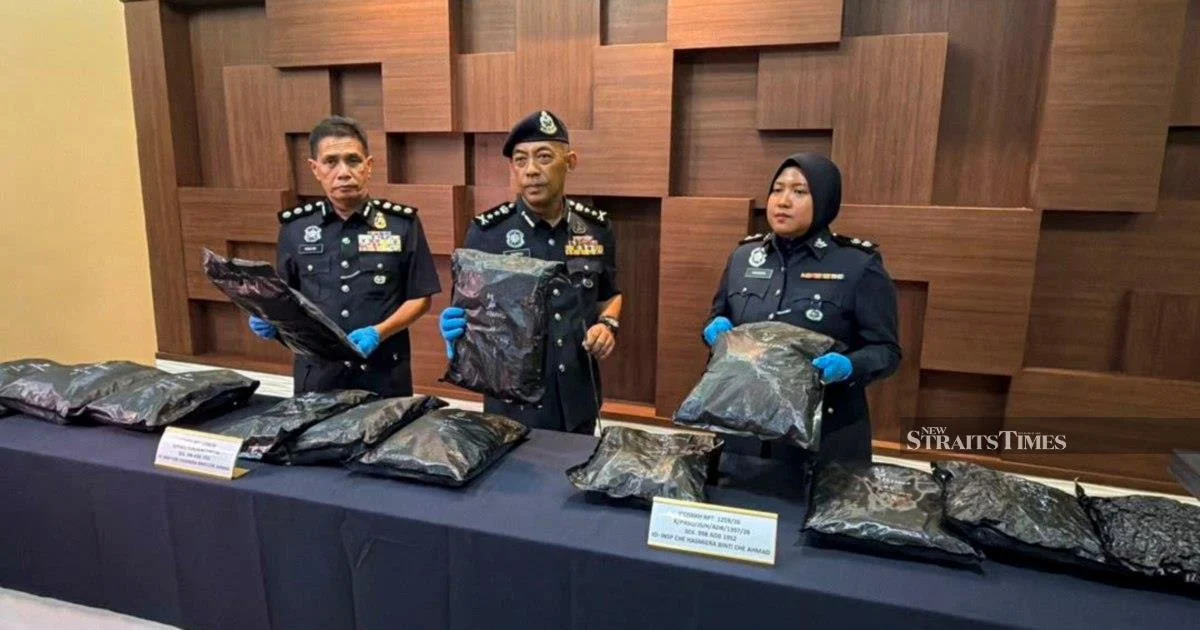
Police in Kedah have moved swiftly to apprehend a student enrolled at a private higher education institution on suspicion of attempting to smuggle a substantial quantity of cannabis across Malaysia's northern frontier. The arrest took place at Bukit Kayu Hitam, a major border checkpoint linking Malaysia to Thailand, where officers discovered the suspect in possession of 14.63 kilogrammes of cannabis buds. Preliminary valuation of the seized narcotics places their street value at approximately RM1.17 million, underscoring the substantial economic scale of the operation and the growing threat of illicit drug trafficking through northern Malaysian entry points.
The incident highlights how criminal networks continue to exploit young individuals with access to higher education as couriers for moving prohibited substances across international borders. By recruiting students—individuals who may carry less suspicion at border crossings due to their demographic profile—drug trafficking organisations appear to be refining their strategies to circumvent law enforcement detection. The choice of Bukit Kayu Hitam, one of Malaysia's busiest land border crossings and a frequent transit route between the two nations, suggests the suspect may have been following established smuggling corridors used by organised trafficking groups. This operational sophistication indicates that larger criminal syndicates likely orchestrated the movement rather than an isolated individual acting independently.
The quantity seized represents a significant confiscation for the region. At 14.63 kilogrammes, this haul would constitute a substantial supply volume capable of serving numerous distribution points within Malaysia or continuing onward to other Southeast Asian markets. The valuation at RM1.17 million reflects the premium pricing of cannabis in Malaysia's illicit market, where supply constraints and severe legal penalties elevate street prices considerably above those in countries where the substance faces less stringent controls. The economic incentive for traffickers thus remains extraordinarily high, particularly for operatives willing to assume the substantial personal legal risk involved in cross-border smuggling.
The Bukit Kayu Hitam checkpoint serves as a critical control point where authorities maintain enhanced vigilance against drug trafficking. The border region between Malaysia and Thailand has long represented a vulnerability in the nation's drug interdiction efforts, with the porous nature of certain crossing points and the volume of daily traffic creating persistent enforcement challenges. The fact that this particular seizure occurred at an official checkpoint suggests detection mechanisms, whether routine customs inspections, intelligence-led operations, or passenger profiling, functioned effectively on this occasion. However, the continued flow of attempted smugglers through this same corridor demonstrates that law enforcement faces an uphill struggle against well-funded criminal enterprises.
Malaysia's stance on drug trafficking remains among the world's most severe, with possession of quantities exceeding specified thresholds triggering presumptions of trafficking intent and exposing offenders to capital punishment. For a student to become involved in such activities, whether through financial desperation, coercion, or deliberate criminal intent, represents a profound legal jeopardy. The trajectory from university student to death-row inmate has materialised in Malaysian courts multiple times in recent years, a sobering reminder of the irreversible consequences of involvement in large-scale drug smuggling. The psychological and developmental factors that might drive a young person with educational prospects into such extreme criminality remain unclear from initial reports but warrant investigation and analysis by authorities seeking to understand recruitment vulnerabilities.
The operation raises questions about how organised crime syndicates identify and approach potential couriers among student populations. Educational institutions, particularly private colleges with larger international student enrolments or more transient domestic student bodies, may present target-rich environments for traffickers seeking disposable assets. The involvement of a student suggests either deliberate targeting by criminal networks or an individual's voluntary participation driven by financial reward or coercive pressure. Understanding these recruitment dynamics becomes increasingly important as law enforcement agencies throughout Southeast Asia grapple with the adaptability of trafficking organisations.
The seizure contributes to a broader pattern of cannabis smuggling through mainland Malaysia's northern frontier, a trafficking route that has proven remarkably resilient despite intensified enforcement efforts in recent years. Thailand's evolving legal landscape regarding cannabis, which has seen certain regulated uses approved, has paradoxically complicated border control efforts by creating perceptions among some traffickers that the substance faces reduced scrutiny. The disparity in legal frameworks across national borders typically generates trafficking dynamics favouring illicit movement from jurisdictions with weaker enforcement toward more profitable downstream markets.
This incident also underscores the vulnerability of Malaysia's higher education sector to infiltration by criminal elements seeking to exploit student communities. Institutions with large student populations, particularly those with significant international cohorts or students facing financial hardship, may inadvertently become recruitment grounds for trafficking networks. Enhanced awareness programmes targeting student bodies, coupled with institution-level initiatives to identify at-risk individuals, could potentially disrupt these recruitment pathways.
Looking forward, the arrested student now faces processing through Malaysia's criminal justice system, which will apply the nation's uncompromising narcotics legislation. The case will likely conclude with either substantial imprisonment terms or capital charges depending on prosecutorial decisions and final trial outcomes. For educational administrators, this arrest serves as a stark reminder of the security challenges within campus environments and the importance of vigilance regarding student involvement in illicit activities outside institutional walls.


