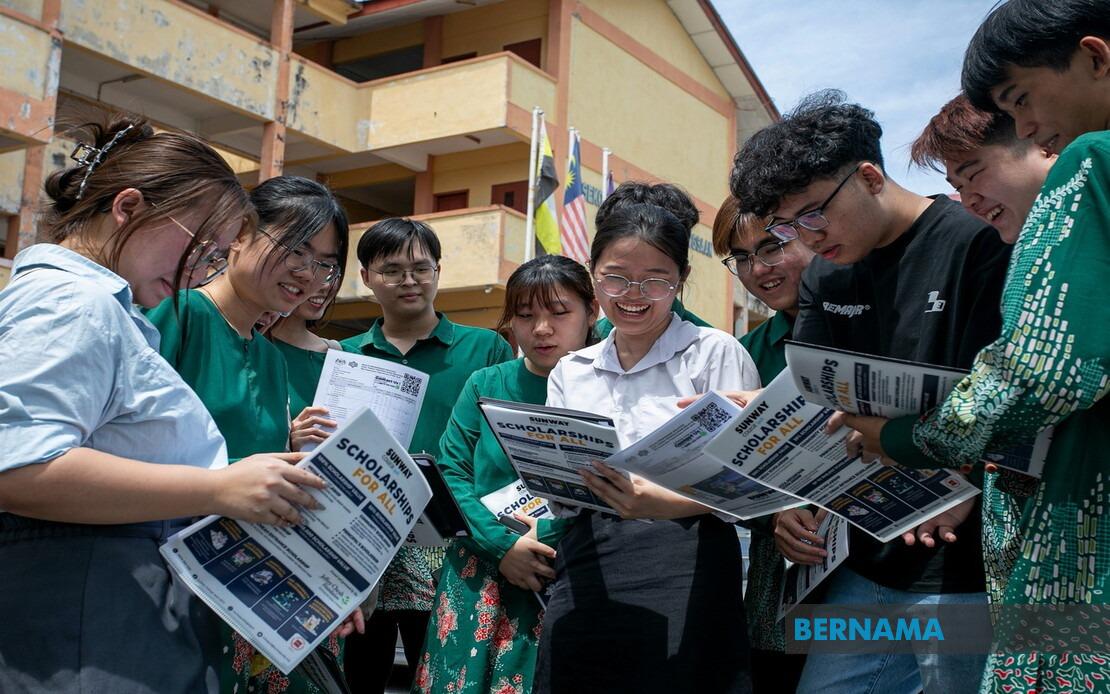
Malaysia's Form Six qualification continues to establish itself as a meaningful and accessible route into higher education, with recent high achievers from varied demographic backgrounds reinforcing the system's ability to nurture excellence across all communities. The 2025 STPM examination results have thrown into sharper focus the advantages that the two-year programme offers—whether measured by academic rigour, financial accessibility, or inclusive infrastructure—compelling a fresh conversation about its place within Malaysia's educational landscape at a time when alternative tertiary pathways proliferate.
Hazaril Hakimi Hassan, an Orang Asli student from Kampung Paya Mendoi in Kuala Krau, Pahang, epitomises this inclusivity argument. Achieving a flawless 4.00 Cumulative Grade Point Average through SMK Temerloh, Hazaril's trajectory underscores how Form Six, despite historically receiving less institutional focus and public attention, can unlock academic potential in communities sometimes marginalised from educational discourse. His recognition by the Malaysian Examinations Council signals institutional acknowledgment that excellence emerges when support networks—from teachers and family—align with student determination. His aspiration to read Malay Language Education at Universiti Putra Malaysia and eventually lecture in the field demonstrates how STPM credentials facilitate pathways into knowledge-producing professions that shape society.
The financial dimension of STPM deserves particular emphasis for Malaysian families navigating tertiary education costs. Ng Yu Yong, a stellar performer from SMK Tsung Wah in Kuala Kangsar, Perak, directly articulates what many parents and students perceive but seldom hear articulated clearly: Form Six represents substantially lower financial outlay compared to private colleges or international pathways, whilst maintaining competitive academic standing. Having secured five A grades including in Physics and Biology—subjects demanding rigorous laboratory engagement and conceptual mastery—Ng's counsel to prospective students consciously repositions STPM not as a second-tier option but as an actively superior choice for those serious about excellence without financial haemorrhage. His target of pursuing an MBBS degree at Universiti Malaya reflects confidence that STPM provides sufficient academic credibility and preparation for demanding professional programmes, negating any lingering perception that alternative routes confer competitive advantage in competitive professional training.
The international recognition that Form Six qualifications carry constitutes another understated advantage in an increasingly mobile student demographic. As Malaysian students increasingly consider undergraduate study abroad, having STPM on their academic record opens doors in British universities particularly, given Malaysia's Commonwealth heritage and educational alignment. Ng explicitly validates this dimension, noting how STPM credentials facilitate seamless transition to prestigious institutions globally—a practical reality that resonates with middle-class Malaysian families viewing education as both national and transnational investment.
Yeoh Chwen Yih's achievement presents perhaps the most compelling case for STPM's inclusive infrastructure. As a visually impaired student at St John's Institution, Yeoh obtained the same perfect 4.00 CGPA as peers without visual disabilities, a result that would have been substantially more difficult without institutional accommodation. The availability of screen-reading technology within Form Six classrooms—software enabling rapid access to learning materials compared to Braille conversion—illustrates how STPM's mature institutional framework accommodates diverse learners better than emerging alternatives might. Yeoh's determination to pursue law and perception that Form Six provides the most inclusive environment speaks to accessibility provisions that younger programme competitors may not yet have developed systematically. This dimension matters profoundly in an inclusive society working toward genuine educational equity.
The competitive academic rigour embedded within STPM design itself warrants recognition. Unlike systems that fragment into vocational and academic streams, Form Six maintains integrated curriculum demanding broad-based knowledge whilst developing specialisation. Ng's achievement across multiple science disciplines and Hazaril's success in humanities subjects both reflect STPM's capacity to develop versatile thinkers rather than narrowly trained examination passers. This holistic preparation increasingly holds value in universities and workplaces where adaptability, critical thinking, and knowledge synthesis outweigh rote competency.
For Malaysian policymakers contemplating education system development, these three voices articulate why Form Six deserves renewed institutional attention and resource allocation. The pathway faces genuine competition from diploma programmes, private colleges, international baccalaureate offerings, and other alternatives. Yet the evidence presented through recent high achievers suggests STPM retains distinct advantages if properly supported and marketed. The challenge lies in ensuring that schools nationwide—particularly in rural and underserved areas—maintain teaching quality and institutional commitment that enables students like Hazaril to perceive and pursue Form Six seriously.
Regional context amplifies STPM's relevance. Within Southeast Asia, Malaysia's publicly funded, nationally standardised Form Six examination stands somewhat alone—a significant asset for consistency, accessibility, and national equity. Thailand's tertiary system, the Philippines' diverse higher education landscape, and Indonesia's university entrance mechanisms each present different strengths and complications. STPM's combination of affordability, academic credibility, international transferability, and inclusive infrastructure positions it competitively even within regional comparison.
The stories emerging from the 2025 STPM results ultimately challenge narratives of decline or irrelevance. Hazaril, Ng, and Yeoh collectively demonstrate that Form Six, when properly resourced and supported, delivers on multiple simultaneous promises: academic excellence, financial accessibility, international competitiveness, and genuine inclusion. For Malaysia's education policy framework, sustaining this pathway requires conscious investment, teacher development, and continued institutional evolution—but the returns, measured in student achievement across diverse communities, clearly justify the commitment.


