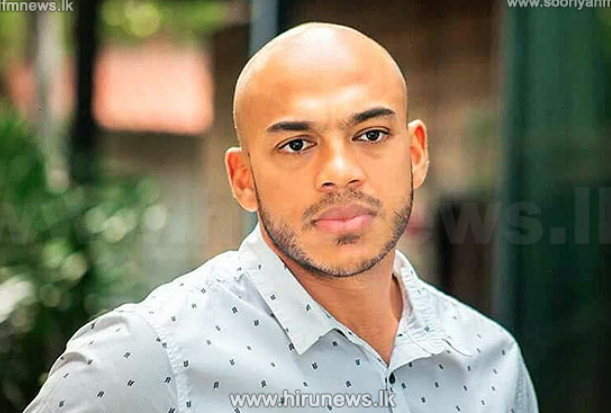
The anti-corruption apparatus in Sri Lanka has claimed another prominent scalp from the country's most influential political family, with the detention of Yoshitha Rajapaksa, the 38-year-old son of former president Mahinda Rajapaksa. On Wednesday, the Bribery Commission formally arrested him in connection with allegations that he exploited government resources to fund his military education while simultaneously securing rapid advancement through naval ranks that he was not properly qualified to hold. The arrest represents the latest manifestation of a systematic legal offensive against the Rajapaksa clan since the current administration of President Anura Kumara Dissanayake assumed power following elections in 2024 with an explicit mandate to dismantle the entrenched culture of elite impunity that had long characterised Sri Lankan politics.
Yoshitha's immediate legal troubles centre on his military career trajectory and the educational opportunities it afforded him. According to the Bribery Commission's formal statement, he is accused of abetting a process whereby he gained promotion and advancement despite lacking the minimum qualifications required for such positions within the naval hierarchy. More significantly, once he had secured these unearned promotions, he then deployed state resources to fund a prestigious officer training course at Dartmouth, Britain's renowned naval college. The commission characterises this arrangement as a calculated misuse of public funds for personal educational enrichment that should never have been granted in the first place, given his questionable eligibility for advancement within the naval establishment.
The decision to send Yoshitha to Dartmouth generated considerable controversy even at the time of his attendance, which coincided with his father's presidency between 2005 and 2015. Public commentators argued vigorously that his placement at one of the world's most selective military institutions represented a theft of opportunity from more deserving naval cadets whose merit-based candidacies ought to have secured the position. This narrative of unmerited privilege became emblematic of how the Rajapaksa political machine allegedly functioned: using state institutions and resources as personal fiefdoms to advance the interests of family members regardless of ability or qualification. The present legal case essentially validates those long-standing criticisms by treating them as prosecutable violations rather than merely unfortunate examples of political favouritism.
Yoshitha's detention also comes after he had already been implicated in two separate money-laundering investigations, circumstances that had resulted in him being placed under a foreign travel ban and released on bail pending court proceedings. His arrest now removes the protective shield of bail and elevates the seriousness of his legal jeopardy substantially. The broader constellation of charges against him encompasses not merely his military advancement but also his subsequent purchase of residential and commercial assets whose acquisition he has struggled to justify through legitimate means. In one particularly revealing case, he claimed to have raised funds for a house purchase by selling gemstones that his grandaunt had gifted to him, yet when investigators traced back the origin of those gems, the grandaunt herself could not adequately explain how she had originally obtained such valuable stones. An additional separate prosecution relates to his acquisition of a television network, suggesting a pattern of asset accumulation that far exceeds plausible earnings from his naval salary.
The acceleration of legal action against the Rajapaksa family under the current government reflects a significant departure from the hands-off approach that characterised previous administrations. The 2024 election victory of President Dissanayake was substantially built upon a popular groundswell of outrage over corruption, economic mismanagement, and the perception that previous governments had actively protected rather than prosecuted wealthy elites. This provided Dissanayake with both a mandate and a political imperative to pursue the Rajapaksas aggressively. Yoshitha's arrest follows a broader pattern in which numerous family members and close political associates have faced charges spanning corruption, money laundering, and even murder—accusations that have languished in the courts for years without resolution under previous administrations but are now being actively pursued.
The Rajapaksa family's political dominance has been substantially eroded since its apex. Yoshitha's uncle Gotabaya, who became president in 2019 following Mahinda's earlier presidency, was forced to flee the country and resign in 2022 after a severe economic crisis and civil unrest. Upon his recent return to Sri Lanka, Gotabaya has faced his own legal vulnerabilities, including a newly imposed foreign travel ban and ongoing litigation related to his alleged responsibility for security failures that contributed to the Easter Sunday bombings of 2019, which killed 279 people. His attempts to preemptively obtain court orders preventing his arrest suggest a man deeply conscious of his legal exposure in an environment where judicial leniency can no longer be assumed.
For Malaysian observers and the broader Southeast Asian region, the Rajapaksa prosecutions offer an instructive case study in how political transformation at the ballot box can eventually translate into institutional accountability for entrenched elites. Sri Lanka's experience demonstrates both the possibilities and the delays inherent in post-electoral anti-corruption campaigns, particularly when prosecuting wealthy and well-connected defendants with resources to mount sustained legal defences. The persistence of the courts in pursuing cases that accumulated through years of relative inaction under previous governments suggests that institutional memory and investigative capacity, once developed, can survive changes in political leadership.
The implications for Sri Lanka's governance trajectory remain significant. A sustained commitment to prosecuting the Rajapaksa family could meaningfully reshape political culture by establishing precedent that even former heads of state and their immediate relatives face genuine legal consequences for corruption. Conversely, if subsequent political changes result in prosecutions being abandoned or settled through negotiated settlements, it would signal that the current anti-corruption momentum remains primarily a function of electoral competition rather than institutionalised commitment to rule of law. The coming months and years of litigation against Yoshitha Rajapaksa and his family members will substantially determine which trajectory Sri Lanka ultimately follows.