South Korean President Lee Jae Myung has sought to balance acknowledgment of genuine electoral failings with a firm rejection of allegations that the June 3 local elections were rigged, while simultaneously urging demonstrators to respect the boundaries of lawful protest. In a statement posted to X on June 15, Lee cautioned that while public concern over voting irregularities is understandable, protesters must not extend their demonstrations in ways that curtail the fundamental rights of others to access public facilities and conduct normal business.
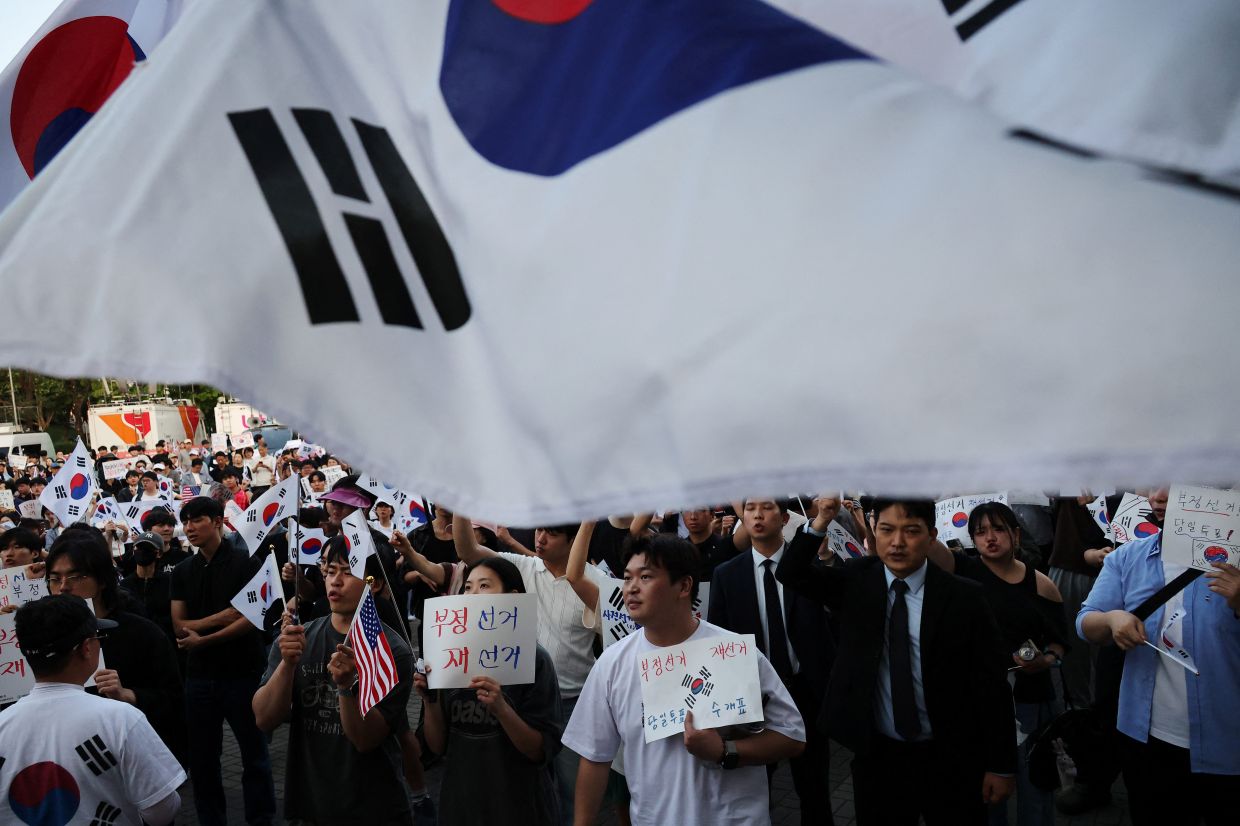
The immediate context for Lee's intervention involves ongoing protests near Olympic Park in southern Seoul, where ballot shortages and management failures during the June 3 elections have triggered sustained demonstrations. The handball arena within the park, which served as the vote-counting centre for those elections and housed ballot boxes afterward, has become the focal point of activist activity. Lee's concern stems partly from reports that sports organisations with offices in the park have experienced significant disruptions, struggling to complete administrative functions necessary for South Korean athletes to meet their international competition obligations.
Lee's measured approach reflects a delicate political balance. The previous day, he had publicly characterised the National Election Commission's handling of the election as a grave institutional failure that infringed upon citizens' fundamental voting rights—language that legitimises public discontent. However, he simultaneously drew a sharp distinction between valid criticism of bureaucratic incompetence and what he termed "baseless conspiracy theories" alleging systematic election rigging. This demarcation seeks to preserve the space for democratic accountability while delegitimising more radical interpretations of events that some activists have advanced.
The underlying electoral problems are substantial and real. On June 3, numerous polling stations experienced shortages of ballot papers, forcing temporary suspensions or delays in voting at multiple locations across the country. These operational failures represent a serious breach of the electoral administration that undermines public confidence in democratic institutions. Lee's acknowledgment of this dimension reflects his recognition that such visible dysfunction cannot be dismissed or minimised without further eroding institutional legitimacy, particularly among younger voters and reform-minded citizens already sceptical of establishment competence.
Yet Lee's rhetoric pivots decisively when addressing those who have channelled electoral grievances into demands for fraud investigations or suggestions of manipulation. He indicated that some protesters have engaged in what authorities view as criminal behaviour, including threatening police officers and ordinary citizens, conducting unauthorised inspections, blocking facility access, and obstructing official duties. By framing such actions within a law-and-order paradigm, Lee signals that while systemic failures warrant investigation and remedy, they do not justify extra-institutional protest methods that breach established legal norms.
The President's intervention, delivered via video link from the Vatican while attending official functions, carries particular weight in the South Korean context, where executive pronouncements on electoral matters carry significant institutional resonance. Lee instructed police to conduct thorough investigations into both those who obstructed work through force and blockade and those who conspired in organising such obstruction, indicating a determination to pursue accountability through established legal channels rather than through concessions to street pressure.
Lee's call for a transparent parliamentary investigation into the election commission's failures addresses legitimate demands for institutional accountability. He urged the National Election Commission to fully cooperate with parliamentary scrutiny, noting that such investigation could commence within the week. Simultaneously, he called upon a joint investigation team composed of prosecutors and police to accelerate their efforts to determine responsibility without preferential treatment or sanctuary for any parties involved. This dual-track approach—parliamentary oversight of systemic failures alongside prosecutorial investigation of individual wrongdoing—attempts to channel grievances into formal institutional mechanisms rather than sustained public agitation.
The distinction Lee articulates between democratic dissent and what he perceives as lawlessness reflects broader questions about protest culture and institutional legitimacy in South Korea, a nation with a strong tradition of street demonstrations but also strict laws governing public assembly. His insistence that "there are lines that must be observed and the clearest of those lines are the law and institutions" encapsulates a conservative institutional philosophy that privileges order and legal procedure over the immediacy of popular expression. For Malaysian observers, this reflects ongoing tensions in many democracies between protecting institutional stability and accommodating legitimate popular demands for accountability.
Lee emphasised that transforming the voting-rights infringement into an opportunity for democratic strengthening requires both healthy criticism and constructive alternatives pursued collectively. He called for a thorough and transparent fact-finding process to be accelerated, suggesting that institutional sluggishness in responding to public concern represents a secondary failure compounding the original electoral mismanagement. This framing allows Lee to position himself as responsive to legitimate grievance while simultaneously constraining the scope of acceptable protest methods and interpretations of events.
The broader significance of Lee's intervention extends beyond immediate electoral mechanics to questions about how democracies manage crises in institutional confidence. The ballot shortages represent the kind of procedural failure that, if left unaddressed through transparent investigation and corrective reform, erodes public trust systematically. Yet Lee's firm rejection of rigging allegations and insistence on legal constraints for protesters suggests he views more radical reinterpretations of events as potentially destabilising to democratic institutions themselves. This represents a classical conservatism about the relationship between democratic expression and institutional continuity.
For Southeast Asian contexts where electoral management remains contested and institutional confidence remains fragile, South Korea's experience offers instructive lessons. The incident demonstrates that even relatively mature democracies with sophisticated electoral infrastructure can experience significant operational failures that trigger substantial public protests. Lee's response—combining acknowledgment of failures with resistance to more radical reinterpretations, coupled with promises of investigation through formal channels—reflects standard elite strategies for managing electoral crises without fundamentally altering institutional structures or conceding to protest demands beyond systemic reform.
Moving forward, the effectiveness of Lee's approach depends substantially on whether the promised parliamentary investigations, prosecutorial inquiries, and remedial measures materialise swiftly and produce tangible accountability. Delayed institutional responses or investigations perceived as insufficiently rigorous risk validating activist claims that official channels cannot deliver justice, potentially intensifying street pressure. Conversely, if formal processes demonstrably address the failures and implement preventive reforms, Lee's framework for channelling dissent into institutional mechanisms may prove sustainable and strengthen rather than diminish democratic confidence.