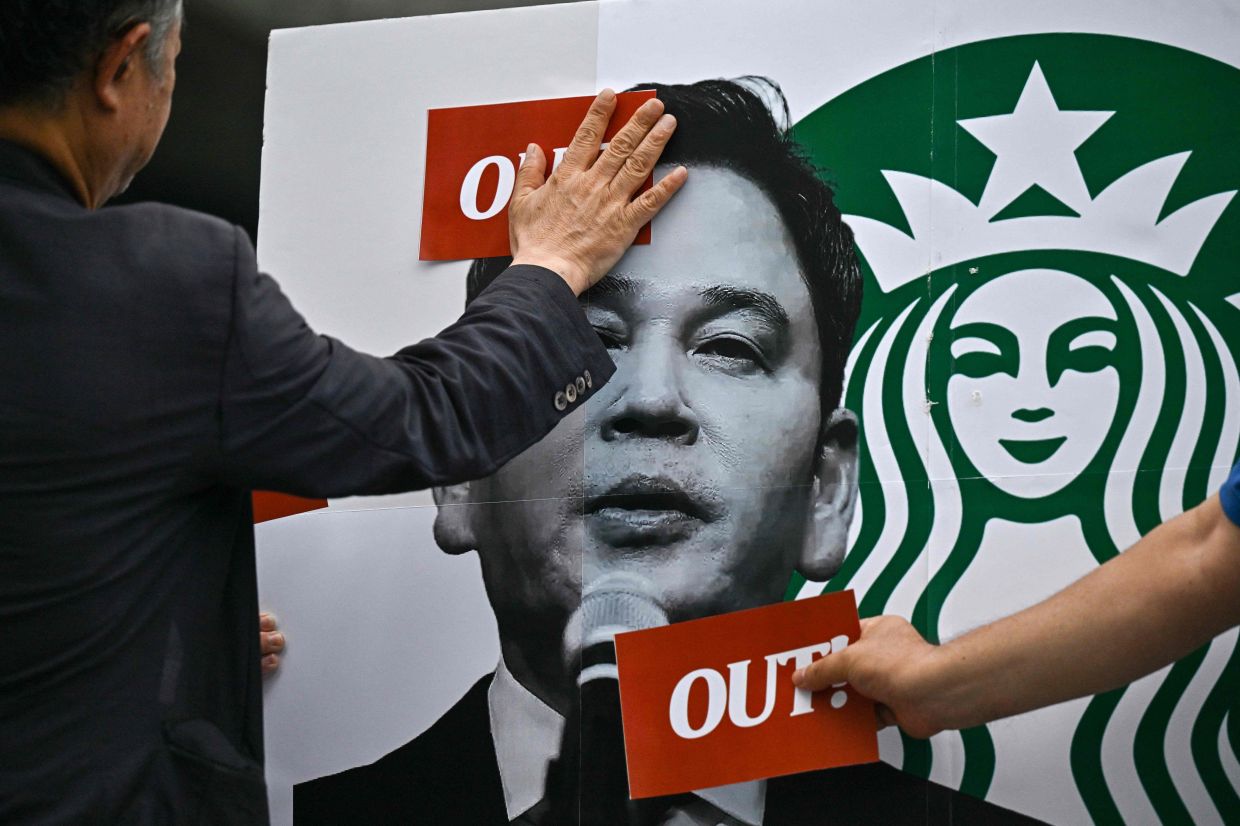
South Korean police have launched formal questioning of a senior executive at Shinsegae Group, the conglomerate that operates Starbucks Korea, as investigations deepen into a promotional campaign that touched raw nerves across the nation. The questioning of Yang Jong-hwan, who heads the group's audit team, marks an escalation in official scrutiny of what has become a significant public relations catastrophe for one of Asia's largest retail giants. The incident underscores how deeply historical memory shapes corporate accountability in South Korea, where sensitivity around pivotal moments in the nation's democratic journey remains paramount.
The controversy centres on Starbucks Korea's "Tank Day" promotion, which was scheduled for May 18—a date with profound significance in South Korean history. This day marks the anniversary of the Gwangju uprising, the 1980 pro-democracy movement that resulted in an official death toll of 165 civilians, though historians and eyewitnesses have long contended the actual figure substantially exceeds official records. The timing of a marketing campaign designed to boost sales of reusable cups on this commemorative date sparked immediate and widespread public outrage, with citizens and activist groups viewing the move as not merely insensitive but emblematic of corporate disregard for national tragedy.
The scale of Starbucks Korea's operations makes the misstep particularly consequential. The company operates more than 2,000 stores across South Korea under a licensing arrangement with Shinsegae Group, making it a ubiquitous presence in the country's coffee culture and urban landscape. As Starbucks' third-largest market globally after the United States and China, South Korea represents significant commercial interests for the American coffee chain. The incident therefore carries implications extending beyond national boundaries, affecting corporate reputation across the region and raising questions about international brand management in markets with distinct historical contexts.
Shinsegae Group's initial response attempted damage control through leadership changes and ceremonial contrition. The Korea chief executive was terminated on the day the scandal erupted, signalling swift accountability at the operational level. Subsequently, Shinsegae Group Chairman Chung Yong-jin issued a formal public apology, bowing in a gesture intended to demonstrate remorse and respect for national sensitivities. However, these measures proved insufficient to quell public anger and institutional response.
A civic group escalated the matter by filing formal complaints against Chung and other senior executives, invoking South Korea's 2016 law protecting the dignity of the democratic uprising. This legislation, enacted to preserve historical truth and prevent trivialisation of the crackdown, carries significant legal weight in South Korea's approach to historical accountability. The complaint alleges not only violations of this historical protection statute but also defamation and insult, creating multiple legal vectors through which the incident is being examined.
The investigation process has prompted Starbucks Korea to undertake institutional re-education. All Starbucks stores across the nation will close for half a day, with staff attending mandatory history lessons focused specifically on the 1980 crackdown and its place in South Korea's democratic development. This represents an unusual corporate acknowledgment that employee understanding of national history is integral to appropriate business conduct. Separately, Chung and other senior executives have been scheduled to attend similar educational sessions, signifying leadership commitment to grasping the historical context they failed to adequately consider during campaign planning.
Internal investigations at Shinsegae have identified systemic failures in approval processes that enabled the problematic campaign to advance. Officials signed off on campaign materials without properly reviewing design files, suggesting oversight structures broke down at multiple checkpoints. This procedural negligence, rather than malicious intent, appears to characterise the lapse. Yet the consequences have been tangible: the company acknowledged experiencing sharp declines in sales during the scandal's immediate aftermath, particularly in affected regions.
The geographical dimension of public reaction underscores the Gwangju uprising's ongoing resonance in South Korea's collective consciousness. Protests emerged not only in Seoul but specifically in Gwangju, the region that bore the heaviest toll during the 1980 crackdown. This dual-city reaction reflected both national concern about historical respect and localised anger from communities with direct ancestral connections to the tragedy. The company's insensitivity therefore registered as an affront across multiple layers of South Korean society.
Presidential engagement with the controversy elevated its political significance. President Lee Jae Myung publicly expressed outrage at what he characterised as inhumane and disgraceful conduct, lending executive authority to public disapproval. This high-level condemnation reinforces broader South Korean expectations that corporations operating within the nation must demonstrate adequate respect for historical memory and national values.
The incident illuminates challenges faced by multinational corporations operating across culturally and historically distinct markets. While global brands seek operational efficiency through standardised approaches, they encounter local contexts where historical consciousness profoundly shapes consumer sentiment and regulatory frameworks. For Starbucks specifically, the situation raises questions about localisation of management practices and corporate governance structures that ensure adequate engagement with regional historical consciousness before major campaigns launch.


