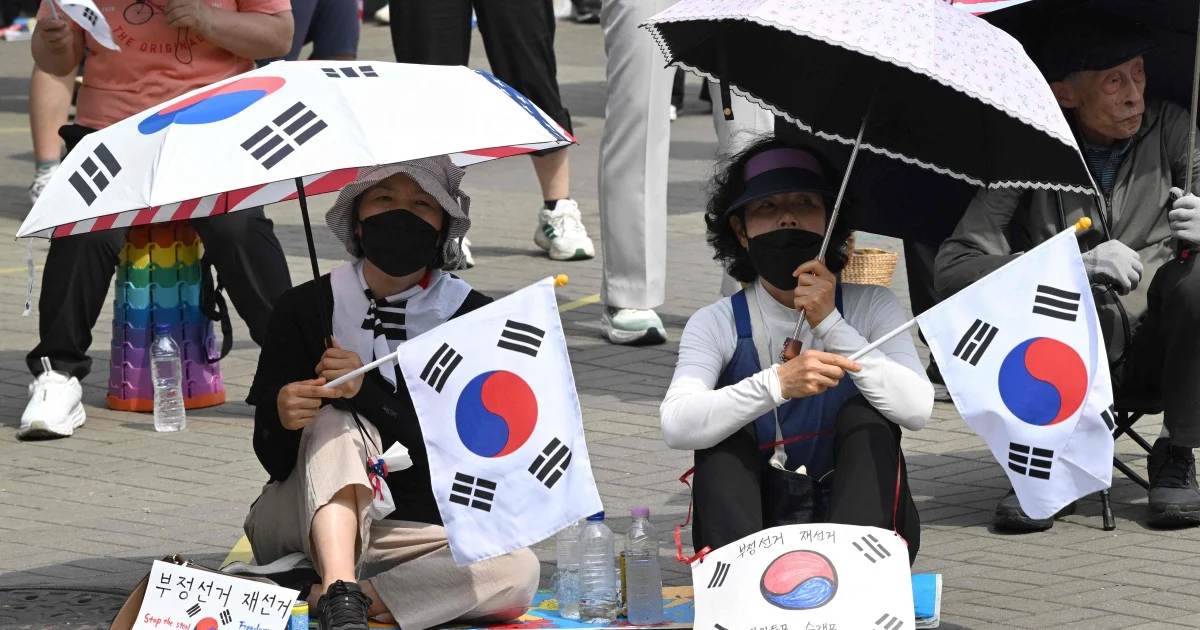
South Korea's parliament has launched an official 45-day parliamentary investigation into the National Election Commission, responding to widespread concerns about operational failures that emerged during the June 3 local elections. The decision, formalised at a plenary session on Thursday, marks a significant escalation in political scrutiny over what many observers characterise as a troubling lapse in electoral administration.
The investigation centres on substantive ballot-paper shortages that disrupted voting procedures across multiple polling stations. These logistics failures created significant inconvenience for voters and raised broader questions about whether South Korea's election infrastructure remains adequately resourced and managed to handle the demands of nationwide electoral cycles. For a country that prides itself on democratic institutions and electoral integrity, the incident represented an embarrassing operational stumble that demanded formal accountability mechanisms.
The National Election Commission, which bears primary responsibility for administering South Korea's electoral processes, now faces parliamentary scrutiny that will examine how the organisation failed to accurately forecast ballot requirements and distribute materials effectively. The 45-day window provides lawmakers with sufficient time to conduct thorough testimony, review documents, and determine what systemic weaknesses allowed such preventable disruptions to occur during a major electoral event.
Ballot shortages during elections carry particular political weight in South Korea's context. Democratic elections remain culturally significant and symbolically important following the nation's decades-long transition from authoritarian rule to democratic governance. Any malfunction in voting logistics—even when technically remediable—can fuel public scepticism about whether institutions are functioning reliably and whether all voices can be equally heard during the electoral process. Voter confidence in administrative competence forms a cornerstone of democratic legitimacy.
The parliamentary probe will likely examine several operational dimensions. Commissioners will want to understand how the election body calculated expected voter turnout, why those projections proved inaccurate, whether supply-chain coordination with printing facilities was deficient, and whether contingency protocols for shortage scenarios existed but were improperly implemented. Documentation of communication between the National Election Commission and local electoral boards may reveal whether warnings about potential shortfalls were flagged and ignored at higher administrative levels.
This investigation also reflects broader patterns within South Korean politics where opposition parties and government-aligned factions frequently weaponise administrative failures to score political points. Yet regardless of partisan motivations, the underlying legitimacy concerns cannot be dismissed. When voting itself—the most fundamental democratic act—becomes administratively burdensome for citizens due to institutional mismanagement, the episode transcends partisan opportunism and becomes a genuine democratic problem meriting investigation.
The June 3 local elections themselves remained significant throughout South Korea's political calendar, determining municipal leadership and regional legislative representation. Any disruption to voting participation, whether through ballot shortages or other administrative obstacles, potentially skews electoral outcomes by disproportionately affecting certain voter cohorts. Voters facing depleted ballot supplies at their assigned polling stations might have encountered longer queues, were forced to travel to alternative locations, or potentially decided not to vote altogether, thereby altering the composition of the voting population.
For Malaysian observers, the South Korean situation offers relevant perspective on electoral administration in larger democracies. While Malaysia's Election Commission operates within its own distinct institutional framework and constitutional context, comparable challenges around voter registration accuracy, ballot supply logistics, and polling-station resource allocation transcend national borders. Election administrators throughout Southeast Asia and beyond share common operational pressures when managing large-scale simultaneous voting across geographically dispersed territories.
The parliamentary investigation will establish important precedent regarding how South Korea's democratic institutions respond when electoral bodies fall short of expected performance standards. Should the probe identify systemic failures requiring structural reform, the National Election Commission might face recommendations for organisational restructuring, enhanced funding allocation, or revised protocols for ballot production and distribution. These potential reforms could influence election administration practices throughout the region as countries learn from each other's experiences.
The 45-day timeline suggests parliament considers this investigation reasonably urgent despite its thoroughness. This measured pace indicates lawmakers view the matter as serious enough to demand comprehensive examination but not so catastrophic as to warrant emergency procedures. The investigation's conclusions will likely shape public confidence in electoral institutions heading toward South Korea's next major electoral cycle.
Ultimately, this parliamentary inquiry represents democratic institutions holding themselves accountable. That elected legislators initiated formal investigation rather than dismissing ballot shortages as administrative minutiae demonstrates democratic maturity, even when political calculation influences which party champions investigation most vocally. For South Korea's democracy to maintain public legitimacy, such willingness to scrutinise institutional performance must remain consistent across electoral cycles and administrations.


