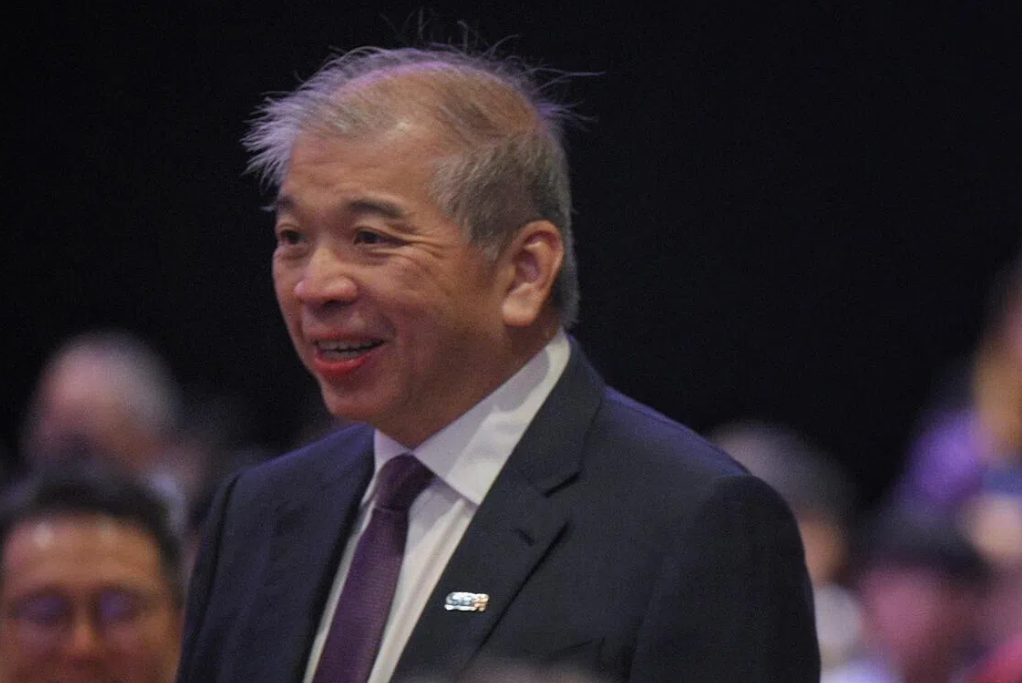
Singapore shipping magnate Teo Siong Seng, chief executive of Singamas Container Holdings, has been named as a defendant in two civil lawsuits filed in a California federal court, alongside executives from major container manufacturers accused of orchestrating an international price-fixing scheme. The legal action represents a significant escalation beyond criminal charges already brought by the US Department of Justice, opening a new avenue for American businesses to seek compensation through the courts.
The civil proceedings, launched in the District Court for the Northern District of California on June 2 and 9, were initiated separately by two US firms: C.A. Spalding Company, a manufacturing enterprise, and Daybreak Express, a transportation business. Both companies are seeking to recover substantial financial damages they claim to have suffered as a result of alleged price manipulation within the global container industry over several years. These private lawsuits complement rather than replace the criminal investigation, creating multiple legal fronts for the accused parties.
The allegations centre on a coordinated scheme involving five major manufacturers that collectively produce roughly 95 percent of the world's standard dry containers. The companies implicated in the January 22 criminal indictment—which was unsealed on May 19—include China International Marine Containers (CIMC), Shanghai Universal Logistics Equipment, CXIC Group Containers, Singamas Container Holdings, and two unnamed manufacturers. According to court filings, executives from these firms allegedly conspired to artificially restrict the supply of containers and maintain inflated prices across global markets.
Investigators uncovered an extraordinarily sophisticated enforcement mechanism underlying the alleged cartel. The conspirators installed 87 surveillance cameras distributed across 49 container production lines at their facilities specifically to monitor compliance with agreed-upon output restrictions. Beyond surveillance, they implemented operational constraints including limitations on the number of shifts and daily operating hours permitted on each production line. This level of systematic monitoring suggests a deliberate, organised effort to prevent any member from cheating on the arrangement—a hallmark of durable cartels that economists have long identified as necessary for price-fixing to persist.
The scheme's impact on global commerce has been substantial. Between 2019 and 2021, the price of a standard 20-foot shipping container more than doubled, climbing from approximately US$1,600 to US$3,500. This dramatic increase rippled through supply chains worldwide, affecting not only shipping companies but manufacturers, retailers, and importers dependent on container transport. For Malaysian and Southeast Asian businesses engaged in international trade, such price movements directly influence logistics costs and ultimately consumer prices for imported goods.
The financial gains reaped by the cartel members were enormous. CIMC's container manufacturing division saw profits surge from around 137 million yuan in 2019 to 1.99 billion yuan in 2020, before skyrocketing to 11.3 billion yuan in 2021. Singamas experienced an even more dramatic turnaround, moving from a net loss of approximately US$110 million in 2019 to a profit of about US$186.8 million by 2021. These figures underscore how substantially the alleged conspirators benefited from keeping container supplies artificially constrained and prices elevated.
The civil lawsuits petition the court for "treble damages"—a provision under US antitrust law that permits courts to award three times the actual losses incurred by victims if liability is established. This punitive dimension significantly amplifies the financial exposure for the defendants, as it transforms compensation into a deterrent mechanism designed to punish illegal conduct and discourage similar behaviour by others. For executives and companies found culpable, such damages can prove devastating to balance sheets and shareholder value.
Court records indicate that summonses were issued on June 8 and 11, requiring all named defendants to formally respond within 21 days. Failure to respond within this timeframe exposes them to default judgments, where the court may find against them without a full hearing on the merits. The named individuals include Mai Boliang, former chief executive and current chairman of CIMC; Huang Tianhua, CIMC's vice-president; Wan Yongbo, general manager of CIMC's Operation Management Centre; Li Qianmin, general manager of Shanghai Universal Logistics Equipment; and Zhang Yuqiang, chief executive of CXIC Group Containers. All are Chinese nationals. Teo is included alongside Vick Ma, Singamas's marketing director, who is currently facing extradition proceedings from France following an April arrest.
Teo, a 71-year-old Singaporean, has stepped back from numerous prominent roles since being named in the criminal indictment. He has taken leaves of absence from Pacific International Lines, where he serves as executive chairman; the Singapore Business Federation, where he holds the chairman position; the Singapore Economic Resilience Taskforce; Enterprise Singapore, where he sits on the board; and the National University of Singapore, where he is a pro-chancellor. This withdrawal reflects the reputational damage and operational challenges that arise when business leaders face serious legal jeopardy in foreign jurisdictions.
Teo announced on May 28 that he does not intend to seek re-election when his term as Singapore Business Federation chairman concludes on June 24. He had only recently assumed this role on May 20, 2025, following the early departure of his predecessor Lim Ming Yan, who stepped down to focus on his new appointment as chairman of Changi Airport Group. Teo had previously served as SBF chairman from 2014 to 2020, completing three consecutive two-year terms, making him a familiar figure in Singapore's business establishment. In his sole public statement since the allegations emerged, Teo said he had "proactively decided to take these leaves of absence to afford myself sufficient time to attend to this matter, and for the best interests of the aforementioned organisations."
The container price-fixing allegations carry implications extending far beyond the immediate defendants. The scheme exposed systematic weaknesses in oversight of global supply chain cooperation, even among firms engaged in legal joint ventures and industry associations. For Malaysian logistics operators, port authorities, and exporters who rely heavily on container availability and pricing, the case underscores how concentrated market power among a handful of manufacturers can create vulnerabilities. Southeast Asian economies, which depend substantially on containerised shipping for their trade competitiveness, face real consequences when cartel behaviour inflates transportation costs and erodes competitiveness in world markets.
The dual legal process now underway—criminal prosecution alongside civil claims—reflects the multifaceted approach US authorities deploy against international cartels. While criminal cases focus on individual culpability and deterrence through imprisonment, civil proceedings enable harmed businesses to obtain financial restitution. For the regional business community, these cases serve as a reminder that antitrust violations carry severe consequences across multiple jurisdictions, and that even geographically distant decisions by executives can trigger exposure to US courts and penalties.


