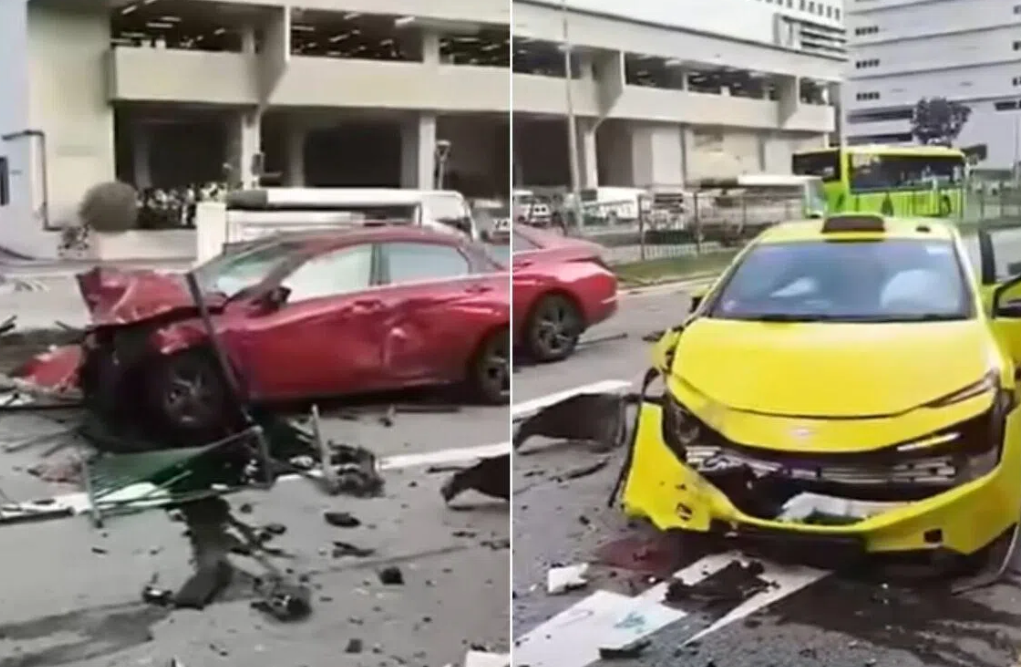
A 36-year-old man has been brought before Singapore courts on multiple serious charges stemming from a motor vehicle collision in Kallang that left two people injured. Mohamed Firdouz Mohamed Akram stands accused of dangerous driving whilst under the influence of methamphetamine, commonly known as Ice, along with violations related to licensing, vehicle control, and weapons possession. The charges were formally filed on June 19, marking the culmination of a swift police investigation that led to his arrest within hours of the incident.
The incident unfolded in the early morning of June 17 when Firdouz allegedly operated a private vehicle along Kallang Bahru around 8am. According to statements made in court, he had consumed Ice prior to getting behind the wheel and subsequently failed to maintain proper command of the vehicle. This loss of control resulted in a collision with a taxi that was lawfully operating in the area at that time. The impact left two occupants of the cab with injuries ranging from chest pain to spinal discomfort, requiring medical attention and significantly disrupting their daily lives.
The taxi driver, aged 60, reported chest pains following the collision, while his 43-year-old passenger sustained injuries to her tailbone region. Both injuries, whilst not described as life-threatening in court documents, were serious enough to warrant formal mention in the charge sheet and represent the kind of physical harm that traffic authorities take seriously when prosecuting dangerous driving cases. The decision to include injury offences in the charge sheet reflects the real human cost of impaired and reckless driving behaviour on Singapore's roads.
What compounds the severity of the matter is Firdouz's alleged conduct immediately after the crash. Rather than remain at the scene or render assistance to the injured parties, he allegedly abandoned his vehicle and fled before police units arrived. This hit-and-run element of the case demonstrates a pattern of irresponsible behaviour that extends beyond the moment of impact. Police records indicated that officers traced and established his identity relatively quickly, setting the stage for his apprehension within five hours of receiving the initial report.
The police investigation uncovered additional criminal matters during the apprehension process. A search of the vehicle that Firdouz had abandoned revealed suspected drugs, drug paraphernalia associated with consumption, vaporising devices, and a knuckleduster. These items were seized as evidence and form the basis for separate weapons possession charges. More significantly, court documents reveal that at approximately 1pm on the same day of the crash, Firdouz was found in a room at the Village Hotel Katong on Marine Parade Road in possession of two knives, leading to additional weapons offences that broaden the scope of criminal allegations against him.
The licensing violation adds another layer to the prosecution's case. Firdouz is accused of operating a motor vehicle without holding a valid Class 3 licence, which is mandatory for driving private cars in Singapore. This absence of proper licensing suggests either that his licence had been suspended or revoked, or that he never obtained the necessary qualification in the first place. Operating a vehicle whilst not properly licensed represents a serious breach of road safety regulations and is particularly egregious when combined with drug impairment.
Singapore's legal framework maintains stringent penalties for driving under the influence of controlled drugs. The law provides that offenders convicted of operating a vehicle whilst impaired by drugs face potential incarceration of up to one year, fines reaching S$10,000, or both sanctions applied concurrently. These penalties reflect the jurisdiction's firm stance on drug-impaired driving, recognising the substantial public safety risks posed by individuals operating motor vehicles whilst chemically impaired.
Dangerous driving causing injury carries its own distinct penalties under Singapore law. Those found guilty of this offence face potential jail sentences of up to one year coupled with fines ranging from S$2,000 to S$10,000. The existence of separate penalty structures for different elements of driving offences allows courts to tailor sentences appropriately based on the circumstances and severity of each case. In Firdouz's situation, the combination of multiple charges suggests he may face consecutive penalties if convicted on all counts.
The incident highlights broader concerns about drug use and road safety across the region. Methamphetamine abuse, particularly in its crystalline Ice form, has become an increasingly significant issue in Southeast Asia and Singapore. The substance is highly addictive and produces stimulant effects that impair judgment, reaction time, and motor control—all critical capacities required for safe vehicle operation. Authorities across Malaysia and other neighbouring countries have similarly grappled with rising methamphetamine use and its intersection with traffic safety.
For Malaysian readers and those following regional crime trends, the case demonstrates the interconnected nature of drug abuse, traffic violations, and violence across the region. The prevalence of methamphetamine use and the recklessness it precipitates reflect patterns observed in neighbouring jurisdictions. Singapore's rapid investigation and prosecution serve as a model for how comprehensive police response can quickly identify and apprehend dangerous offenders, potentially preventing further harm to the public.
The matter remains ongoing with the court scheduled to hear the case again on July 17. Firdouz's legal proceedings will likely involve detailed examination of toxicology results, vehicle forensics, and witness testimony from those injured in the collision and other observers. The outcome will establish important precedent regarding the intersection of drug use, driving offences, and weapons possession in Singapore's criminal justice system.
This case underscores the critical importance of stringent enforcement of driving laws and drug-related offences. The combination of impaired driving, unlicensed operation, weapons possession, and flight from the scene presents a troubling portrait of criminal behaviour that endangered the public. For road users across Southeast Asia, including Malaysia, the incident serves as a sobering reminder of the dangers posed by impaired drivers and the necessity for both enforcement and public vigilance in maintaining road safety standards.