The Selangor state government has issued a public advisory warning residents to exercise heightened caution regarding unsolicited short message service communications and online messages that reference the KitaSelangor Voucher initiative. Authorities are particularly concerned about phishing attempts and fraudulent schemes designed to exploit public interest in the assistance programme. The Selangor State Secretary's Office released a statement emphasising that residents should immediately disregard any suspicious links or requests for personal information arriving through unverified sources claiming to represent the state government.
This cautionary message comes at a critical juncture, as applications for the KitaSelangor Voucher Programme have not yet commenced to the general public. Scammers often take advantage of this period of anticipation, creating counterfeit communication channels to deceive unsuspecting recipients before official systems go live. The timing of the alert underscores the state government's recognition that cybercriminals frequently target assistance programmes where vulnerable populations seek financial relief.
To reduce confusion and protect residents, the Selangor State Secretary's Office has instructed the public to seek all information regarding the KitaSelangor Voucher exclusively through established government channels. This includes the official state government website, verified social media accounts, and announcements made directly by state authorities. The warning explicitly advises citizens not to trust unverified claims or promotional materials circulating online that purport to offer early access or expedited processing of applications.
The legitimate application process will commence through a phased approach beginning June 23, with eligible recipients receiving official SMS notifications from authorised government systems. These messages will guide beneficiaries through a verification procedure and direct them to the dedicated KitaSelangor Voucher Portal for formal application submission. Individuals selected to participate will be required to upload supporting documentation through this secure platform. The state government has urged residents to await the official public announcement scheduled for June 22 before taking any action related to the programme.
The KitaSelangor Voucher initiative targets specific demographic groups identified through government data and records supplied by partnering agencies. Intended beneficiaries include economically disadvantaged households listed in the eKasih database, individuals who have experienced employment termination, registered vulnerable populations under the Social Welfare Department's oversight, and single mothers who satisfy the programme's eligibility criteria. This targeted distribution approach ensures assistance reaches those facing the greatest financial hardship.
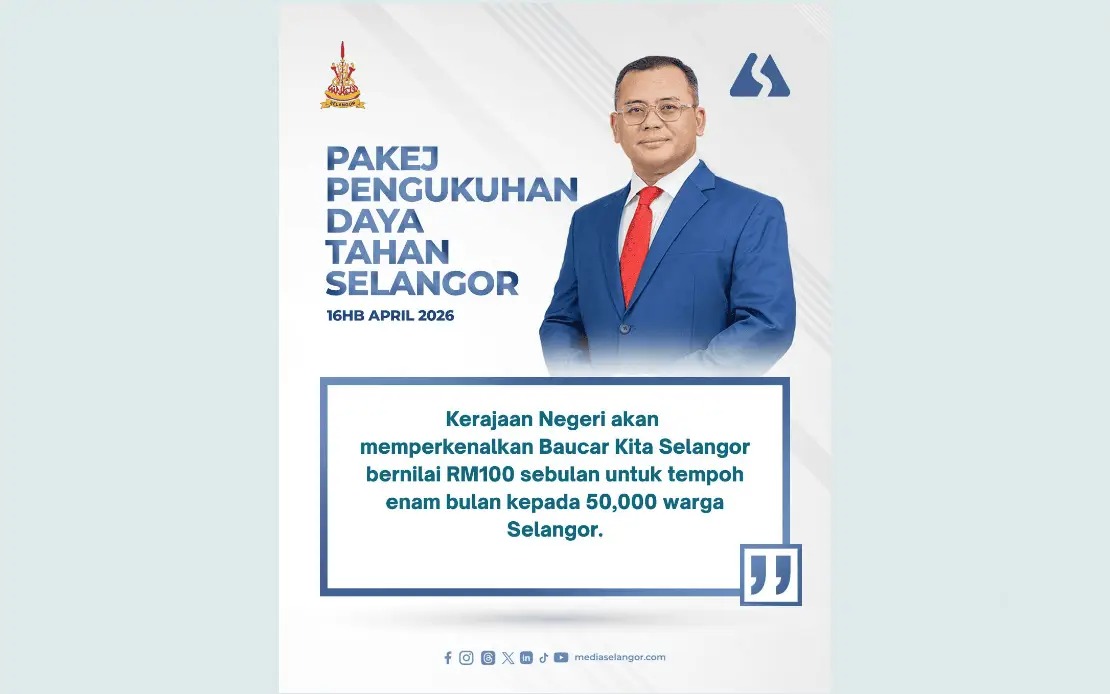
According to Selangor Menteri Besar Datuk Seri Amirudin Shari, approximately 50,000 low-income families across Selangor will receive monetary assistance through this initiative. Each qualifying household will receive RM100 monthly across a six-month distribution period, providing RM600 in total aid per family. The programme is scheduled to commence on June 30 and represents a substantial commitment of state resources toward alleviating household financial pressure.
This voucher scheme forms part of the broader RM140 million Selangor Resilience Strengthening Package Phase 1, which the state government announced on April 16. The comprehensive package addresses multiple economic challenges currently affecting Selangor residents, including the inflationary pressures on essential goods and services, elevated living expenses across urban and suburban areas, and ongoing global supply chain disruptions that have contributed to price instability. The initiative reflects the state administration's response to economic headwinds affecting household budgets throughout the region.
For Malaysian readers and residents of Selangor specifically, understanding the distinction between official and fraudulent communications is essential when navigating state government assistance programmes. Scammers operating SMS-based schemes frequently replicate official language and formatting to increase credibility, making it difficult for unsuspecting residents to identify deception. The most reliable protection involves directly verifying information through government contact centres or official websites rather than responding to unexpected messages requesting personal or financial details.
The advisory serves as a broader reminder about digital security practices when engaging with government services. Residents should never provide banking credentials, identification numbers, or other sensitive personal information through unsolicited channels, regardless of how official the communication may appear. Legitimate government systems will not request such information via SMS or unofficial messaging platforms. Any suspicious messages should be reported to the state government and relevant law enforcement agencies tasked with investigating cybercrime and fraud schemes targeting the public.