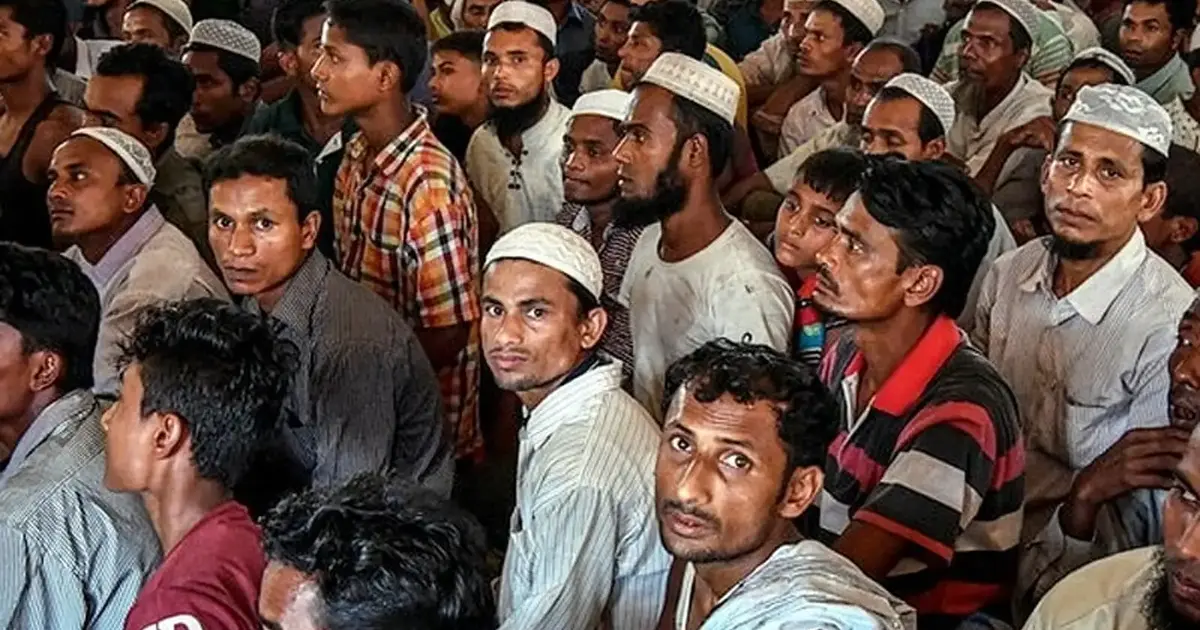
The Rohingya Ulama Council has moved to quash persistent rumours alleging that members of the Rohingya community in Malaysia are actively seeking citizenship, with council chairman Rahimullah Hussain dismissing such claims as malicious falsehoods designed to inflame sentiment against the displaced population. The categorical denial underscores growing tensions surrounding Rohingya presence in the country, where misinformation and speculation have periodically threatened social cohesion and the community's precarious standing.
Rahimullah Hussain's statement represents an effort by community leadership to counter what the council characterises as a deliberate disinformation campaign. By framing the allegations as fabricated rather than merely inaccurate, the council's position suggests that false narratives are being circulated with intentional purpose—to incite animus toward an already vulnerable population that depends heavily on international humanitarian protection and local goodwill for its survival and wellbeing.
The Rohingya situation in Malaysia remains extraordinarily complex, intersecting questions of international humanitarian responsibility, national security concerns, and the practical challenges of hosting one of Southeast Asia's largest refugee populations. Malaysia currently hosts approximately 180,000 registered Rohingya refugees, according to UNHCR figures, making it among the world's most significant host nations despite lacking formal refugee convention signatories status. This demographic reality invariably generates both institutional strain and public discourse, some of which reflects legitimate policy concerns while other portions rely on speculation and rumour rather than fact.
Citizenship claims represent a particularly sensitive flashpoint in Malaysia's immigration and integration debates, touching upon identity, sovereignty, and demographic composition. That such allegations have circulated with sufficient prominence to warrant an explicit denial from the Ulama Council indicates the rumours have gained traction in public discourse, whether through social media amplification, word-of-mouth transmission, or deliberate campaigns. The council's intervention suggests community leaders recognise the reputational and political danger these narratives pose.
The characterisation of such allegations as "fabricated to incite hatred" reflects the council's assessment that malicious actors may be weaponising citizenship rumours to generate hostile sentiment. In contexts where refugee populations already face discrimination, marginalisation, and resource competition narratives, inflammatory claims about citizenship-seeking can readily transform into fuel for broader xenophobic sentiment. The humanitarian principle of non-refoulement—the prohibition against returning persons to territories where they face persecution—becomes increasingly difficult to sustain in host countries where public opinion has been poisoned against vulnerable populations.
This episode illustrates the communication challenges facing refugee leadership structures in Southeast Asia. Elected representatives and council officials must simultaneously address internal community needs, engage with host nation authorities and civil society, counter misinformation, and navigate international diplomatic channels. For the Rohingya Ulama Council, establishing clarity about the community's actual intentions and legal status becomes essential to maintaining the fragile social compact that permits continued refuge.
Malaysia's position as a primary destination for Rohingya seeking safety reflects both geographic proximity and the country's historical openness to refugee populations, though this openness has become increasingly contested in recent years. Political parties and commentators have periodically raised concerns about Rohingya economic participation, social integration, and long-term settlement possibilities. Within this heated political environment, unverified claims about citizenship-seeking can rapidly metastasise into broader policy debates and electoral rhetoric.
The council's denial also carries implicit acknowledgment that such claims could reasonably be expected to generate significant public backlash if believed. This reveals something important about perceived public sentiment: that meaningful segments of Malaysian society view Rohingya citizenship claims as potentially threatening to national interests, social stability, or demographic balance. Whether or not such fears are proportionate or evidence-based, their existence shapes both the rumours' circulation and the urgency of the council's response.
Looking forward, this denial may offer limited protection against future allegations if underlying anxieties about refugee settlement and integration remain unaddressed through sustained dialogue and evidence-based policy discussion. The Rohingya Ulama Council's intervention represents necessary community advocacy, yet lasting reputational protection for the community depends on broader institutional efforts: government clarity about refugee policy, media literacy initiatives to combat disinformation, and civil society engagement that humanises rather than abstracts the Rohingya experience.
The timing and visibility of such denials also matter for Malaysia's international standing and humanitarian credibility. As a country hosting substantial refugee populations and seeking recognition as a responsible regional actor, Malaysia's approach to managing Rohingya integration—and the public narratives surrounding it—carries implications for Southeast Asian burden-sharing discussions and ASEAN's collective capacity to address displacement crises. Clear, factual communication from both community leaders and government officials remains essential to preventing rumour-driven deterioration of the social environment in which Rohingya refugees attempt to rebuild their lives.

%22%2F%3E%3C%2Fpattern%3E%3C%2Fdefs%3E%3Crect%20width%3D%22100%25%22%20height%3D%22100%25%22%20fill%3D%22url(%23ph4w4yvg)%22%2F%3E%3Crect%20width%3D%22100%25%22%20height%3D%22100%25%22%20fill%3D%22url(%23ph4w4yvp)%22%2F%3E%3Ctext%20x%3D%2250%25%22%20y%3D%2250%25%22%20text-anchor%3D%22middle%22%20dominant-baseline%3D%22central%22%20fill%3D%22rgba(255%2C255%2C255%2C0.95)%22%20font-family%3D%22Georgia%2C%20'Times%20New%20Roman'%2C%20serif%22%20font-weight%3D%22700%22%20font-size%3D%22226%22%20letter-spacing%3D%22-0.02em%22%3EPenang%3C%2Ftext%3E%3C%2Fsvg%3E)