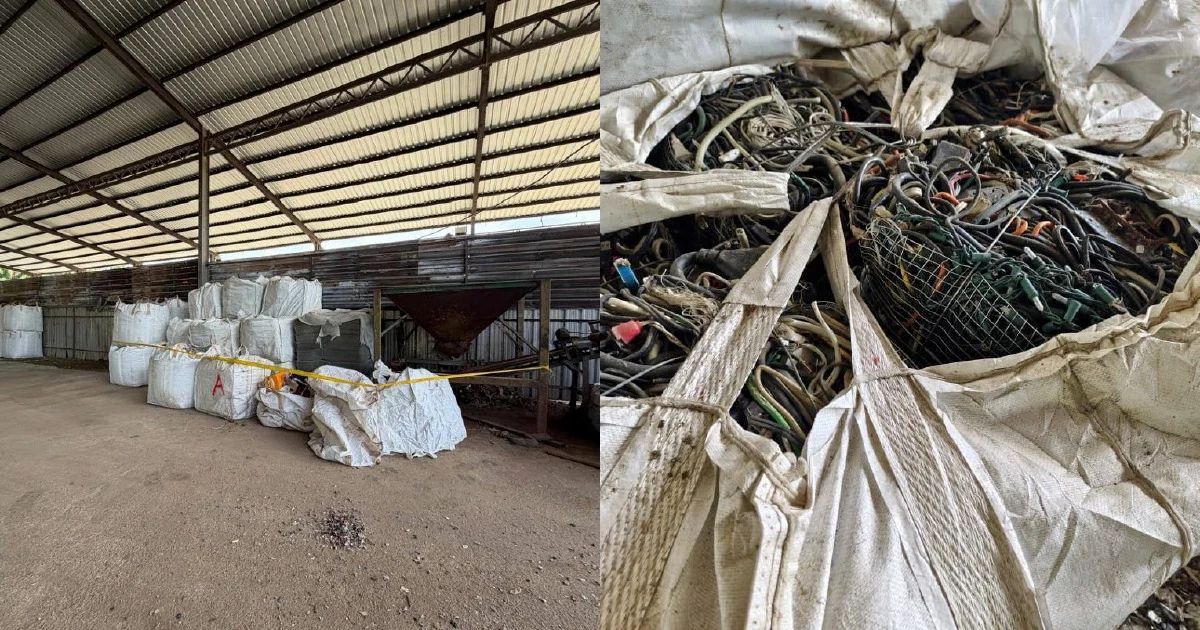
Enforcement authorities have struck a significant blow against illegal electronic waste operations in Penang, confiscating an estimated RM3 million in illegally processed and stored materials during a coordinated raid on a facility in Bukit Mertajam yesterday. The operation resulted in the arrest of five individuals linked to the unlicensed establishment, marking another escalation in authorities' crackdown on the underground e-waste recycling sector that has flourished across Malaysia despite regulatory prohibitions.
The Bukit Mertajam facility operated without proper licensing or environmental compliance measures, authorities confirmed, storing hazardous materials that pose significant risks to both human health and environmental integrity. The scale of confiscated material underscores the extent to which informal, unregulated e-waste operations have penetrated suburban industrial areas across the Klang Valley and northern Selangor regions, often locating themselves in secondary business districts where oversight remains inconsistent.
Illegal e-waste processing represents a particularly pernicious form of environmental crime in Malaysia, as the sector attracts individuals seeking rapid profits through the recovery of valuable minerals and metals—particularly copper, gold, and rare earth elements—without bearing the substantial costs associated with proper recycling infrastructure, hazardous materials handling, and environmental remediation. Workers in these facilities typically lack protective equipment and basic safety protocols, exposing themselves to toxic substances including lead, cadmium, mercury, and persistent organic pollutants that leach into surrounding soil and groundwater.
The Bukit Mertajam operation's discovery comes amid growing regional concern regarding Malaysia's role in the global e-waste supply chain. Southeast Asia has become a de facto dumping ground for discarded electronics from developed nations, with Malaysia's porous regulatory enforcement and abundant informal labour attracting transnational waste traffickers seeking to circumvent stringent environmental regulations in their countries of origin. Local authorities have identified several processing clusters operating across Selangor, Penang, and Johor, though resource constraints continue to hamper comprehensive enforcement.
The five individuals arrested during yesterday's raid face investigations under Malaysia's environmental legislation and waste management statutes, which carry potential penalties including substantial fines and custodial sentences. Authorities have not disclosed the individuals' identities pending completion of initial questioning, though investigators are reportedly examining connections to broader regional e-waste networks that may operate across state boundaries and possibly into Thailand and Vietnam.
This seizure represents merely the visible portion of a vastly larger underground economy. Estimates suggest that formal, licensed e-waste recyclers in Malaysia process only a fraction of the nation's total electronic waste volume, with substantial quantities being diverted into informal channels where dismantling occurs in warehouse facilities, residential compounds, and rural locations beyond easy regulatory detection. The Malaysian Environmental NGO Coalition has repeatedly cautioned that such operations ultimately transfer environmental and health costs to vulnerable communities adjacent to processing sites.
The enforcement action reflects sustained pressure from multiple government agencies to dismantle illegal recycling infrastructure, particularly following heightened scrutiny from international environmental bodies and neighbouring countries concerned about transboundary pollution. Regional cooperation mechanisms have intensified following discoveries of Malaysian-sourced e-waste contamination affecting waterways in Thailand and Cambodia, prompting bilateral discussions regarding tighter export controls and domestic processing oversight.
For Malaysian consumers and businesses, the proliferation of illegal e-waste operations underscores the importance of responsible disposal pathways. Licensed recyclers certified under Malaysia's Environmental Quality Act remain the only legitimate channels for safe electronic waste processing, though public awareness regarding these services remains limited and participation rates remain disappointingly low. The absence of mandatory producer responsibility schemes has created a vacuum that informal operators readily exploit.
The recovered materials from yesterday's raid will undergo proper segregation and processing through authorized facilities, ensuring that recoverable materials are extracted safely whilst hazardous components are neutralised before final disposal. This recovery phase itself demands substantial investment in specialized equipment and trained personnel—precisely the infrastructure costs that motivate illegal operators to shortcut formal procedures.
Looking forward, enforcement agencies have signalled intensified surveillance of industrial areas historically associated with informal recycling activity, deploying both ground-level investigations and advanced monitoring technologies to identify emerging facilities. Authorities also acknowledge the necessity of concurrent demand-side interventions, including manufacturer take-back programmes and expanded public education regarding the environmental and health consequences of patronising unlicensed recyclers who undercut formal sector pricing through elimination of safety and environmental compliance expenses.
The Bukit Mertajam operation's scale suggests that Malaysia's illegal e-waste sector continues expanding despite previous enforcement successes, reflecting the sector's fundamental profitability and the limited availability of legitimate recycling alternatives. Addressing this challenge comprehensively will require sustained enforcement commitment, simultaneous strengthening of formal recycling infrastructure capacity, and integration of extended producer responsibility frameworks that redistribute waste management costs to manufacturers rather than communities and workers currently bearing the environmental and health burdens.