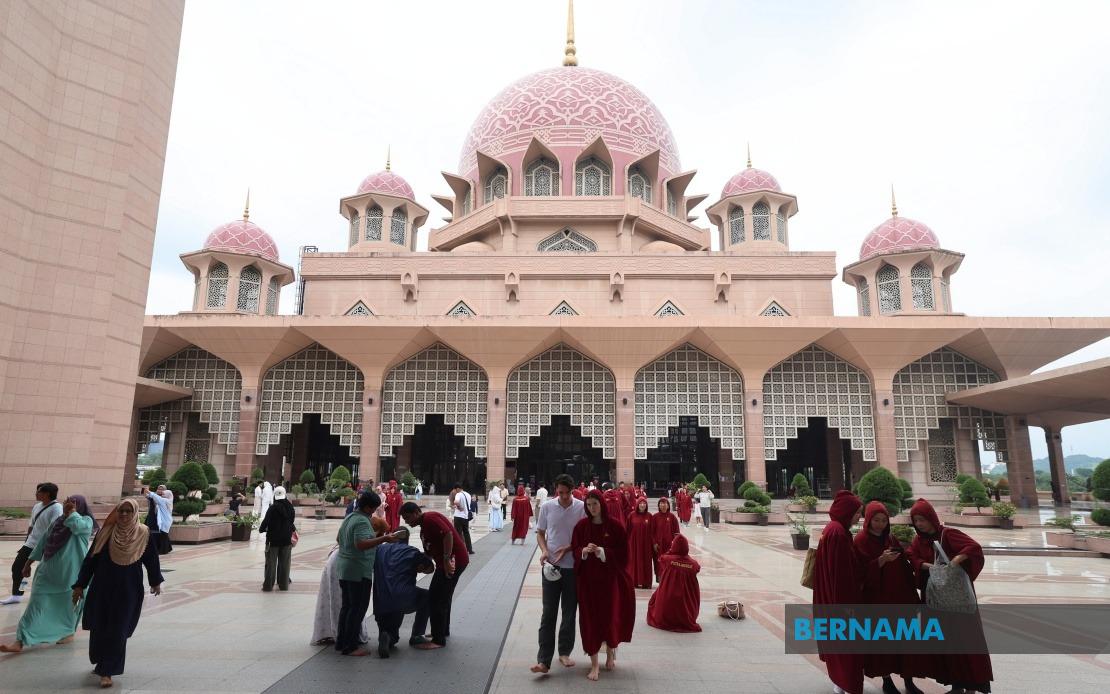
The Putra Mosque in Putrajaya is set to become the focal point of Malaysia's National Maal Hijrah observance, drawing an estimated 5,000 attendees comprising both local and international participants for the 1448H/2026M celebration. Sultan Nazrin Shah of Perak will preside over the occasion and deliver the opening address, lending considerable ceremonial weight to a commemoration that holds deep spiritual significance within the Islamic calendar.
The gathering represents one of the nation's most significant religious observances, bringing together government leadership, diplomatic representatives, and faith-based dignitaries under a single roof. Deputy Prime Ministers Datuk Seri Ahmad Zahid Hamidi and Datuk Seri Fadillah Yusof, along with multiple Cabinet ministers, heads of federal departments, and senior administrative officials, are confirmed to participate. The international dimension of the event underscores Malaysia's position as a bridge between the Muslim-majority Southeast Asian region and the broader Islamic world, with foreign envoys attending to underscore diplomatic ties and shared values.
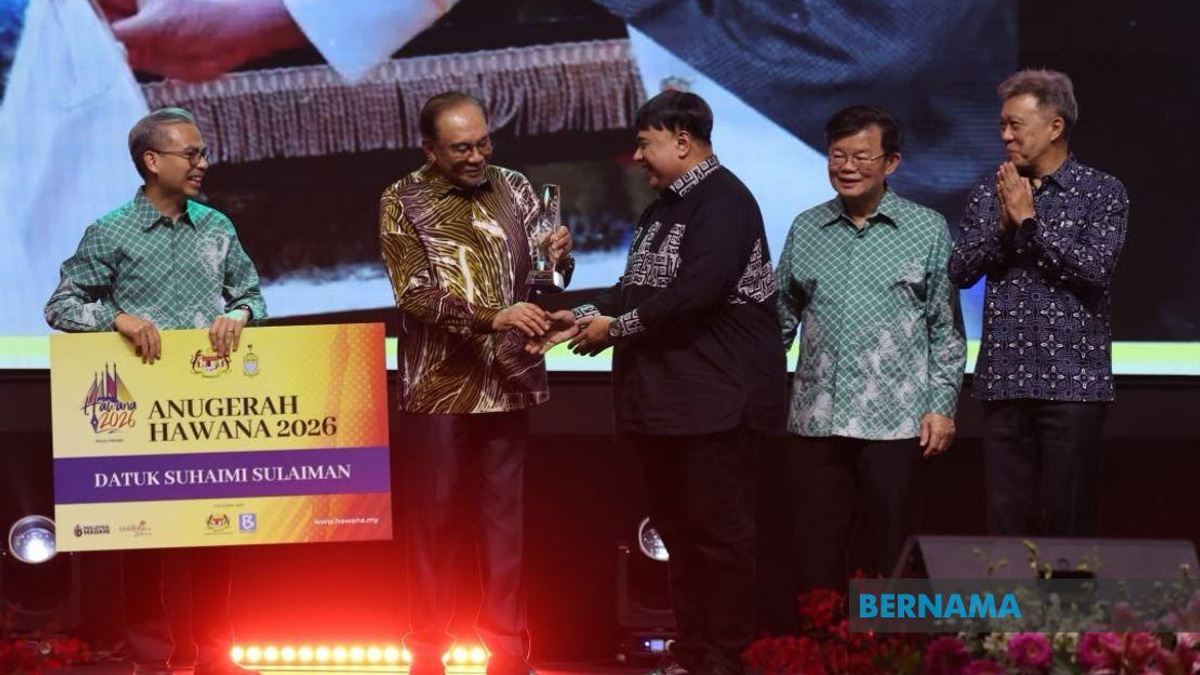
Central to the celebration's programme is the presentation of the National and International Tokoh Maal Hijrah Awards, a recognition system that honours individuals demonstrating exceptional accomplishment within Islamic scholarship, practice, and advancement. The award criteria extend beyond academic credentials to encompass character integrity and tangible contributions toward strengthening Islam both domestically and on the global stage. This dual recognition—national and international categories—acknowledges that Islamic civilisation transcends borders and that exemplary individuals emerge from diverse contexts and communities.
The theme underlying this year's commemoration deliberately connects to the historical Hijrah of Prophet Muhammad, which transformed an isolated band of believers into the nucleus of Islamic civilisation. The Department of Islamic Development Malaysia (JAKIM) selected this conceptual framework to encourage contemporary Muslims to internalise the Hijrah's deeper lessons: the importance of principled migration toward spiritual and moral advancement, the willingness to sacrifice personal comfort for collective good, and the commitment to building institutions and knowledge systems rooted in faith. The thematic choice resonates particularly in a modern era when Muslims worldwide navigate rapid social change and competing ideological currents.
Innovatively, the organisers introduced the Tausiyyah @ Maal Hijrah programme, held the day prior to the main event at Putra Mosque itself. This initiative moves beyond ceremonial commemoration toward experiential engagement, inviting participants to reflect deeply on Quranic teachings through live recitations by accomplished qari. Rather than treating the Quran as a historical text, the programme positions it as a living guide offering wisdom applicable to contemporary challenges. Participants are encouraged to contemplate the verses' meanings and consider how the teachings might reshape their daily decisions, professional conduct, and community relationships.
The pedagogical approach embedded in the Tausiyyah programme reflects a broader Islamic education philosophy that emphasises tadabbur—deliberate reflection and contemplation—as distinct from mere memorisation. By combining the auditory experience of expert Quranic recitation with guided reflection and practical application, the initiative bridges the gap between reverent appreciation and actionable insight. For attendees, this represents an opportunity to move beyond passively observing a religious calendar date toward actively engaging with Islamic intellectual and spiritual traditions.
Following the main celebration, the framework extends into a subsequent National and International Tokoh Maal Hijrah Lecture scheduled for the following day at Putrajaya Islamic Complex Auditorium. This continuation allows award recipients—individuals who embody the ideals being celebrated—to share their accumulated knowledge, professional experiences, and spiritual journeys with a broader audience. The lecture format transforms the awards from symbolic recognition into a knowledge-dissemination platform, enabling awardees to influence thinking among younger generations and inspire emulation of their excellence.
The multi-day structure of these observances demonstrates sophisticated event planning that recognises the varying capacities and interests of different participant cohorts. While the main ceremony attracts high-level political and diplomatic figures, the subsidiary programmes create space for grassroots engagement and intellectual exchange. This layered approach ensures that Maal Hijrah commemorations function simultaneously as state occasions, religious observances, educational forums, and community-building experiences.
For Malaysian readers and the broader Southeast Asian context, these celebrations carry particular resonance. As a Muslim-majority nation that has successfully maintained religious harmony alongside democratic governance and economic development, Malaysia positions itself through events like this as a model of how Islamic principles can coexist with modern institutional frameworks. The prominence afforded to international guests signals Malaysia's aspiration to contribute meaningfully to global Islamic discourse while maintaining regional leadership in Muslim-majority Southeast Asia.
The Hijrah itself embodies themes of transformation, resilience, and principled action that extend beyond purely religious domains. In a region experiencing demographic shifts, technological disruption, and geopolitical realignment, the conceptual resonance of the Hijrah—moving toward justice, knowledge, and spiritual grounding—offers frameworks through which Muslims and non-Muslims alike might contemplate their own societal transitions and moral commitments. By framing the National Maal Hijrah celebration around award recipients whose contributions span diverse fields from scholarship to humanitarian work, Malaysia implicitly acknowledges that Islamic values manifest across multiple professional and social domains.
The gathering at Putra Mosque ultimately represents more than a ceremonial obligation. It constitutes a deliberate assertion that faith-based reflection, institutional recognition of excellence, and engagement with sacred texts remain vital components of national identity and social cohesion. In an increasingly pluralistic and rapidly changing region, Malaysia's commitment to robust, intellectually engaged religious observance—one that welcomes international participation and emphasises learning alongside ceremony—offers a distinctive model worthy of regional attention.