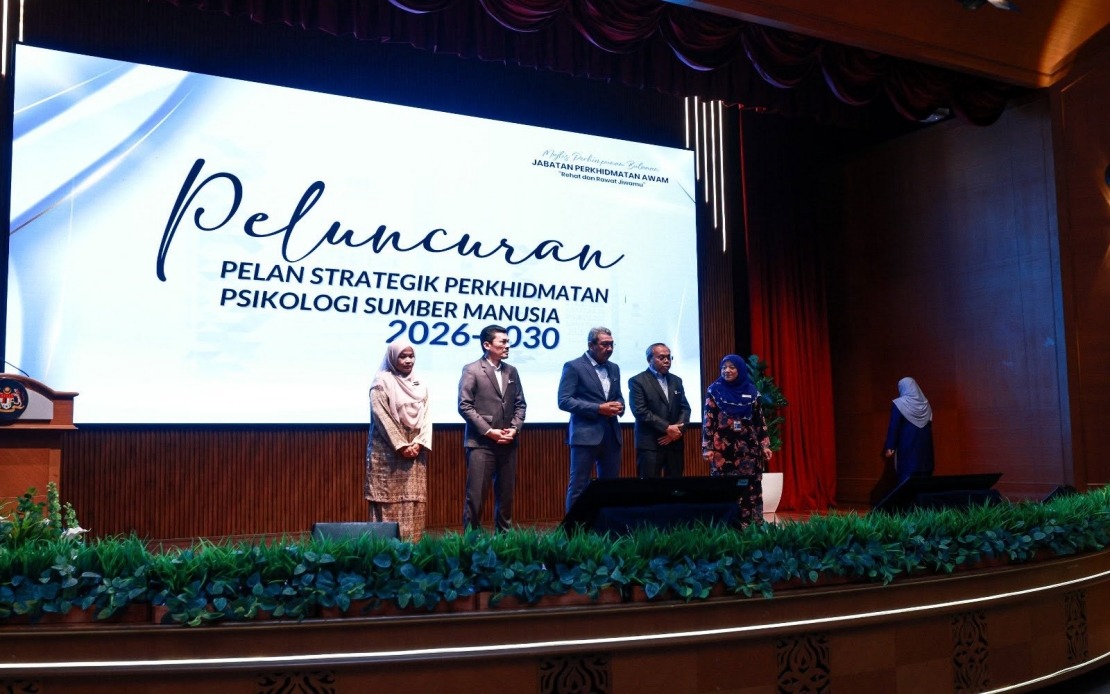
Malaysia's Public Service Department has taken a decisive step to reshape how the civil service approaches employee mental health, launching a comprehensive five-year strategic blueprint designed to strengthen psychological well-being across the government workforce. The Human Resources Psychology Services Strategic Plan 2026-2030, unveiled at the PSD's June monthly assembly in Putrajaya, represents one of the most substantive commitments the Malaysian civil service has made to address mental health and emotional support at an institutional level. The framework comprises twelve distinct strategies, twenty-two targeted programmes, and forty-eight carefully calibrated performance indicators to monitor progress across the sprawling government machinery.
The initiative was formally launched by Tan Sri Wan Ahmad Dahlan Abdul Aziz, the Director-General of Public Service, during an assembly themed "R&R (Rest and Treat) Your Soul," a phrase that encapsulates the department's evolving philosophy toward employee wellness. This messaging represents a calculated departure from traditional approaches that have often relegated psychological support to the margins of civil service administration. By positioning rest and treatment as central concerns rather than peripheral benefits, PSD is signalling that organisational performance and individual mental health are fundamentally interconnected—a recognition that carries significant weight in a region where workplace mental health remains under-discussed despite mounting evidence of its impact on productivity and retention.
Central to the new strategy is the concept of "Treat," which PSD frames not as reactive crisis management but as proactive intervention requiring courage from individual civil servants. Under this framework, employees are encouraged to actively address psychological challenges by dismantling the stigma traditionally surrounding mental health support, openly discussing problems within their workplaces, and accessing professional psychological services without fear of career repercussion. This represents a meaningful shift from cultures where admitting psychological struggles could be perceived as weakness or incompetence. The Director-General's emphasis on collective responsibility underscores that protecting employee well-being is not an individual burden but an organisational imperative rooted in the recognition that healthy workforces generate stronger institutions.
The strategic plan operates within the broader context of PSD's H.E.M.A.T work culture initiative, which itself advocates for governance reform grounded in public empathy, progressive mindsets, innovation appreciation, and transparent administration. By positioning mental health support as a component of this larger ecosystem, PSD is framing psychological well-being not as a standalone welfare issue but as integral to modernising how government functions. The introduction of the "Rawat" concept—a term meaning to care for or treat—provides a localised vocabulary for understanding systematic intervention in mental health, making the initiative more culturally resonant for Malaysia's diverse civil service, which encompasses approximately 1.6 million employees across federal, state, and local government levels.
The decision to outline forty-eight key performance indicators reflects a data-driven approach to measuring success, moving beyond anecdotal evidence toward quantifiable outcomes. These metrics will likely encompass measures such as uptake rates for psychological counselling services, employee satisfaction with mental health support, reduction in stress-related absenteeism, and staff retention improvements. For a bureaucracy historically focused on procedural compliance, this emphasis on measurable wellness outcomes signals an institutional reorientation. However, the true test lies in implementation across diverse government agencies with varying capacities, resources, and cultural readiness to embrace mental health initiatives.
The timing of this strategic plan carries significance for Malaysia's civil service workforce, which has faced mounting pressures in recent years. The post-pandemic era has amplified awareness of mental health challenges globally, yet government sectors in developing and middle-income economies often lag in formalising support structures. Malaysia's announcement positions the country alongside international best practices while acknowledging local contexts. For comparative perspective, several Southeast Asian governments have begun similar initiatives, but Malaysia's comprehensive twelve-strategy framework with twenty-two programmes suggests an unusually ambitious scope.
Implementing such a strategy across diverse government agencies will require substantial investment in training psychologists and counsellors, establishing accessible support infrastructure, and fundamentally altering workplace cultures where mental health discussions remain uncomfortable. Agencies accustomed to hierarchical structures and formal procedures must develop the interpersonal trust necessary for employees to disclose psychological difficulties. This cultural transition cannot be mandated but must be cultivated through consistent messaging, visible leadership commitment, and demonstrated consequences for stigmatising mental health challenges.
The strategic plan's emphasis on self-care and the concept of "resting when tired" also reflects changing understandings of productivity and burnout in the public sector. Rather than valorising overwork or presenteeism—both endemic to many government cultures—the framework legitimises wellness as a professional responsibility. This reframing carries implications for how civil servants perceive their obligations, potentially reducing the psychological toll of demanding public service roles while paradoxically improving overall performance through a more sustainable approach to work.
For Malaysia's broader economy and governance, this initiative has downstream implications. A mentally healthier civil service translates into more engaged public servants, improved service delivery to citizens, and reduced healthcare costs associated with work-related psychological conditions. As Malaysia competes regionally for talent in an increasingly competitive job market, positioning government employment as psychologically supportive could enhance recruitment and retention of capable professionals. The civil service's ability to demonstrate genuine commitment to employee well-being may influence perceptions of government as a modern, employee-conscious employer.
Looking forward, the success of the 2026-2030 strategic plan will depend on sustained funding, trained personnel, institutional accountability, and most critically, whether frontline managers and senior leaders genuinely embrace rather than merely tolerate mental health conversations. The plan's existence is significant; its implementation will determine whether Malaysia's civil service truly transforms how it supports the psychological well-being of its workforce or whether the strategy becomes another policy document that sits uneasily alongside entrenched workplace cultures resistant to change.


