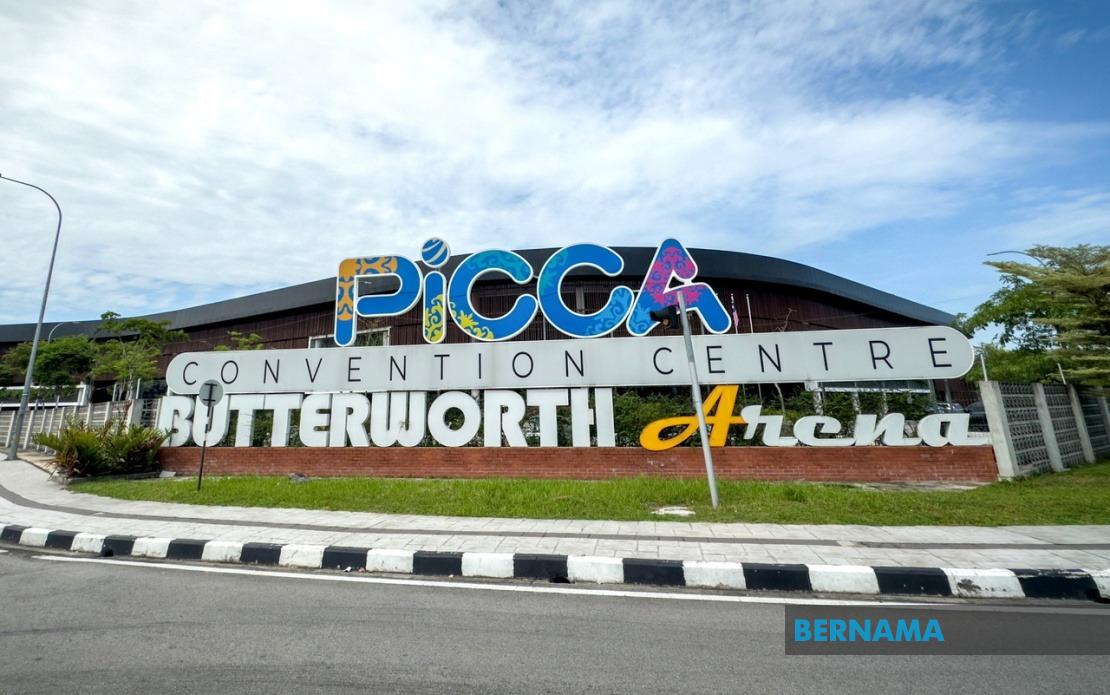
The National Journalists' Day (HAWANA) 2026 celebration reaches its culmination today at PICCA@Arena Butterworth Convention Centre, drawing approximately 1,000 journalists, editors, and media executives from across Malaysia and international delegations. The sixth edition of this significant industry gathering operates under the banner 'Media Integrity Strengthens Credibility', a thematic choice that reflects contemporary concerns about the reliability of news and information dissemination in an increasingly complex media landscape. The ceremonial opening by Prime Minister Datuk Seri Anwar Ibrahim at 3 pm signals the government's investment in recognising journalism's role as a cornerstone of democratic governance and informed public discourse.
The official proceedings will feature a distinguished roster of participants underscoring the event's national importance. Penang Chief Minister Chow Kon Yeow and Communications Minister Datuk Fahmi Fadzil join the Prime Minister in presiding over proceedings that extend beyond ceremonial protocols to address substantive matters affecting Malaysia's media sector. The presence of Bernama Chairman Datuk Seri Wong Chun Wai and Chief Executive Officer Datin Paduka Nur-ul Afida Kamaludin reflects the Malaysian National News Agency's central role in organising this annual commemoration, which the Ministry of Communications has positioned as the country's premier platform for honouring journalistic excellence and professional standards.
A particularly noteworthy dimension of this year's celebration involves the participation of regional and international news organisations, highlighting HAWANA's evolution into a Southeast Asian media gathering. Delegations from Indonesia's Antara News Agency, Vietnam News Agency, Xinhua News Agency, alongside the Indonesian Journalists Association and the Malaysia-Indonesia Journalists Friendship Association (ISWAMI), bring cross-border perspectives to discussions surrounding media credibility and journalistic integrity. Such international engagement provides Malaysian practitioners with comparative insights into how neighbouring nations navigate challenges of misinformation, political pressure, and the digital transformation of newsrooms—issues equally relevant across the region.
Among the day's ceremonial highlights, Prime Minister Anwar Ibrahim will present the HAWANA Award and Special HAWANA Award to individuals whose contributions have materially advanced journalism and shaped public understanding. These accolades, alongside distributions of Tabung Kasih@HAWANA contributions directed toward supporting media veterans facing financial hardship, embody a systemic commitment to valuing journalistic work and providing for those whose careers have served the public interest. Such recognition schemes carry symbolic weight in a profession often characterised by competitive pressures and constrained resources, particularly as newsrooms nationwide contend with declining advertising revenues and evolving business models.
Beyond formal ceremonial functions, the event incorporates cultural and commercial dimensions through the three-day RIUH Pi HAWANA Carnival, which occupies the PICCA Convention Centre parking grounds and attracts both industry practitioners and general public attendance. The carnival's programming—featuring performances by established Malaysian artists including Exists, Bunkface, Masdo, Sakura Band, Budak Nakal Hujung Simpang, and Chelsea Ng—deliberately positions journalism and media not as an insular professional pursuit but as an activity embedded within broader cultural discourse. The presence of more than 24 local creative product brands and 20 food and beverage vendors transforms the gathering into a community-oriented festival, potentially expanding HAWANA's audience beyond industry circles to encompass younger demographic segments and general interest audiences.
The foundational narrative underpinning HAWANA traces to May 29, 1939, when Utusan Melayu newspaper published its inaugural edition, establishing a historical anchor that contemporary celebrations commemorate annually on this date. This historical grounding imbues the contemporary event with continuity, connecting present-day media practitioners to the pioneering journalists who navigated colonial-era publishing constraints to establish vernacular journalism in Malaysia. The perpetuation of this commemorative practice across eight decades reflects evolving understandings of journalism's historical significance while maintaining institutional memory regarding the profession's foundational struggles and achievements.
The selection of 'Media Integrity Strengthens Credibility' as the sixth edition's overarching theme responds directly to contemporary anxieties surrounding information reliability, journalistic independence, and public trust in media institutions. In Malaysia specifically, where regulatory frameworks govern media operations and commercial pressures increasingly influence editorial decision-making, this thematic emphasis signals recognition that journalistic credibility represents an asset requiring continuous cultivation and defence. The theme implicitly acknowledges that integrity encompasses not merely factual accuracy but also editorial independence, transparency regarding funding sources and editorial processes, and accountability mechanisms enabling audience correction and engagement.
The preparatory programming leading to today's grand finale demonstrates the event's integration into broader professional calendars. The May 7 HAWANA 2026 Media Forum, June 4 Strategic Partners Engagement Event, and June 14 Fun Walk successively built momentum and enabled sectoral dialogue prior to the culminating celebration. Such graduated programming distributes engagement opportunities across multiple touchpoints, allowing journalists with varying schedules and geographic locations to participate in different event components while maintaining cumulative industry attention across an extended timeframe.
The Ministry of Communications' organisational leadership, exercised through Bernama as implementing agency, embeds HAWANA within governmental infrastructure for coordinating media policy and professional recognition. This institutional positioning reflects the state's interest in maintaining constructive relationships with media practitioners while promoting professional standards aligned with government communication objectives. The collaborative structure involving private media organisations, international delegations, and industry associations, however, suggests governmental intention to create inclusive platforms rather than coercive mechanisms for directing journalistic practice.
For Malaysian newsrooms experiencing resource constraints, workforce reductions, and digital-era business model uncertainties, HAWANA's public recognition and celebration of professional contributions carries practical significance beyond ceremonial acknowledgment. By convening practitioners across media platforms, geographic regions, and language communities, the event creates opportunities for networking, professional development, and strategic thinking about journalism's future in Southeast Asia. The international dimension particularly enables Malaysian journalists to contextualise their professional challenges and innovations within regional and global frameworks, potentially informing responses to shared challenges including digital misinformation, resource scarcity, and audience fragmentation.


