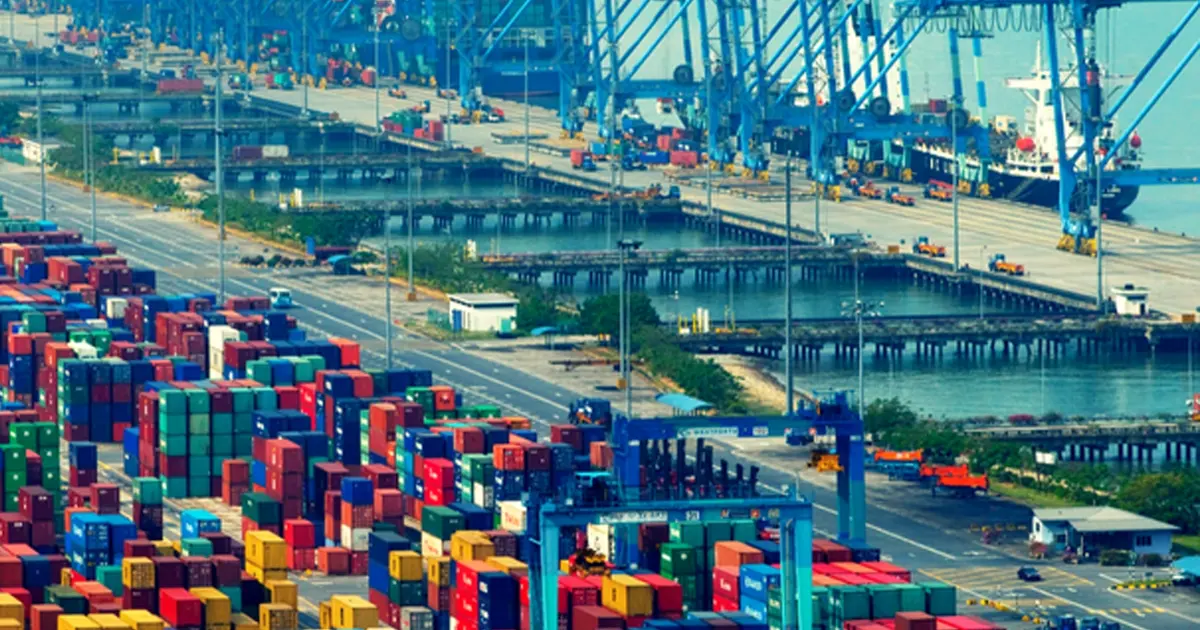
The Port Klang Free Zone (PKFZ) is displaying tangible signs of recovery, having accumulated RM108 million in revenue whilst achieving 86 per cent reactivation of its operations, according to Transport Minister Loke Siew Fook. The milestone reflects sustained momentum over an 18-month period, demonstrating that the strategic overhaul of Malaysia's largest specialised port facility has begun yielding measurable commercial results.
The PKFZ's resurgence represents more than mere financial metrics. The facility, located within the Port Klang complex in Selangor, serves as a critical logistics hub for Malaysia's trade ecosystem, particularly for high-value, time-sensitive cargo operations. Its recovery trajectory holds significance for regional supply chain dynamics and positions Port Klang to compete more effectively against rival ports throughout Southeast Asia. The zone's renewed momentum also carries implications for container traffic volumes and the broader competitiveness of Malaysian ports in an increasingly contested regional market.
Contextualising these figures requires understanding the PKFZ's turbulent history. The free zone facility has grappled with operational setbacks and underutilisation in preceding years, stemming from infrastructure constraints, management challenges, and competitive pressures from alternative port developments elsewhere in Malaysia and the region. The current reactivation push represents a deliberate policy intervention aimed at maximising the facility's latent capacity and restoring investor confidence in its commercial viability.
The 86 per cent reactivation rate indicates substantial progress in bringing dormant or underperforming operations back online. This encompasses reopening warehousing facilities, restoring cargo handling capabilities, and resuming specialised services that distinguish the PKFZ from conventional port operations. The gradual restoration of these services creates multiplier effects throughout the port's supply chain, from brokerage firms to logistics providers and freight forwarders who depend on active free zone operations.
Revenue generation of RM108 million across the 18-month window provides a baseline from which future performance can be measured. Sustained upward trajectory will depend upon several interconnected factors. These include the consistency of global trade flows, Malaysia's appeal to multinational companies seeking Southeast Asian logistics bases, and the competitive positioning of Port Klang relative to Singapore, Bangkok, and Ho Chi Minh City ports. Additionally, the effectiveness of port management and the timeliness of infrastructure investments will determine whether the facility can maintain momentum or whether growth plateaus.
Transport Minister Loke Siew Fook's characterisation of the performance as "steady, encouraging growth" suggests measured optimism within government circles. This framing acknowledges genuine progress whilst tempering expectations, reflecting an awareness that consolidating these gains remains an ongoing challenge. The minister's involvement underscores the strategic importance the government assigns to Port Klang's performance and the broader port and logistics sector.
The reactivation initiative operates within a broader context of Malaysia's efforts to enhance its position in global logistics networks. As trade patterns evolve and supply chains reconfigure following pandemic disruptions, ports throughout Southeast Asia are competing intensively for transshipment cargo and value-added services. The PKFZ's recovery directly supports Malaysia's aspiration to function as a premium logistics destination capable of handling sophisticated port operations beyond basic container handling.
Industry observers will scrutinise whether the current reactivation pace can be sustained and accelerated further. The remaining 14 per cent of facilities awaiting reactivation may encompass more challenging cases, potentially requiring additional capital investment or commercial restructuring. Understanding which operations remain dormant and why will provide insight into genuine constraints confronting the facility versus those stemming from market conditions beyond management control.
Employment implications extend throughout the logistics workforce across Selangor and Port Klang itself. Reactivation of warehousing and cargo handling operations directly creates job opportunities for port workers, supervisory staff, and specialised technical personnel. Indirectly, increased free zone activity stimulates demand for transport services, documentation processing, and commercial services supporting port operations, generating broader economic activity in surrounding communities.
Looking forward, the sustainability of PKFZ's recovery hinges upon maintaining investor confidence and ensuring that the facility delivers reliable, cost-competitive services relative to alternatives. Continued government support, reflected in infrastructure upgrades and policy enhancements, will likely remain essential. The port's evolution also depends on responding dynamically to evolving trade patterns, particularly within higher-margin sectors such as electronics, chemicals, and automotive components that require specialised handling.
The RM108 million revenue figure and 86 per cent reactivation rate signify meaningful progress following a challenging period, yet represent early stages of what should be a longer recovery trajectory. Success ultimately will be determined by whether the facility can attract expanding volumes of premium cargo and maintain operational excellence standards that distinguish it within Malaysia's competitive port landscape.