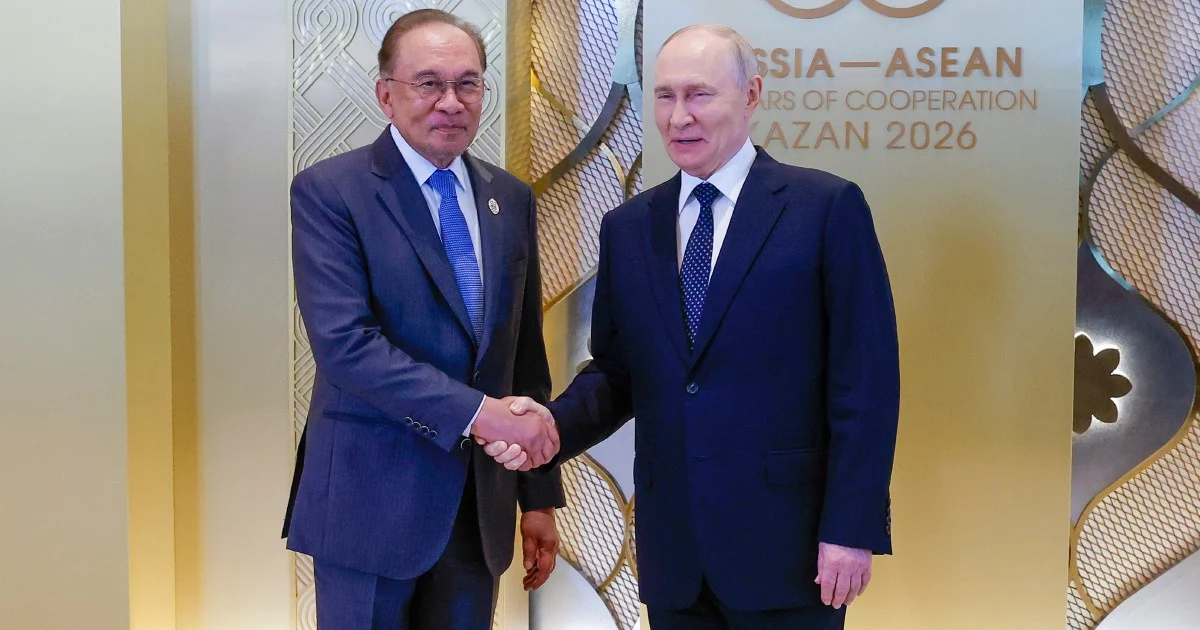
Prime Minister Datuk Seri Anwar Ibrahim's diplomatic journey to Russia and Turkmenistan represents a deliberate realignment of Malaysia's energy procurement strategy, addressing mounting concerns about supply chain vulnerability and price volatility in global energy markets. The visits, endorsed by BRICS International Malaysia, underscore the government's commitment to establishing alternative energy corridors beyond traditional suppliers, a critical consideration for a nation whose manufacturing and power generation sectors depend heavily on stable hydrocarbon supplies.
Malaysia's historical reliance on Middle Eastern oil and liquefied natural gas has exposed the country to geopolitical disruptions and market fluctuations beyond its control. The decision to deepen engagement with Russian and Turkmen energy sectors reflects a pragmatic recognition that Southeast Asia's energy future requires geographic diversification. Turkmenistan, one of the world's largest proven natural gas reserves holders, offers substantial untapped potential for long-term supply agreements. Russia, despite international sanctions, remains a significant energy player with capabilities in both conventional and liquefied natural gas production, technologies that could benefit Malaysia's energy infrastructure modernisation efforts.
The strategic calculus extends beyond mere commodity acquisition. By engaging directly with major energy-producing nations, Malaysia positions itself to influence regional energy diplomacy and potentially secure advantageous contract terms. Energy security has become intertwined with geopolitical influence; nations controlling supply mechanisms wield considerable soft power in bilateral negotiations. For Malaysia, establishing closer working relationships with Russia and Turkmenistan through state visits and official channels demonstrates commitment to pragmatic, non-aligned foreign policy that prioritises national interest over ideological alignment.
The timing of these visits carries particular significance within Malaysia's broader regional context. As Southeast Asia collectively pursues energy transition policies while managing immediate power and transportation needs, the region remains vulnerable to supply disruptions. The conflict in Eastern Europe has demonstrated how quickly energy markets can convulse, and liquefied natural gas prices have become subject to geopolitical arbitrage. By moving to secure medium and long-term agreements now, Malaysia aims to insulate itself against future price shocks and ensure that industrial production costs remain competitive compared to regional rivals.
Cooperation frameworks established during these visits likely encompass exploration partnerships, technology transfer arrangements, and infrastructure investment. Joint ventures in liquefied natural gas processing and transportation could generate employment and technological expertise domestically while securing supply arrangements. Such arrangements typically include capacity guarantees and preferential pricing mechanisms that protect signatories from sudden market disruptions. For Malaysia, these mechanisms represent valuable insurance against energy crises that could damage manufacturing export competitiveness.
The economic dimension of enhanced partnerships with Russia and Turkmenistan extends beyond hydrocarbons. Both nations require sophisticated financial services, technical expertise, and manufactured goods that Malaysian companies can provide. Energy partnerships frequently become anchors for broader commercial relationships, creating opportunities in engineering, construction, telecommunications, and financial services. Malaysian banks and construction firms could participate in infrastructure development across Central Asia, generating revenue streams while establishing strategic footholds in emerging markets.
Domestically, Anwar's energy diplomacy addresses critical infrastructure challenges facing Malaysia. The country's electricity generation capacity requires significant expansion to accommodate growing industrial demand and renewable energy integration. While Malaysia possesses offshore natural gas reserves, production has plateaued and domestic supplies prove insufficient for long-term requirements. Imported liquefied natural gas supplements local production, but sourcing arrangements remain concentrated among limited suppliers. Establishing relationships with alternative suppliers reduces the leverage any single nation or consortium can exert over Malaysia's energy policy and infrastructure investment decisions.
The visits also signal Malaysia's positioning within evolving global power structures. BRICS expansion and Central Asian geopolitical realignments are reshaping international relations. By engaging Russia and Turkmenistan directly, Malaysia demonstrates its role as a serious regional actor rather than a passive consumer of Western-determined energy arrangements. This positioning has implications for Malaysia's standing in regional organisations and bilateral relationships with various powers competing for influence across Southeast Asia and beyond.
Environmental considerations accompany the energy security agenda. While natural gas represents a transition fuel toward decarbonisation, Malaysia's energy security strategy must eventually accommodate renewable capacity expansion. Partnerships with Russia and Turkmenistan could include technology sharing for carbon capture, hydrogen production, and other energy transition technologies. Several post-Soviet nations have developed expertise in managing energy systems alongside environmental objectives, experience potentially valuable for Malaysia's Net Zero ambitions.
The diplomatic investments in Russia and Turkmenistan simultaneously strengthen Malaysia's negotiating position with existing energy suppliers. When alternative sources become available, established suppliers recognise the credible possibility of contract diversification, encouraging them to offer more competitive terms and reliable delivery commitments. This competitive dynamic benefits Malaysian consumers and industries through improved pricing and supply stability.
For Southeast Asian regional stability, Malaysia's energy security strengthening carries broader implications. Energy scarcity or supply disruptions that compromise one nation's economic performance can trigger regional instability through migration pressures, resource competition, and political instability. By securing its energy future, Malaysia contributes to regional prosperity and stability more broadly. Energy cooperation among Southeast Asian nations themselves may be enhanced if Malaysia's successful diversification demonstrates viable alternatives to concentrated supply networks.
The visits represent calculated diplomatic moves that acknowledge Malaysia's position as a middle-income nation requiring energy security without ideological rigidity constraining partnership options. Pragmatic energy diplomacy, pursued across multiple supply sources and incorporating technology partnerships, positions Malaysia to navigate the complex energy transitions defining this decade while maintaining industrial competitiveness and domestic prosperity.