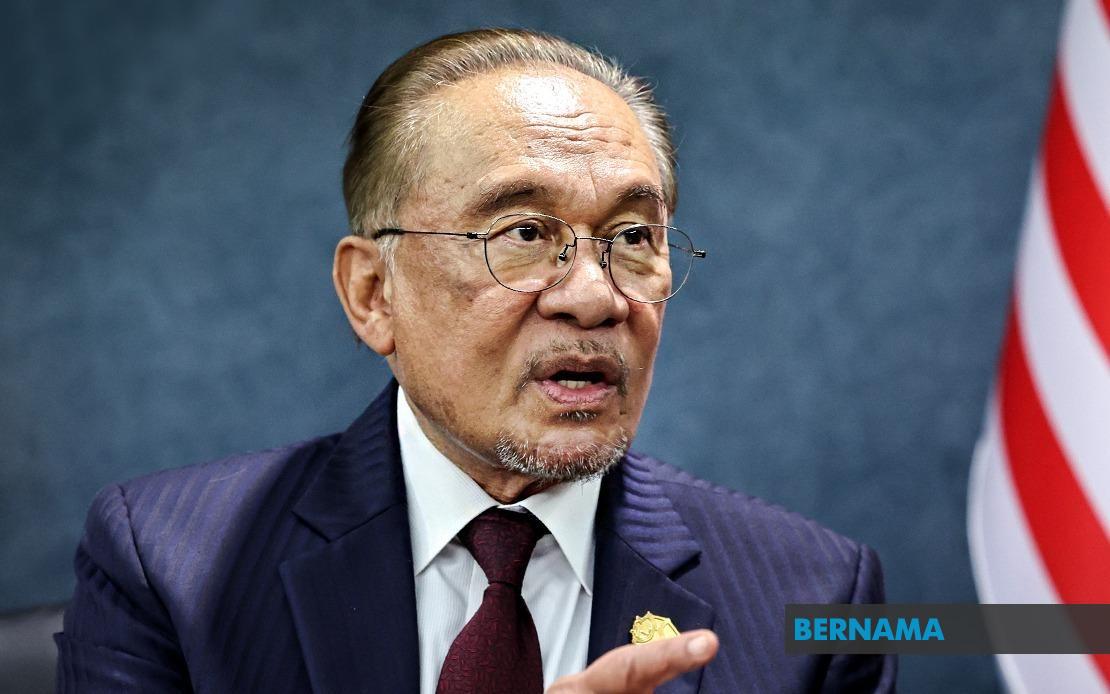
Prime Minister Datuk Seri Anwar Ibrahim took centre stage at the ASEAN-Russia Business Forum in Kazan on June 17, delivering remarks to an audience of business representatives and government officials from across ASEAN and Russia. The event, held at Kazan IT Park, positioned Malaysia as an active participant in one of the region's most significant diplomatic engagements, with the Prime Minister also serving as Finance Minister bringing economic perspectives to the discussions.
The visit underscores Malaysia's commitment to deepening ties with Russia at a time when regional powers are recalibrating their international relationships. Anwar's attendance at the forum, combined with his scheduled participation in the gala dinner at the Tatar State Academic Theater and a courtesy call with Russian President Vladimir Putin, reflects the high-level diplomatic significance both nations place on their bilateral relationship. This multi-layered engagement goes beyond ceremonial protocol, offering substantive opportunities to advance commercial and strategic interests.
Kazan itself provides a symbolically resonant backdrop for these discussions. Situated at the confluence of the Volga and Kazanka rivers in European Russia, approximately 800 kilometres east of Moscow, the city serves as a cultural and economic hub with a population of roughly 1.3 million residents. Often described as Russia's third capital after Moscow and St Petersburg, Kazan boasts a history spanning more than a millennium and stands as a major centre of Islamic culture and heritage. This unique positioning as a bridge between the Russian and Muslim worlds makes it particularly apt for conversations between Russia and ASEAN, a region with significant Muslim populations.
The 2024 summit carries particular weight as it marks the 35th anniversary of ASEAN-Russia dialogue relations, a milestone that allows both sides to reflect on the trajectory of their engagement. Since Russia was established as a full ASEAN Dialogue Partner in 1996, the relationship has matured substantially. The elevation to Strategic Partnership status in 2018 represented a watershed moment, formalising commitments across political-security, economic, and socio-cultural cooperation. This framework provides the foundation upon which current discussions build, allowing leaders to discuss advancement in multiple dimensions simultaneously.
For Malaysia specifically, Russia represents an increasingly important economic partner within Europe. As Malaysia's ninth-largest trading partner among European nations in 2025, bilateral commerce reached RM8.72 billion, equivalent to approximately USD2.04 billion. This substantial figure reflects deepening commercial integration despite geopolitical complexities. Malaysian exporters have cultivated strong market presence with electrical and electronic products, machinery, equipment and components forming the backbone of outbound shipments, complemented by processed food products that cater to Russian consumer preferences. The reciprocal flow demonstrates Russia's capacity as a resource supplier, with petroleum products, minerals, chemicals and chemical-based products constituting Malaysia's primary import categories.
Broader ASEAN-Russia trade dynamics reveal the scale of economic interdependence at stake. The 2024 calendar year recorded total ASEAN-Russia bilateral trade valued at USD18.1 billion, indicating consistent commercial momentum despite international tensions. However, Russian foreign direct investment into ASEAN economies remains relatively modest at USD92.97 million, equivalent to RM367.90 million, suggesting untapped potential for deeper capital flows and technology transfer. This disparity presents an opportunity for business forums like the one in Kazan to identify sectors and mechanisms that could attract greater Russian investment into Southeast Asian economies.
The timing of Anwar's intervention in these discussions carries weight given his dual portfolio responsibilities. As both Prime Minister and Finance Minister, his remarks address not only political dimensions of the partnership but also economic policy frameworks that shape bilateral commerce. This combination enables him to articulate how Malaysia views the relationship from both national governance and fiscal perspectives, potentially signalling receptiveness to specific investment proposals or trade facilitation measures that require cabinet-level approval.
For Malaysian business participants attending the forum, the event provides direct access to Russian decision-makers and counterparts seeking to expand operations in Southeast Asia. The presence of high-level government officials from both ASEAN and Russia creates networking opportunities that can translate into concrete commercial arrangements. Industries ranging from technology and digitalisation to resource extraction and food processing stand to benefit from connections established during such gatherings.
The ASEAN-Russia relationship exists within a complex geopolitical context that makes sustained dialogue particularly valuable. Both sides have demonstrated commitment to maintaining engagement despite international pressures, with ASEAN's policy of strategic autonomy aligning with Russia's interests in sustaining diverse partnerships. By hosting the commemorative summit in Kazan, Russia signals the significance it attaches to ASEAN, while ASEAN's participation reaffirms the region's intention to maintain a balanced approach to great power relations rather than gravitating toward any single bloc.
Looking forward, the outcomes of these discussions may shape bilateral agendas for months to come. Announcements regarding enhanced cooperation frameworks, sectoral partnerships, or investment commitments could emerge from the various meetings and forums scheduled throughout the summit. Malaysia's prominent role, anchored by Anwar's participation in multiple forums and his audience with President Putin, positions the nation to influence the trajectory of ASEAN-Russia relations while advancing specific Malaysian interests in sectors and markets where Russian partnerships offer strategic value.


