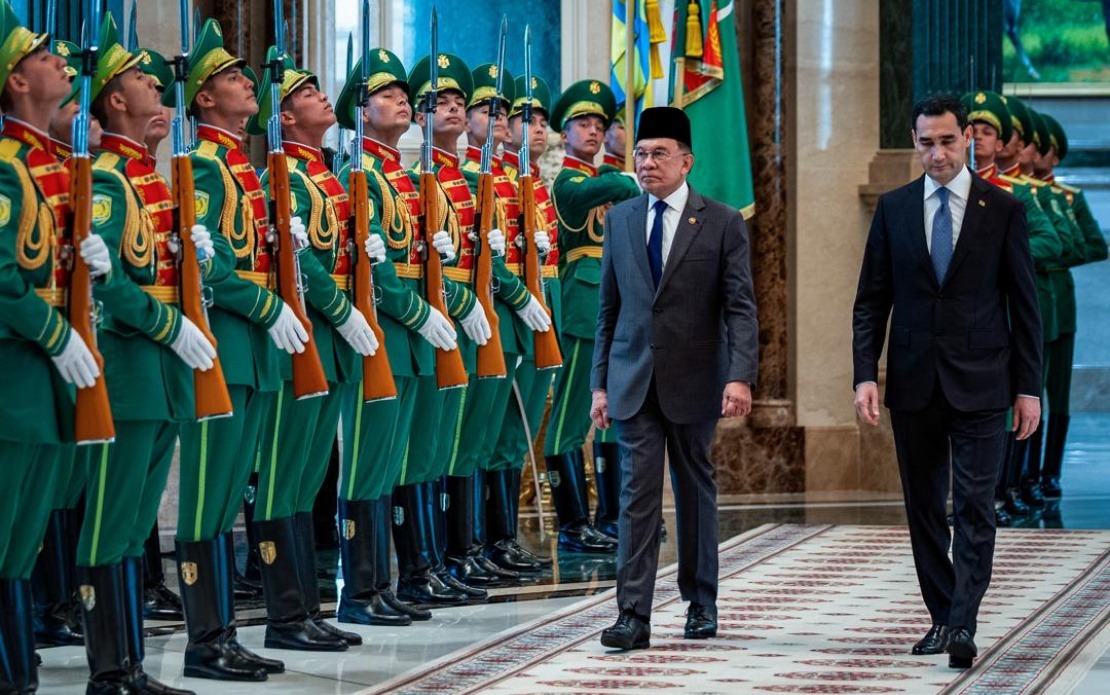
Prime Minister Datuk Seri Anwar Ibrahim arrived at the Turkmenistan Presidential Palace in Ashgabat on June 19 to receive an official state welcome, cementing Malaysia's diplomatic engagement with the energy-rich Central Asian nation. The ceremony marked a significant milestone in bilateral relations, being the premier's first visit to Turkmenistan since he assumed office as Malaysia's 10th Prime Minister in November 2022.
President Serdar Berdimuhamedov extended a formal reception to the Malaysian delegation, with the traditional guard of honour standing at attention as Malaysia's and Turkmenistan's national anthems were performed. This ceremonial dimension underscores the diplomatic weight both nations attach to strengthening their relationship and recognising Malaysia's evolving role in Central Asian affairs.
The welcoming protocol included introductions between Anwar and key members of Turkmenistan's Cabinet and senior government officials, followed by the prime minister's presentation of his accompanying delegation to the Turkmenistan president. Such structured exchanges are customary in official state visits and serve to establish personal connections between decision-makers who will shape future bilateral initiatives.
The two leaders subsequently engaged in private discussions before transitioning to a formal bilateral meeting format. This staged approach—beginning with a restricted four-eyed conversation and expanding to broader talks—enabled both sides to address sensitive matters and forge consensus on strategic priorities before involving their respective teams in substantive negotiations.
Anwar's two-day visit, which commenced on June 18, represents Malaysia's growing focus on diversifying relationships beyond traditional partners and engaging with nations controlling significant energy and mineral resources. Turkmenistan, sitting atop vast natural gas reserves and serving as a corridor for Central Asian trade, holds considerable strategic importance for Malaysia's long-term economic and geopolitical interests.
The timing of this visit demonstrates the Malaysian leadership's commitment to projecting the country's diplomatic influence across diverse regions. Since Anwar's appointment in late 2022, his administration has prioritised high-profile international engagements to reposition Malaysia as an active participant in global affairs and to explore partnership opportunities aligned with the nation's development agenda.
Turkmenistan's invitation to host the Malaysian prime minister reflects reciprocal interest in deepening bilateral ties. The Central Asian state, while geographically distant from Malaysia, shares common ground in championing regional stability, promoting non-aligned foreign policy principles, and seeking economic diversification beyond traditional sectors.
The bilateral discussions touched upon matters of mutual interest spanning trade, investment, cultural exchange, and potential cooperation in energy and technology sectors. For Malaysia, Turkmenistan represents an untapped market and a source of critical energy resources, while Turkmenistan may view Malaysia as a gateway to Southeast Asian markets and a partner in advancing regional connectivity initiatives.
This visit also carries symbolic significance within Malaysia's broader foreign policy framework. By engaging directly with Central Asian leadership, Anwar signals Malaysia's intent to strengthen ties with nations outside established multilateral forums and to pursue bilateral relationships based on shared economic and strategic objectives.
The reception accorded to the Malaysian prime minister reflects Turkmenistan's diplomatic openness and willingness to elevate bilateral engagement. Presidential-level protocol, combined with the structured nature of the discussions, suggests both sides view this visit as a foundation upon which to build sustained cooperation across multiple sectors.
For Southeast Asian observers, the visit underscores Malaysia's active diplomacy and its capacity to engage with distant partners while managing regional responsibilities. The initiative also illustrates how middle-income nations can strategically position themselves to benefit from Central Asian resources and market opportunities during an era of multipolar international relations.
Looking ahead, the substantive outcomes of these bilateral talks will likely shape Malaysia-Turkmenistan relations over the coming years. Any agreements reached on trade facilitation, investment protection, or cultural programmes will reflect both nations' commitment to transforming high-level political engagement into tangible benefits for their respective populations and economies.


