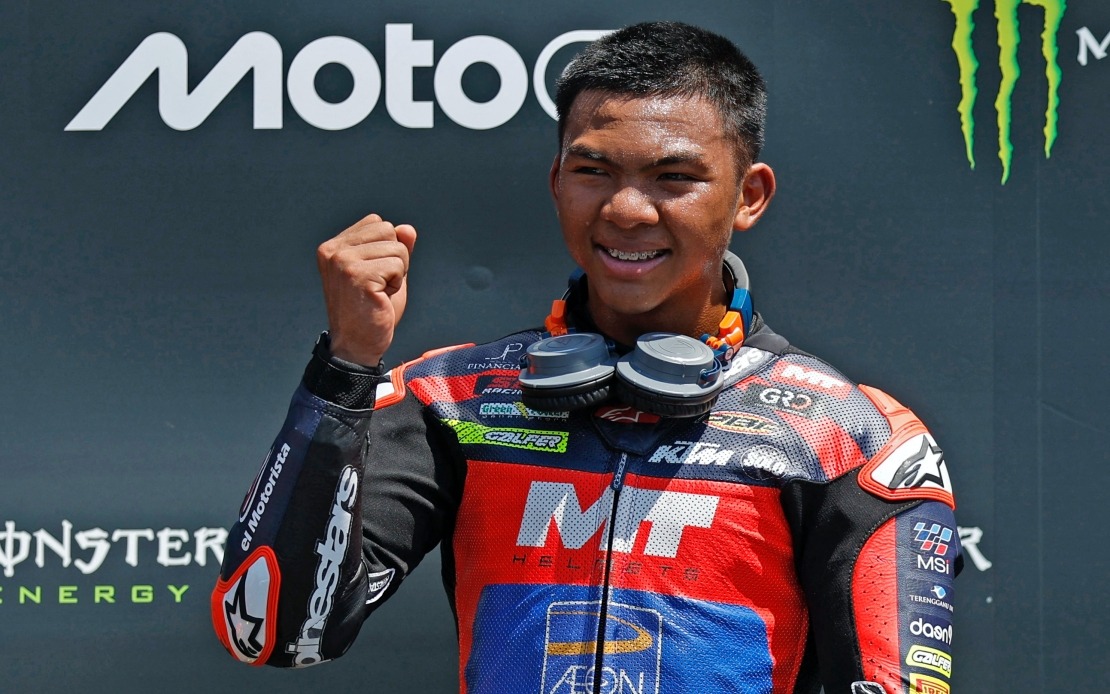
Malaysia's motorsport credentials received a significant boost on June 21 when 18-year-old Moto3 rider Hakim Danish Ramli crossed the finish line first at the Czech Grand Prix held at Brno Circuit. The triumph marked a pivotal moment for the nation's two-wheeled racing programme, as it represents the first Grand Prix victory by a Malaysian in the Moto3 class since Khairul Idham Pawi's back-to-back wins at the 2016 Argentina and German rounds. Prime Minister Datuk Seri Anwar Ibrahim acknowledged the achievement through a social media post, writing: "Congratulations Hakim Danish! The journey is still long, carry on with more wins." The message underscores official recognition of the young rider's potential and the broader significance of breaking an extended championship drought.
The Brno Circuit success represents a substantial momentum shift for Hakim Danish's 2024 campaign, as it follows an encouraging third-place podium finish at the Italian Grand Prix held at Mugello the previous month. This pair of strong results demonstrates improving consistency at the highest levels of international motorcycle racing and suggests the rider is entering a productive phase of his season. For the AEON Credit-MT Helmets-MSi team, securing victory at one of the sport's established circuits indicates both technical competence and effective development work on the motorcycle setup.
The decade-spanning gap since Malaysia's previous Moto3 Grand Prix victory carries particular weight within the nation's motorsport culture. Khairul Idham Pawi's double triumph in Argentina and Germany during the 2016 season had represented a high-water mark for Malaysian participation in the feeder class to MotoGP. The extended absence of victories suggested a potential gap in the pipeline of competitive talent or a shift in the competitive balance that favoured other nations' development programmes. Hakim Danish's breakthrough thus carries symbolic importance beyond the individual race result, signalling that Malaysian motorsport continues to produce riders capable of competing successfully on the world stage.
At just 18 years old, Hakim Danish operates within the typical age profile for Moto3 competitors, where riders often transition to the intermediate Moto2 category or ascend directly to MotoGP within a few seasons. His early demonstration of winning capability suggests the potential for a sustained competitive career in international motorcycle racing. The maturation trajectory of young riders in this series often determines whether early success translates into higher-category competitiveness or remains isolated achievements. For Malaysian motorsport observers, the question becomes whether this victory marks the beginning of a sustained competitive presence in Grand Prix racing or represents a notable but isolated peak.
The broader Southeast Asian motorsport landscape has experienced consolidation in recent years, with riders from various nations competing across regional and international series. Malaysia's historical strength in motorcycle racing stems from domestic demand, established training structures, and proven pathways to international competition. Hakim Danish's victory reinforces the validity of these institutional arrangements and provides encouragement to younger riders navigating the expensive and highly competitive process of developing world-class motorcycle racing talent.
Official support and recognition from the highest political levels carry tangible benefits for motorsport development ecosystems. Prime ministerial acknowledgment amplifies public interest, potentially attracting sponsorship interest and media coverage that sustains athlete funding and career progression. In the context of Malaysian motorsport, where financial resources often determine progression opportunities, such high-level validation can generate momentum that extends beyond individual races.
The AEON Credit-MT Helmets-MSi team's technical approach and rider development methodology contributed directly to the Brno Circuit victory. Understanding the specific factors that enabled success at this particular circuit—whether mechanical setup innovations, rider confidence building, competitive advantage timing, or a combination of elements—provides valuable lessons for Malaysian motorsport programmes seeking to expand their competitive footprint. The team's composition and operational philosophy merit attention from Malaysian motorsport stakeholders evaluating how to nurture future talent effectively.
Looking forward, the remainder of the 2024 Moto3 season will reveal whether Hakim Danish can consolidate this breakthrough with additional strong performances. The competitive intensity of the category means that single victories, while meaningful, require substantiation through sustained excellence across multiple venues and varying track characteristics. Teams and manufacturers monitor such performances closely when evaluating long-term driver development and sponsorship commitments.
Hakim Danish's achievement resonates within Malaysia's broader sporting narrative, where individual breakthrough performances in international competitions generate widespread national pride and inspire younger competitors to pursue excellence in their respective disciplines. The victory at Brno represents not merely a solitary race win but a statement of competitive capability that extends recognition of Malaysian motorsport potential to the global audience that follows Grand Prix racing across its various categories.
%22%2F%3E%3C%2Fpattern%3E%3C%2Fdefs%3E%3Crect%20width%3D%22100%25%22%20height%3D%22100%25%22%20fill%3D%22url(%23ph5y615g)%22%2F%3E%3Crect%20width%3D%22100%25%22%20height%3D%22100%25%22%20fill%3D%22url(%23ph5y615p)%22%2F%3E%3Ctext%20x%3D%2250%25%22%20y%3D%2250%25%22%20text-anchor%3D%22middle%22%20dominant-baseline%3D%22central%22%20fill%3D%22rgba(255%2C255%2C255%2C0.95)%22%20font-family%3D%22Georgia%2C%20'Times%20New%20Roman'%2C%20serif%22%20font-weight%3D%22700%22%20font-size%3D%22320%22%20letter-spacing%3D%22-0.02em%22%3ERim%3C%2Ftext%3E%3C%2Fsvg%3E)