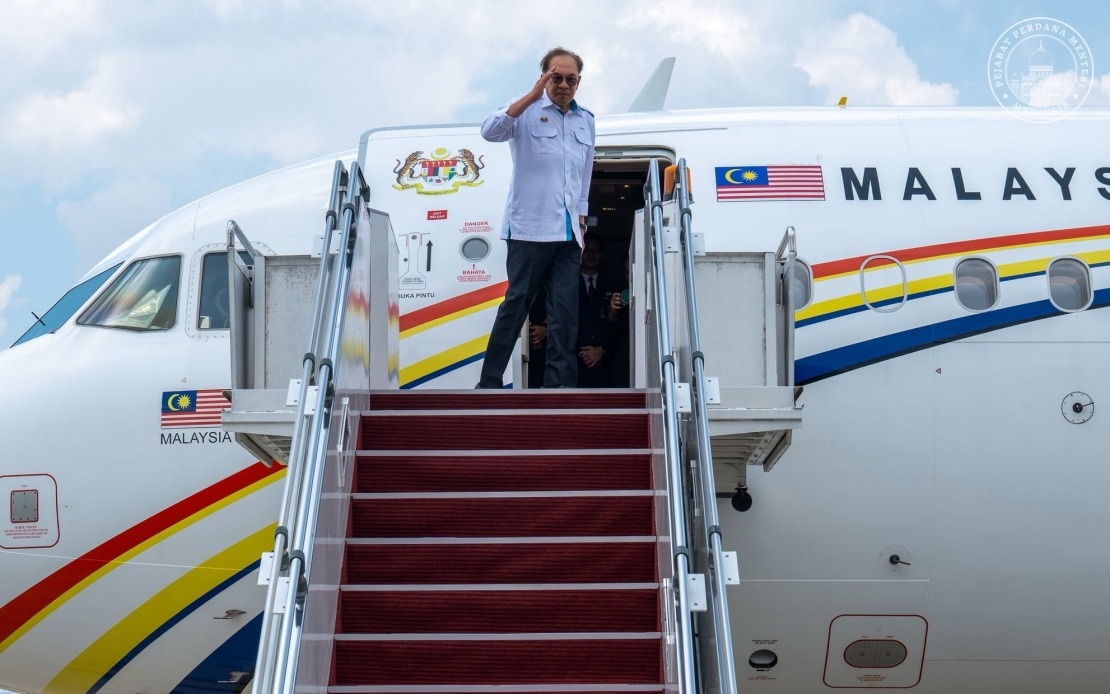
Prime Minister Datuk Seri Anwar Ibrahim has embarked on a significant diplomatic mission to Russia, departing from Subang Air Base for Kazan where he will lead the Malaysian delegation at the ASEAN-Russia Commemorative Summit on June 17 and 18. The visit underscores Malaysia's commitment to strengthening multilateral relationships beyond its immediate region and reflects the country's growing engagement with strategic partners across Eurasia. Accompanying Anwar are several senior cabinet members and officials tasked with advancing Malaysia's economic and diplomatic interests at one of the year's most important international forums.
The Prime Minister's itinerary includes a one-on-one meeting with Russian President Vladimir Putin, a crucial opportunity to discuss bilateral relations and broader regional cooperation frameworks. Beyond the formal bilateral engagement, Anwar will participate in the Russia-ASEAN Business Forum, a platform designed to facilitate commercial dialogue and identify investment opportunities between Russian enterprises and ASEAN member states. These engagements represent a deliberate effort to diversify Malaysia's international partnerships and tap into emerging market opportunities in Central Asia and Russia.
The delegation composition reflects the multifaceted nature of Malaysia's engagement priorities. Minister of Investment, Trade and Industry Datuk Seri Johari Abdul Ghani and Minister of Economy Akmal Nasrullah Mohd Nasir will focus on trade, investment, and economic cooperation dimensions. Their presence signals Malaysia's serious intent to translate high-level diplomatic visits into tangible commercial outcomes. Supporting officials from the Prime Minister's Office and the Foreign Ministry will handle protocol, negotiations, and coordination of the various bilateral and multilateral meetings scheduled throughout the summit.
The Kazan summit marks a pivotal moment in ASEAN-Russia relations, commemorating 35 years of formal diplomatic engagement dating back to 1991 when ties were established in Kuala Lumpur. This anniversary provides an ideal occasion to assess the trajectory of cooperation, acknowledge achievements, and recalibrate strategic objectives. For Malaysia, which has played a central role in ASEAN regionalism, the summit offers a platform to reinforce the bloc's collective voice while advancing national interests within a broader Southeast Asian framework.
The substantive agenda encompasses several priority areas reflecting contemporary global challenges and opportunities. Trade and investment cooperation remains foundational, with both parties keen to expand commercial ties beyond traditional sectors. Energy security discussions will address mutual interests in oil, gas, and renewable energy technologies—domains where Russian expertise and resource wealth complement ASEAN's developmental needs. Food security has emerged as a critical concern for the region, and dialogue with a major agricultural producer offers pathways to secure supply chains and explore cooperative ventures.
Digital economy and technological advancement represent forward-looking dimensions of the partnership. As ASEAN members accelerate digital transformation, collaboration with Russia on cybersecurity, artificial intelligence, and digital infrastructure development could yield mutual benefits. Science and technology partnerships, particularly in areas like space exploration and scientific research, extend the relationship beyond traditional economic metrics. Cultural and educational exchanges strengthen societal bonds and foster long-term understanding between peoples, while tourism cooperation capitalizes on shared interests in promoting visitor flows and hospitality sector development.
The ASEAN-Russia Strategic Partnership framework provides the overarching structure for these discussions. Rather than pursuing ad-hoc initiatives, both parties are working within a coherent strategic vision designed to ensure consistency, continuity, and complementarity across multiple sectors. This institutionalized approach reflects diplomatic maturity and a recognition that sustainable partnerships require systematic development rather than episodic engagement.
Following the Kazan summit, Anwar will proceed to Ashgabat, Turkmenistan, for an official state visit at the invitation of President Serdar Berdimuhamedow. This onward journey illustrates Malaysia's expanding footprint in Central Asia and the Caucasus region. Turkmenistan, a natural gas-rich nation and regional power broker, represents another important avenue for Malaysian diplomatic and economic outreach. The consecutive nature of these visits—Russia and Turkmenistan—allows the Prime Minister to advance Malaysia's regional agenda systematically across complementary partners.
The timing of this diplomatic mission reflects Malaysia's strategic calculation regarding its role in Southeast Asian regionalism and global affairs. By actively engaging with major powers and regional actors, Malaysia positions itself as a bridge between the developed and developing worlds, between Southeast Asia and Eurasia. Such positioning enhances Malaysia's diplomatic leverage and provides avenues to advance national interests across multiple platforms simultaneously. For Malaysian businesses and investors, high-level diplomatic visits often create market entry opportunities and facilitate networking with Russian and Central Asian counterparts.
From a regional perspective, the ASEAN-Russia summit carries implications for how Southeast Asia navigates great power competition and maintains strategic autonomy. Russia's engagement with ASEAN occurs within a context of shifting global alignments, where both Russia and the Southeast Asian bloc are seeking meaningful partnerships outside traditional Cold War frameworks. Malaysian participation at the highest level underscores the region's commitment to inclusive engagement and its reluctance to adopt zero-sum geopolitical positioning that might limit diplomatic flexibility.
The emphasis on people-to-people exchanges within the summit's agenda reflects recognition that sustainable international relations rest upon human connections, cultural understanding, and societal networks. Beyond governmental and commercial interactions, fostering educational partnerships, artistic collaborations, and tourism flows creates constituencies within both societies invested in maintaining and strengthening ties. These grassroots dimensions often prove more durable than purely governmental relationships.
For Malaysia specifically, the diplomatic mission serves multiple objectives: advancing trade and investment interests, elevating Malaysia's profile as a serious player in global diplomacy, strengthening ASEAN's collective positioning, and opening new avenues for Malaysian enterprises in Russian and Central Asian markets. The visit also demonstrates the government's commitment to maintaining Malaysia's diplomatic engagement across diverse regions and ideological spheres, a characteristic that has historically defined Malaysian foreign policy.
The success of such high-level missions is ultimately measured not merely by the rhetoric exchanged or agreements signed during formal ceremonies, but by their concrete outcomes: new trade agreements finalized, investment commitments realized, educational partnerships established, and long-term relationships deepened. Anwar's delegations and their continued engagement with Russian and Central Asian counterparts will be instrumental in translating the summit's declarations into substantive benefits for Malaysia and its citizens.